

| NAME | |
|---|---|
| Chinese Name | 孙权, 孫權, Sūn Quán |
| Nickname | Emperor Da of Wu (Ngô Đại Đế) |
| Other name | Tôn Quyền |
| Courtesy name | 仲谋, 仲謀, Zhòngmóu, Zhong Mou, tự Trọng Mưu |
| INFORMATION | |
| Born | 182 |
| Birth Place | Fuchun County, Wu Commandery (吴郡富春县; huyện Phú Xuân, quận Ngô) |
| Died | 252 |
| Death Reason | Illness and old age |
| FAMILY | |
| Father | |
| Mother | |
| Spouse | |
| Children | |
| Relatives | |
| CAREER | |
| Allegiance | Han Dynasty; Eastern Wu |
| Battles | Campaign against Huang Zu, Battle of Red Cliffs, Battle of Hefei, Battle of Xiaoyao Ford, Battle of Ruxukou, Capture of Jing Province, Battle of Xiaoting, Cao Pi's invasion of Wu |
| Items | 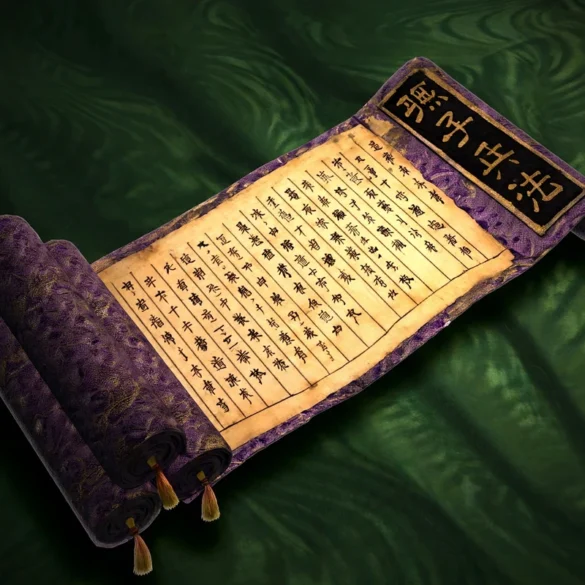 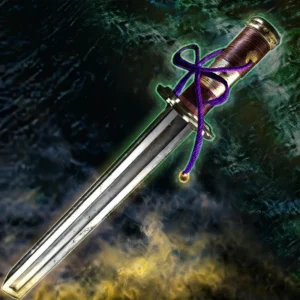 |











Biography & Historical Record
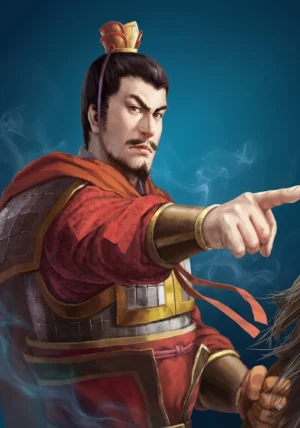
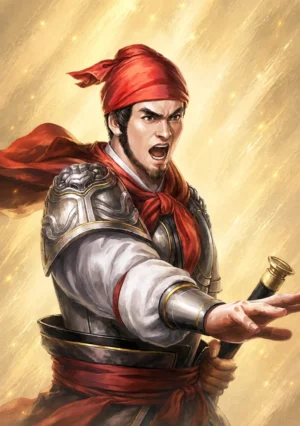
Sun Quan (孙权, Tôn Quyền), courtesy name Zhongmou (仲谋, Trọng Mưu), was the founder and first emperor of Eastern Wu (东吴) — the third kingdom of the Three Kingdoms era. Second son of the warlord Sun Jian (孙坚, Tôn Kiên) and younger brother of Sun Ce (孙策, Tôn Sách), he inherited Jiangdong at age eighteen when Sun Ce was assassinated in 200 AD. Under the guidance of Zhou Yu (周瑜, Chu Du), Zhang Zhao (张昭, Trương Chiêu), and Lu Su (鲁肃, Lỗ Túc), he consolidated power among the Jiangdong gentry and built the naval strength that would define Wu for half a century.
His greatest early achievement was the Liu Bei alliance that produced victory at Red Cliffs in 208 AD — establishing the tripartite division of China. He later fought Liu Bei over Jing Province, captured Guan Yu (关羽, Quan Vũ), and repelled the Yiling invasion through Lu Xun (陆逊, Lục Tốn). Proclaimed Emperor of Wu in 229 AD, he ruled until 252 AD, though succession disputes marred his later years.
In Romance of the Three Kingdoms, Sun Quan is a sagacious but sometimes suspicious ruler who masters the art of using the Yangtze as a barrier against northern ambition. His dramatic decision for war at Chaisang — cleaving the conference table with his sword — and Cao Cao’s praise at Ruxukou (“If one has a son, he should be like Sun Zhongmou!”) define his literary stature.
Role in Romance of the Three Kingdoms
Chapter 29 (The Little Conqueror Hands Over Jiangdong to the Young Lord): Sun Ce, mortally wounded, entrusts Jiangdong to the eighteen-year-old Sun Quan with the counsel to employ Zhou Yu and Zhang Zhao — Sun Quan inherits an empire in the making.
Chapter 44 (Zhuge Liang Rouses Sun Quan with Words; Zhou Yu Forms the Plan): Faced with Cao Cao’s massive southern armada, Sun Quan resolves for war after consulting Zhuge Liang and Zhou Yu, draws his sword to cleave the conference table, and swears death to any who advocate surrender.
Chapters 50–53: Sun Quan celebrates the allied triumph at Red Cliffs, besieges Hefei against Zhang Liao, and collaborates with Zhou Yu on the marriage lure at Ganlu Temple — confirming the political marriage of his sister Lady Sun to Liu Bei.
Chapters 73–77: Sun Quan allies secretly with Cao Cao to reclaim Jing Province, captures and executes Guan Yu — triggering Liu Bei’s Yiling campaign.
Chapters 82–98: Appoints Lu Xun to burn Liu Bei’s camps at Xiaoting; declares himself Emperor of Wu in 229 AD.
Sun Quan (孙权) — Historical & Literary Timeline
Ch. 7 / 182 AD
Born in Jiangdong
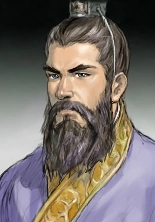
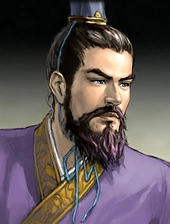
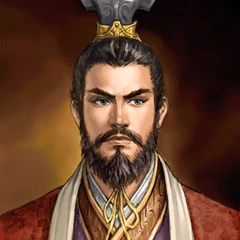
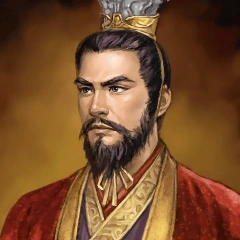
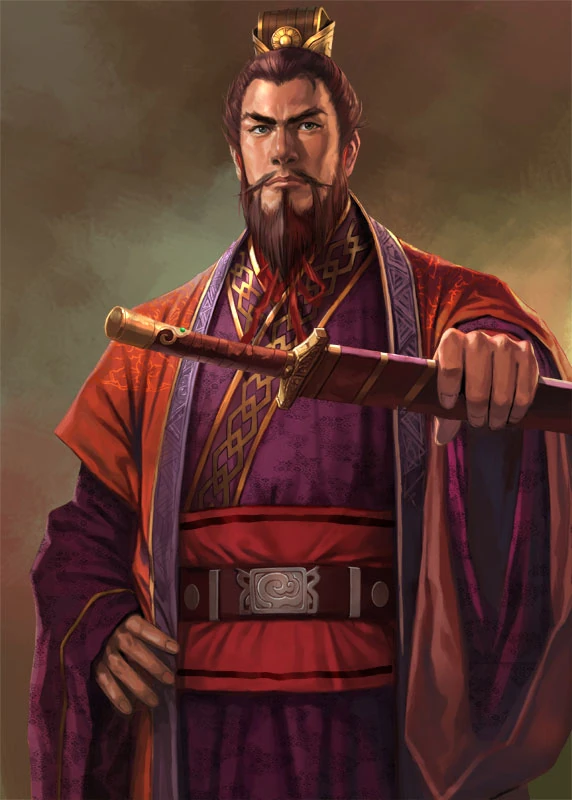
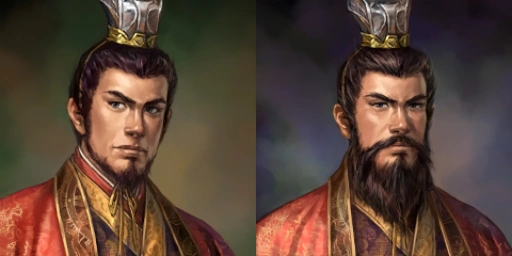
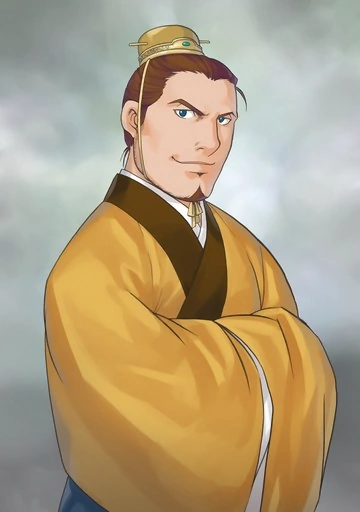
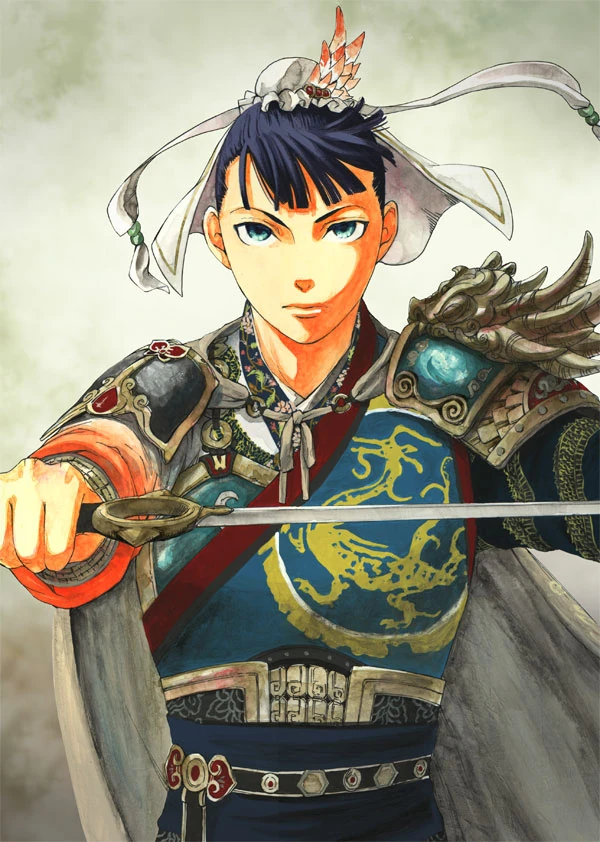
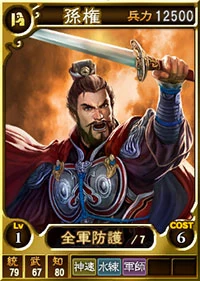
Second son of Sun Jian (孙坚, Tôn Kiên); the novel describes his distinctive appearance — square jaws, green eyes, purple beard.
Ch. 29 / 200 AD
Inherits Jiangdong
Sun Ce (孙策, Tôn Sách) dies; eighteen-year-old Sun Quan assumes lordship with Zhou Yu and Zhang Zhao as pillars of governance.
Ch. 44 / 208 AD
Decision for war
Chooses resistance over surrender; allies with Liu Bei (刘备, Lưu Bị); cleaves the council table with his sword before Red Cliffs.
Ch. 50 / 208 AD
Red Cliffs victory
Allied fire attack destroys Cao Cao’s fleet; Wu naval supremacy on the Yangtze is established.
Ch. 77 / 219 AD
Guan Yu’s capture
Allied with Cao Cao to seize Jing Province; captures and executes Guan Yu (关羽, Quan Vũ) — turning Liu Bei into a mortal enemy.
Ch. 82–84 / 222 AD
Xiaoting triumph
Appoints Lu Xun (陆逊, Lục Tốn) Supreme Commander; fire attack annihilates Liu Bei’s Yiling invasion force.
Ch. 98 / 229 AD
Emperor of Wu
Formally declares himself Emperor of Eastern Wu at Wuchang, completing the tripartite division of the realm.
Ch. 108 / 252 AD
Death at Jianye
Passes away at age seventy-one after ruling Jiangdong for over five decades.
For detailed historical records, archives, and official chronicles, explore Sun Quan on Wikipedia.
Key Relationships
Family
- Father Sun Jian (孙坚, Tôn Kiên): Founding warlord of the Sun clan whose military legacy and Jiangdong foundation Sun Quan inherited.
- Mother Lady Dowager Wu, Lady Guotai (吴国太, Ngô Quốc Thái): Wife of Sun Jian; mother of Sun Ce, Sun Quan, Sun Yi, Sun Kuang, and Lady Sun.
- Brother Sun Ce (孙策, Tôn Sách): Elder brother and “Little Conqueror” who bequeathed Jiangdong to Sun Quan upon his assassination in 200 AD.
- Sister Sun Shangxiang (孙尚香, Tôn Thượng Hương): Married to Liu Bei in a political alliance (Chapters 54–55); later recalled to Wu with infant Liu Shan (Chapter 61).
- Consort Lianshi (练师, Luyện Sư): Beloved consort and mother of several of Sun Quan’s heirs.
- Sons Sun Deng (孙登, Tôn Đăng), Sun He (孙和, Tôn Hòa), Sun Ba (孙霸, Tôn Bá), Sun Xiu (孙休, Tôn Hưu), and Sun Liang (孙亮, Tôn Lượng): Heirs whose succession disputes marred Sun Quan’s later reign.
Friends
- Zhou Yu (周瑜, Chu Du): Most trusted commander and architect of the Red Cliffs victory; Sun Quan’s closest military partner until Zhou Yu’s death.
- Lu Su (鲁肃, Lỗ Túc): Diplomat who advocated the Liu Bei alliance and managed the fragile Wu–Shu partnership.
- Lu Xun (陆逊, Lục Tốn): Brilliant strategist who saved Wu at Xiaoting and later served as Grand Chancellor.
- Zhang Zhao (张昭, Trương Chiêu): Senior civil adviser who counseled Sun Quan from his accession through decades of rule.
- Gan Ning (甘宁, Cam Ninh): Feared naval commander who served Sun Quan’s early campaigns against Huang Zu.
Enemies
- Cao Cao (曹操, Tào Tháo): Primary northern rival whose massive southern campaign was shattered at Red Cliffs; later fought to a draw at Ruxukou.
- Liu Bei (刘备, Lưu Bị): Ally at Red Cliffs who became a mortal enemy after the Jing Province dispute and Guan Yu’s execution.
- Zhang Liao (张辽, Trương Liêu): Wei champion who routed Sun Quan at Xiaoyao Ford (Chapter 67) and defended Hefei.
- Huang Zu (黄祖, Hoàng Tổ): Jiangxia governor whom Sun Quan besieged three times to avenge Sun Jian’s death.
Other
- Zhuge Liang (诸葛亮, Gia Cát Lượng): Shu’s envoy whose verbal sparring at Chaisang helped rouse Sun Quan to war; later managed the renewed Wu–Shu alliance through Deng Zhi.
- Cao Pi (曹丕, Tào Phi): Wei emperor who enfeoffed Sun Quan as King of Wu (Chapter 80) before Sun Quan declared full independence.
- Deng Zhi (邓芝, Đặng Chi): Shu diplomat who re-established the grand alliance after Xiaoting (Chapter 86).


In Novel
Chapter 7
- Sun Quan (孙权, Tôn Quyền): Second son of Sun Jian (孙坚, Tôn Kiên), courtesy name Zhongmou (仲谋, Trọng Mưu), born with square jaws, a large mouth, green eyes, and a purple beard.
Chapter 29
- Sun Quan (孙权, Tôn Quyền): Inherited the lordship of Jiangdong at age eighteen upon Sun Ce's (孙策, Tôn Sách) death, employing Zhou Yu (周瑜, Chu Du), Zhang Zhao (张昭, Trương Chiêu), and Lu Su (鲁肃, Lỗ Túc) to govern.
Chapter 38
- Sun Quan (孙权, Tôn Quyền): Launched three naval expeditions against Huang Zu (黄祖, Hoàng Tổ) in Jiangxia to avenge his father Sun Jian's death.
Chapter 43
- Sun Quan (孙权, Tôn Quyền): Consulted his civil and military councils in Chaisang regarding Cao Cao's (曹操, Tào Tháo) massive approaching armada.
Chapter 44
- Sun Quan (孙权, Tôn Quyền): Resolved for war against Cao Cao after consulting Zhuge Liang (诸葛亮, Gia Cát Lượng) and Zhou Yu (周瑜, Chu Du), drew his sword to cleave the conference table, and swore death to any who advocated surrender.
Chapter 50
- Sun Quan (孙权, Tôn Quyền): Celebrated the grand allied triumph at Red Cliffs alongside Liu Bei (刘备, Lưu Bị).
Chapter 53
- Sun Quan (孙权, Tôn Quyền): Commanded the siege of Hefei, fighting fiercely against Wei champion Zhang Liao (张辽, Trương Liêu).
Chapter 54
- Sun Quan (孙权, Tôn Quyền): Collaborated with Zhou Yu (周瑜, Chu Du) in the marriage lure strategy at Ganlu Temple, subsequently confirming the marriage of his sister Lady Sun to Liu Bei (刘备, Lưu Bị).
Chapter 61
- Sun Quan (孙权, Tôn Quyền): Dispatched naval vessels to bring Lady Sun and infant prince Liu Shan (刘禅, Lưu Thiện) back to Eastern Wu.
Chapter 67
- Sun Quan (孙权, Tôn Quyền): Suffered a major rout at Xiaoyao Ford against Zhang Liao's (张辽, Trương Liêu) eight hundred elite cavalry, leaping his horse over the broken bridge to safety.
Chapter 68
- Sun Quan (孙权, Tôn Quyền): Fought Cao Cao (曹操, Tào Tháo) to a draw at Ruxukou, earning Cao Cao's famous praise: "If one has a son, he should be like Sun Zhongmou!"
Chapter 73
- Sun Quan (孙权, Tôn Quyền): Formed a secret military alliance with Cao Cao (曹操, Tào Tháo) to reclaim Jingzhou from Guan Yu (关羽, Quan Vũ).
Chapter 77
- Sun Quan (孙权, Tôn Quyền): Captured and executed Guan Yu (关羽, Quan Vũ) and Guan Ping (关平, Quan Bình), sending Guan Yu's severed head to Cao Cao in Luoyang.
Chapter 80
- Sun Quan (孙权, Tôn Quyền): Accepted nominal vassalage and the title of King of Wu from Emperor Cao Pi (曹丕, Tào Phi) of Cao Wei.
Chapter 82
- Sun Quan (孙权, Tôn Quyền): Appointed Lu Xun (陆逊, Lục Tốn) as Supreme Commander to repel Liu Bei's (刘备, Lưu Bị) grand invasion at Xiaoting.
Chapter 85
- Sun Quan (孙权, Tôn Quyền): Severed ties with Cao Wei, repelling Cao Pi's three-pronged invasion.
Chapter 86
- Sun Quan (孙权, Tôn Quyền): Re-established the grand diplomatic alliance with Shu Han through envoy Deng Zhi (邓芝, Đặng Chi).
Chapter 98
- Sun Quan (孙权, Tôn Quyền): Formally declared himself Emperor of Eastern Wu in Wuchang in 229 AD, establishing the third independent realm.
Chapter 108
- Sun Quan (孙权, Tôn Quyền): Passed away in Jianye at age seventy-one in 252 AD, having ruled Jiangdong for over five decades.
In History
Summary
- Sun Quan (孙权, Tôn Quyền), courtesy name Zhongmou, was the founder and first emperor of Eastern Wu. He inherited Jiangdong from his brother Sun Ce (孙策, Tôn Sách) in 200 AD, allied with Liu Bei (刘备, Lưu Bị) to defeat Cao Cao (曹操, Tào Tháo) at Red Cliffs in 208 AD, and proclaimed himself emperor in 229 AD — maintaining Wu as an independent state for decades.
Year: 200 AD
- Assumed control of Jiangdong at age eighteen after Sun Ce's assassination; consolidated power with Zhou Yu (周瑜, Chu Du), Zhang Zhao (张昭, Trương Chiêu), and Lu Su (鲁肃, Lỗ Túc).
Year: 208 AD
- Allied with Liu Bei and decisively defeated Cao Cao's southern campaign at the Battle of Red Cliffs, securing Wu's territorial independence.
Year: 219 AD
- Captured Jing Province and executed Guan Yu (关羽, Quan Vũ), breaking the Wu–Shu alliance and provoking Liu Bei's Yiling campaign.
Year: 222 AD
- Appointed Lu Xun (陆逊, Lục Tốn) to command the defense at Xiaoting, annihilating Liu Bei's invasion force with a fire attack.
Year: 229 AD
- Formally proclaimed himself Emperor of Wu at Wuchang (later capital at Jianye), completing the tripartite division of China.
Year: 252 AD
- Died at Jianye at age seventy-one after a reign of over fifty years; succeeded by Sun Liang (孙亮, Tôn Lượng).
Historical Record
- Full biography in Sanguozhi, vol. 47 (吴书 — Sun Quan). Chen Shou assessed him as a capable ruler who exploited geography and talent to sustain an independent southern state. The novel amplifies dramatic moments — the table-cleaving oath, Xiaoyao Ford, Ruxukou praise — while preserving the core historical arc from inheritance through emperor to death.
Gallery








COMMENTS (0)