
Short Sword
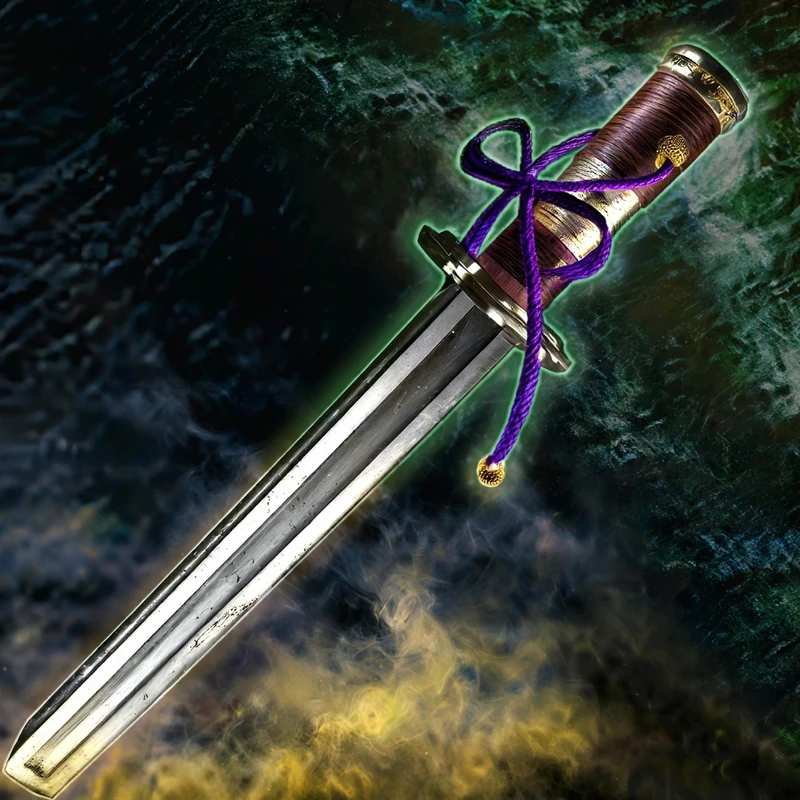
The Lethal Compact Steel: The Han Short Sword of the Three Kingdoms
The Indispensable Sidearm of Sovereign Lords, Tacticians, and Desperate Vanguards
In Luo Guanzhong’s immortal epic novel Romance of the Three Kingdoms (三国演义, Sān Guó Yǎn Yì), long polearms and massive cavalry weapons dominated open plains, yet in the cramped confines of command pavilions, river barges, and desperate ambushes, survival belonged to the Short Sword (短剑, Duǎnjiàn, Đoản Kiếm). Celebrated as the ultimate weapon of personal defense, political oath-taking, and decisive resolution, the straight double-edged short sword was carried by sovereign rulers like Sun Quan (孙权, Tôn Quyền), warlords like Liu Bei (刘备, Lưu Bị), and elite palace bodyguards.
“Drawing the gleaming sword at his waist, he severed the corner of the council table with a thunderous blow, crying out: ‘Whoever dares speak of surrender to Cao Cao shall share the fate of this table!'”
(拔佩剑斫前奏案曰:诸将吏敢复有言迎操者,与此案同!, Bá pèijiàn zhuó qián zòu’àn yuē: Zhū jiànglì gǎn fù yǒu yán yíng Cáo zhě, yǔ cǐ àn tóng!)
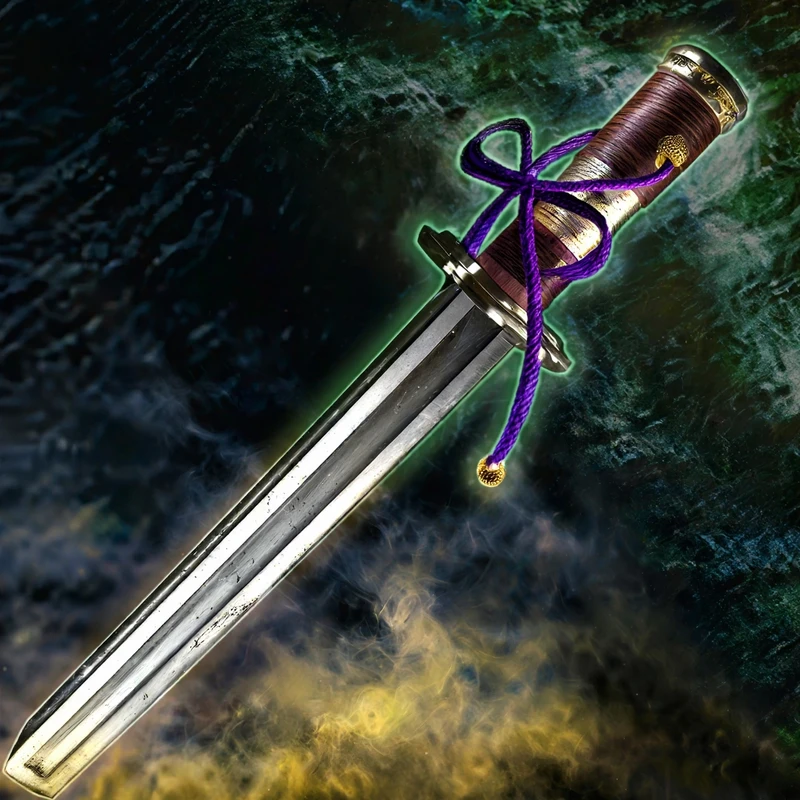
Short Sword (短剑, Đoản Kiếm) — The Precise Close-Quarters Sidearm of Sovereign Lords and Tacticians
More than a mere cutting tool, the short sword was the physical manifestation of sovereign resolve. From the fateful council at Chibi to the chaotic night escapes of warlords, this compact blade was the weapon that altered dynastic history with a single stroke.


1. Etymology and Weapon Classification
The Duǎnjiàn holds a distinguished lineage in ancient Chinese metallurgy and philosophy:
- Duǎn (短): Translates to “Short” or “Compact.” While standard Han longswords (Chángjiàn / 长剑) measured up to 100–120 centimeters, the short sword measured between 45 and 65 centimeters, allowing rapid unsheathing in confined spaces where long lances were useless.
- Jiàn (剑): The straight, double-edged sword—known in Chinese culture as the “Gentleman of All Weapons” (百兵之君). Unlike curved single-edged sabers (Dāo) primarily used for hacking by common infantry, the double-edged sword was the emblem of scholars, noble statesmen, and imperial commanders.
- Pèijiàn (佩剑): The ceremonial and tactical belt-worn sidearm. Wearing an ornate short sword at the waist was the exclusive privilege of high-ranking civil ministers and military generals in the imperial court.
2. Physical Architecture, Metallurgy and Anatomy
Forged with exquisite precision, late Han short swords represented the zenith of ancient pattern-welded iron and steel:
- Double-Edged Tapered Blade: Forged through folding high-carbon and low-carbon steel billets dozens of times (Bǎiliàn Gāng / 百炼钢), creating a blade with razor-sharp edges and exceptional shock-absorbing flexibility.
- Reinforced Diamond Spine (Jiàn Jǐ): The thick central diamond cross-section provided maximum rigidity during armor-piercing thrusts into throat gaps and mail openings.
- Compact Hilt and Guard: The hilt was wrapped in braided silk cord or ray skin, fitted with a modest bronze or jade guard (Gétáo) and a flat disc pommel that allowed quick single-handed manipulation.
- Lacquered Wooden Scabbard: Crafted from seasoned hardwood, decorated with red and black imperial lacquer and brass fittings, suspended at the waist by leather cords for instant horizontal drawing.
3. Tactical Roles and Combat Application
The Short Sword excelled in specialized battlefield scenarios where reach was secondary to agility and speed:
- Close-Quarters Naval Skirmishes: In riverine warfare across the Yangtze River, ship-to-ship boarding actions left no room for long spears. Marines and naval commanders drew short swords to clear cabin decks and slice mooring rigging.
- Tent and Palatial Ambush Defense: When caught unarmed or without heavy armor inside military headquarters, commanders relied on their belt short sword to fend off assassins and night infiltrators.
- The Last Line of Sovereign Defiance: In moments of inescapable capture or defeat, the short sword was the instrument of honorable suicide to preserve dynastic dignity, as seen throughout the turbulent transitions of the Han and Wei.
4. Legendary Moments in Romance of the Three Kingdoms
The Short Sword features at the heart of several defining dramatic climaxes throughout the novel:
Sun Quan’s Table-Cleaving Oath at Chibi (Chapter 44)
When Cao Cao advanced south with an armada of 830,000 soldiers, the civil officials of Eastern Wu, led by Zhang Zhao, urged surrender out of sheer terror. Supported by Zhou Yu and Lu Su, the young lord Sun Quan stood resolute. Drawing his ceremonial short sword, Sun Quan struck the corner of the council table with a thunderous blow, severing the solid wood in half. He declared that any official who dared advocate surrender would suffer the exact same fate, cementing the Sun-Liu alliance that won the Battle of Red Cliffs.
Dian Wei’s Desperate Last Stand at Wancheng (197 AD)
When Zhang Xiu launched his treacherous midnight ambush at Wancheng and stole Dian Wei’s heavy twin halberds, Cao Cao’s superhuman bodyguard Dian Wei drew his short waist sword to block the camp gates. Slashing down dozens of enemy soldiers until the blade bent and broke from relentless impact, Dian Wei’s desperate short-weapon defense bought Cao Cao the critical moments needed to escape on Jueying.
Summary of Profile Details
| Aspect | Historical, Literary & Tactical Details |
| Chinese Name | 短剑 (Duǎnjiàn) / 佩剑 (Pèijiàn) |
| Vietnamese Name | Đoản Kiếm / Bội Kiếm |
| English Names | Short Sword / Han Double-Edged Short Sword / Waist Sword |
| Primary Historical Association | Sun Quan (孙权), Liu Bei (刘备), Han Military Commanders |
| Weapon Category | One-Handed Close-Quarters Steel Blade / Sovereign Sidearm |
| Material Composition | Pattern-welded folded steel (Bailian Gang), bronze guard, lacquered wood scabbard |
| Total Length & Weight | Approx. 50–65 cm (1.8–2.2 Han feet); weight approx. 0.8–1.2 kg |
| Defining Historic Feat | Severed the council table at Chibi to seal the resolve against Cao Cao (208 AD) |
| Core Symbolism | Sovereign Resolve, Uncompromising Authority, Intimate Martial Mastery |
Historical Reality vs. Literary Representation
- Archaeological Finds: Numerous Han Dynasty bronze and folded steel short swords (Duanjian) have been unearthed from Western and Eastern Han tombs across Hubei and Jiangsu, confirming that high-ranking officers and nobles carried decorated waist swords as personal defense weapons.
- The “Sword of Command”: In Han military law, the commander’s sword carried the delegated imperial authority to execute insubordinate officers on the spot (Xiānzhǎn Hòuzòu / 先斩后奏), making the short sword a legal instrument as much as a weapon.
- Pop Culture & Video Games: In strategy games and historical dramas, Sun Quan and tactical leaders are universally depicted with a gleaming short sword at their hips, serving as an aesthetic hallmark of noble lineage and strategic decisiveness.
For detailed historical records, archives, and official chronicles, explore Sun Quan on Wikipedia.
COMMENTS (0)