

| NAME | |
|---|---|
| Chinese Name | 陆抗, 陸抗, Lù Kàng |
| Nickname | The Last Great Pillar of Eastern Wu, Grand Marshal of Jing Province |
| Other name | Lục Kháng |
| Courtesy name | 幼节, 幼節, Yòujié, You Jie, tự Ấu Tiết |
| INFORMATION | |
| Born | 226 |
| Birth Place | Wu County, Wu Commandery (吴郡吴县; huyện Ngô, quận Ngô) |
| Died | 274 |
| Death Reason | Died of illness in office while serving as Grand Marshal and Area Commander of Jing Province |
| FAMILY | |
| Father | |
| Mother | |
| Spouse | |
| Children | |
| Relatives | |
| CAREER | |
| Allegiance | Eastern Wu |
| Battles | Defense of Xiling, Battle of Xiling against Bu Chan, Border Confrontation against Yang Hu, Suppression of Jin Incursions |


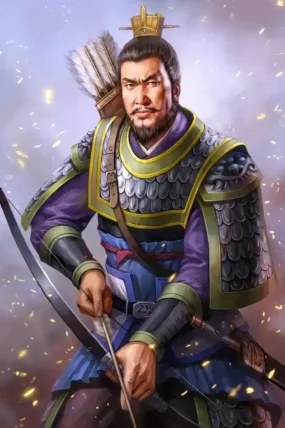


Biography & Historical Record
Lu Kang, courtesy name Youjie, was an illustrious grand marshal, peerless military strategist, and the final grand defensive pillar of the Eastern Wu state during the late Three Kingdoms period. Born in 226 AD in Wu County within Wu Commandery (modern Suzhou, Jiangsu), Lu Kang was the second son of the legendary Grand Chancellor Lu Xun and Lady Sun, the daughter of the warlord Sun Ce. Blessed with extraordinary military intellect, profound strategic foresight, and unimpeachable personal integrity, Lu Kang rose through the ranks of the Eastern Wu military hierarchy to hold the highest offices of state, including Senior General Who Guards the Army (Zhenjun Da Jiangjun), Area Commander of Jing Province (Jingzhou Dudu), and Grand Marshal (Da Sima). Documented extensively in Chen Shou’s official dynastic history Records of the Three Kingdoms (Sanguozhi – Book of Wu, Biography of Lu Kang) and Sima Guang’s Zizhi Tongjian, Lu Kang’s tactical genius and incorruptible vigilance single-handedly shielded Eastern Wu from the overwhelming might of the Western Jin dynasty for over two decades, earning him historical acclaim alongside his father as the twin guardians of the southern realm.
Lu Kang began his formal military service at the age of twenty following his father’s tragic death in 245 AD. When Emperor Sun Quan interrogated the young Lu Kang regarding political accusations fabricated against Lu Xun during the Crown Prince factional struggle, Lu Kang answered each question with such flawless poise, clear reason, and filial dignity that Sun Quan was moved to tears, expressing deep remorse for his mistreatment of Lu Xun and appointing Lu Kang as General Who Establishes Martial Prowess. Throughout the turbulent reigns of Sun Liang, Sun Xiu, and Sun Hao, Lu Kang served as the supreme frontline commander across the strategically vital middle Yangtze river theater and western frontiers. His masterclass campaign occurred in 272 AD during the Battle of Xiling, when the Wu frontier general Bu Chan defected to Western Jin, surrendering the unassailable mountain fortress of Xiling. In response, Jin deployed massive relief armies led by Yang Hu, Yang Zhao, and Wang Chen to relieve Bu Chan and shatter Wu’s western defenses.
Faced with overwhelming numerical superiority and a two-front crisis, Lu Kang demonstrated supreme operational mastery. Rather than storming Xiling directly, he ordered his troops to construct a double line of fortifications—an inner circumvallation to contain Bu Chan and an outer contravallation to block the approaching Jin rescue army. When Jin general Yang Zhao arrived with a formidable host, Lu Kang concentrated elite forces to crush Yang Zhao’s vanguard in a nocturnal counter-ambush, causing the entire Jin army to collapse in retreat. Lu Kang then breached the fortress of Xiling, captured and executed Bu Chan and his conspirators, and completely restored Wu’s western border without suffering major casualties. In the subsequent years, Lu Kang faced his greatest ideological counterpart, the virtuous Western Jin commander Yang Hu, across the Xiangyang-Jiangling border. The mutual chivalry and high respect shared between the two rivals became legendary: when Lu Kang fell ill, Yang Hu sent fine medicinal broth, which Lu Kang drank without suspicion, remarking: ‘How could a noble gentleman like Yang Hu ever use poison?’ In turn, Lu Kang strictly forbade his troops from plundering Jin civilian fields, establishing an era of dignified chivalric peace along the border. Lu Kang repeatedly petitioned Emperor Sun Hao to strengthen the river fleet and enact economic reforms, predicting that Jin would launch an irresistible invasion upon his death. He passed away in office in the autumn of 274 AD at the age of forty-nine; his demise removed the last insurmountable obstacle standing between Western Jin and the conquest of Jiangnan, leading to the fall of Eastern Wu six years later.
Role in Romance of the Three Kingdoms
In Chapters 120 and 121 of Luo Guanzhong’s classic 14th-century historical novel Romance of the Three Kingdoms, Lu Kang is portrayed as the magnificent and unshakeable champion of Eastern Wu, whose supreme strategic brilliance, honorable duel of wits with Yang Hu, and tragic inability to restrain Sun Hao’s tyranny embody the sublime finale of the Three Kingdoms era.
The novel introduces Lu Kang in Chapter 120 as the Grand Marshal stationed at Jiangling, guarding the southern empire against the expansionist ambitions of Western Jin. Luo Guanzhong vividly portrays the famous chivalric exchange between Lu Kang and the Jin commander Yang Hu. Across the border, both commanders recognize each other as peerless heroes of their respective dynasties. When Yang Hu hunts in border territory, he returns all game killed by Wu arrows to Lu Kang; in return, Lu Kang sends jars of fine wine to Yang Hu’s encampment. When Lu Kang suffers from severe chest illness, Yang Hu compounds a specialized herbal remedy and delivers it to the Wu camp. Despite warnings from his subordinates that the medicine might be poisoned, Lu Kang smiles calmly, declaring: ‘Yang Hu is a man of supreme honor; how could he stoop to assassination?’ Lu Kang drinks the entire bowl and makes a complete recovery, prompting Yang Hu to lament that as long as Lu Kang lives, Eastern Wu cannot be subdued by force of arms.
In Chapter 120, Lu Kang’s tactical brilliance is highlighted during the rebellion of Bu Chan at Xiling. Despite Yang Hu’s diversionary advance toward Jiangling, Lu Kang refuses to abandon his fortified perimeter around Xiling, utilizing dual earthworks to decisively defeat Yang Zhao and execute the traitor Bu Chan. Following the victory, Lu Kang submits impassioned, weeping memorials to Emperor Sun Hao, begging the court to cease internal purges, curtail luxurious spending on palaces, and fortify the river approaches before Jin launches its inevitable total assault. However, the despotic Sun Hao rejects the advice, dismissing Lu Kang’s warnings as cowardly and stripping him of his high command. Stricken with profound sorrow for the impending doom of his ancestral house, Lu Kang falls gravely ill and passes away, wailing with his final breath: ‘The altars of Eastern Wu will soon fall into ruin!’ Luo Guanzhong immortalizes Lu Kang with majestic verse, commemorating him as the last titan whose death extinguished the final spark of the Three Kingdoms.
Lu Kang (陸抗) — Historical & Literary Timeline
Vindicating Lu Xun & Early Military Commission
Succeeds his father Lu Xun at age twenty; refutes false court slanders before Sun Quan with eloquence and filial poise, earning imperial remorse and appointment as General Who Establishes Martial Prowess.
Smashing Jin Relief Armies & Executing Bu Chan
Erects double circumvallation fortifications around Xiling; repels Yang Hu’s thrust, shatters Yang Zhao’s relief column, recaptures the fortress, and executes the rebel Bu Chan.
Mutual Chivalry & The Border Exchange of Medicine and Wine
Maintains a famous honorable peace with Jin general Yang Hu along the Jingzhou frontier; drinks Yang Hu’s medicinal remedy without suspicion and holds the borders inviolable through defensive mastery.
Passing Away as the Last Grand Pillar of Eastern Wu
Submits urgent defensive petitions to Emperor Sun Hao warning of Jin’s impending total invasion; passes away of illness in office at age forty-nine, precipitating the fall of Eastern Wu.
For detailed historical records, archives, and official chronicles, explore Lu Kang on Wikipedia.
Key Relationships
Family
- Lu Xun (陆逊, Lục Tốn): Father. Legendary Grand Chancellor and Grand Commander of Eastern Wu who routed Liu Bei at Yiling (222 AD) and crushed Cao Xiu at Shiting (228 AD).
- Lady Sun (孙氏, Tôn Thị): Mother. Daughter of warlord Sun Ce, connecting Lu Kang directly to the founding imperial lineage of Eastern Wu.
- Sun Ce (孙策, Tôn Sách): Maternal grandfather. Founding warlord of Jiangdong and brother of Emperor Sun Quan.
- Sun Quan (孙权, Tôn Quyền): Maternal granduncle and sovereign. Founding Emperor of Eastern Wu who deeply respected Lu Kang’s talent and formally apologized for past discord with Lu Xun.
- Lady Zhang (张氏, Trương Thị): Wife. Noble consort from the prominent Zhang clan of Wu (daughter of Zhang Cheng and granddaughter of Zhang Zhao).
- Lu Yan (陆延, Lục Diên): Eldest son. Promising military officer of Eastern Wu who passed away at an early age.
- Lu Jing (陆景, Lục Cảnh): Second son. Naval general of Eastern Wu who married Princess Sun (daughter of Sun Hao) and fell in heroic defense of the state during the Jin invasion (280 AD).
- Lu Xuan (陆玄, Lục Huyền): Third son. Military commander of Eastern Wu who inherited ancestral troop commands.
- Lu Ji (陆机, Lục Cơ): Fourth son. Legendary literary genius, aesthetician, and general who authored the *Wen Fu* and served in the Western Jin dynasty.
- Lu Yun (陆云, Lục Vân): Fifth son. Celebrated poet, scholar, and imperial official celebrated alongside Lu Ji as the “Two Lus”.
- Lu Dan (陆耽, Lục Đam): Son. Military officer who served in the Western Jin dynasty and was executed alongside his brothers in 303 AD.
- Lu Kai (陆凯, Lục Khải): Cousin. Chancellor of the Left (Zuo Chengxiang) who aligned with Lu Kang in remonstrating against Sun Hao’s tyranny and safeguarding the state.
Friends
- Yang Hu (羊祜, Dương Hỗ): Supreme military commander of Western Jin in Xiangyang. Maintained a renowned border rivalry of mutual chivalry, exchanging medicine, wine, and professional respect with Lu Kang while keeping both realms at peak vigilance (270s AD).
- Sun Xiu (孙休, Tôn Hưu): Third Emperor of Eastern Wu (Emperor Jing). Placed immense trust in Lu Kang’s strategic mastery, appointing him to the vital commandery of Xiling and elevating him to senior generalship.
- Ding Feng (丁奉, Đinh Phụng): Veteran Grand General of Eastern Wu. Collaborated with Lu Kang in coordinating multi-front border defenses against Cao Wei and Western Jin incursions.
- Zhuge Jing (诸葛靓, Gia Cát Tịnh): Senior general of Eastern Wu. Acted as Lu Kang’s trusted subordinate commander during the crucial campaign to recapture Xiling (272 AD).
- Teng Yin (滕胤, Đằng Dận): Senior statesman of Eastern Wu. Collaborated with Lu Kang on administrative and military affairs during the post-Sun Quan regency transitions.
Enemies
- Bu Chan (步阐, Bộ Thiển): Treacherous Area Commander of Xiling who surrendered the vital fortress to Western Jin in 272 AD; swiftly besieged, trapped, and executed alongside his co-conspirators by Lu Kang.
- Yang Zhao (杨肇, Dương Triệu): Senior Western Jin general. Commanded a massive 50,000-man relief army sent to relieve Bu Chan at Xiling (272 AD), but was completely outmaneuvered and routed by Lu Kang.
- Sun Hao (孙皓, Tôn Hạo): Despotic final Emperor of Eastern Wu. Ignored Lu Kang’s desperate defense memorials to fortify the Yangtze riverbanks, hastening Wu’s eventual destruction after Lu Kang’s death (274 AD).
- Sima Yan (司马炎, Tư Mã Viêm): Founding Emperor of Western Jin (Emperor Wu). Repeatedly planned the southern invasion of Wu but was continuously deterred by Lu Kang’s impenetrable defense network throughout Lu Kang’s lifetime.
Others
- No information
In Novel
Chapter 114
- Lu Kang (陆抗, Lục Kháng): Lu Kang succeeds Lu Xun as one of Wu's most important commanders. When Wei attacks Wu, he commands the defense of the frontier and repeatedly defeats or contains Wei forces. He is one of the strongest military leaders remaining in Wu during the late Three Kingdoms period.
Chapter 119
- Lu Kang (陆抗, Lục Kháng): Lu Kang remains a major Wu commander as the Jin threat grows. His death removes one of Wu's most capable defenders and leaves Sun Hao's government increasingly vulnerable to the final Jin invasion.
History
- Lu Kang (陆抗, Lục Kháng) was the leading military commander of Eastern Wu during its final decades and the son of Lu Xun.
- He inherited his family's military responsibilities and became one of Wu's most important defenders against Wei and later Jin.
- During the conflict around Xiangyang and Jiangling, Lu Kang successfully defended Wu territory and maintained the strategic balance along the western frontier.
- He was also known for treating enemy commanders with respect and for understanding that excessive internal conflict could weaken Wu.
- Lu Kang died in 274, leaving Wu with no commander of comparable stature to defend its western frontier.
Classification
- Historical.
COMMENTS (0)