

| NAME | |
|---|---|
| Chinese Name | 罗宪, 羅憲, Luó Xiàn |
| Nickname | Marquis Lie of Xi'e |
| Other name | La Hiến |
| Courtesy name | 令则, 令則, Lìngzé, Ling Ze, tự Lệnh Tắc |
| INFORMATION | |
| Born | 218 |
| Birth Place | Xiangyang County, Nan Commandery (南郡襄阳县; huyện Tương Dương, quận Nam Quận) |
| Died | 270 |
| Death Reason | Died of illness and natural causes (270 AD) |
| FAMILY | |
| Father | |
| Children | |
| Relatives | |
| CAREER | |
| Allegiance | Shu Han - Cao Wei - Western Jin |
| Battles | Siege of Yong'an, Defense of Baidi Castle |


Biography & Historical Record
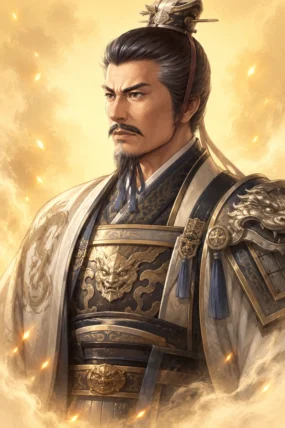
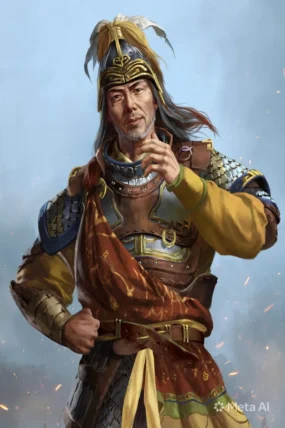
Luo Xian (218–270 AD), courtesy name Lingze, was a prominent military general and politician of Shu Han during the Three Kingdoms period, who later served the Cao Wei and Western Jin dynasties. Born in Xiangyang, Hubei, his family moved to Shu to escape the turmoil near the end of the Eastern Han dynasty. Known for his intelligence and literary talent from a young age, he could compose fine essays at just thirteen years old and studied under the renowned scholar Qiao Zhou. He was praised by his peers, who compared him to Zigong, a distinguished disciple of Confucius.
Luo Xian began his official career as an attendant to the crown prince (Taizi Sheren) under Shu Han and later served in various administrative and diplomatic roles, earning high praise during a mission to Eastern Wu. Because he steadfastly refused to flatter the corrupt eunuch Huang Hao, he was reassigned away from the capital to serve as the Administrator of Badong Commandery, stationed at Yong’an (Baidi Castle).
When Cao Wei invaded Shu Han in 263 AD and Emperor Liu Shan surrendered, Luo Xian famously gathered his troops at the capital of Badong to mourn the fallen state of Shu for three days. Betraying an initial pledge of alliance, Eastern Wu took advantage of Shu’s collapse and sent a large army led by generals such as Bu Xie and Lu Kang to seize Yong’an. Demonstrating extraordinary tactical brilliance, Luo Xian rallied his meager force of 2,000 soldiers to successfully withstand a brutal six-month siege against tens of thousands of Wu troops, while dispatching messengers to secure relief from Cao Wei. Following the lifting of the siege, he surrendered to Cao Wei and continued his distinguished service under the newly established Western Jin dynasty, eventually rising to become General Who Rises Above the River and receiving the title of Marquis of Xi’e. He passed away in 270 AD at the age of fifty-two while holding office, and was posthumously honored with the title of Marquis Lie.
Role in Romance of the Three Kingdoms
In Luo Guanzhong’s historical novel Romance of the Three Kingdoms, Luo Xian is depicted as a model of unyielding loyalty, tactical excellence, and unwavering integrity during the twilight years of Shu Han. When the imperial capital Chengdu falls to Deng Ai’s invading armies in Chapter 119, Luo Xian refuses to surrender immediately to panic, executing officers who spread chaos and leading his garrison in bitter tears of mourning for the Han house. Left isolated in Yong’an (Baidi Castle) with only two thousand men, he rejects Eastern Wu’s opportunistic betrayal when Wu forces under Lu Kang and Bu Xie attempt to seize the strategic gateway under the guise of providing assistance.
Displaying the defensive genius of a master strategist, Luo Xian repels wave after wave of assaults, holding the fortress for half a year until Wei reinforcements arrive to lift the siege. His steadfast defense protects the eastern approach into Sichuan and cements his legacy as one of the last great military heroes of the Three Kingdoms era.
Notable Quotes & Famous Sayings
- “The state has fallen, and our ruler has surrendered to Wei. Instead of offering rescue, Eastern Wu seeks to exploit our misfortune and swallow our lands. Such a breach of faith deserves fierce resistance!” — Luo Xian rallying his garrison at Yong’an against the invading forces of Eastern Wu.
Luo Xian (羅憲) — Historical & Literary Timeline
258 AD
Assignment to Badong Commandery
Due to his refusal to bow to the corrupt eunuch Huang Hao, Luo Xian is transferred away from Chengdu to serve as Administrator of Badong Commandery near the Wu border.
263 AD
Mourning the Fall of Shu Han
Upon receiving news of Liu Shan’s surrender to Cao Wei, Luo Xian gathers his garrison at Yong’an (Baidi Castle), executes panic-mongers, and leads his men in bitter mourning for three days.
264 AD
The Defense of Yong’an Against Eastern Wu
When Eastern Wu betrays the defunct state by sending armies under Bu Xie and Lu Kang to capture Yong’an, Luo Xian uses his 2,000 troops to withstand a brutal six-month siege.
264 AD
Submitting to Cao Wei
After successfully holding out until Wei forces threaten Wu’s rear, Luo Xian breaks the siege and formally submits to Cao Wei, retaining his command as Administrator of Badong.
270 AD
Death of Luo Xian
Luo Xian passes away while in active military service under the Western Jin dynasty, receiving posthumous honors as Marquis Lie.
For detailed historical records, archives, and official chronicles, explore Luo Xian on Wikipedia.
Key Relationships
Family
- Luo Meng (罗蒙, La Mông) — Father of Luo Xian who served as the Administrator of Guanghan Commandery during the Shu Han period.
- Luo Shi (罗式, La Thức) — Elder brother of Luo Xian who served as the Administrator of Jianwei Commandery.
- Luo Xi (罗袭, La Tập) — Child of Luo Xian who continued the family line.
- Luo Shang (罗尚, La Thượng) — Nephew of Luo Xian and son of Luo Shi; he later rose to prominence as the Inspector of Liang Province.
Friends
- No information
Enemies
- Huang Hao (黄皓, Hoàng Hạo) — A corrupt eunuch official in the Shu Han court whose political machinations and malice led to Luo Xian being reassigned away from the capital.
- Lu Kang (陆抗, Lục Kháng) — An Eastern Wu general who led forces to seize Yong’an following the fall of Shu Han in 264 AD; he was repelled by Luo Xian’s defensive efforts.
- Bu Xie (步协, Bộ Hiệp) — An Eastern Wu commander who led direct military assaults against Luo Xian’s garrison at Yong’an during the six-month siege in 264 AD.
Other
- Qiao Zhou (谯周, Tiều Chu) — A renowned scholar and mentor under whom Luo Xian studied classical texts during his youth.
- Liu Shan (刘禅, Lưu Thiện) — The second Emperor of Shu Han to whom Luo Xian served as an official and maintained administrative loyalty until the state’s collapse in 263 AD.
- Sima Zhao (司马昭, Tư Mã Chiêu) — The regent of Cao Wei who recognized Luo Xian’s tactical brilliance and accepted his submission after the defense of Yong’an.
- Sima Yan (司马炎, Tư Mã Viêm) — The founding Emperor of the Western Jin dynasty who continued to employ Luo Xian and honored his service.
In Novel
Luo Xian (罗宪, La Hiến) does not have a named appearance in the supplied Vietnamese edition of Romance of the Three Kingdoms. The character is historically associated with the late Shu defense of Yong'an/Baidi and with resistance to Wu after the fall of Shu, but those events are not narrated with Luo Xian as a named character in this edition of the novel. Therefore no chapter should be added to In Novel merely from the historical record or from references to other defenders.In History
Summary
- Luo Xian (罗宪, La Hiến), courtesy name Lingze, was a Shu Han commander who later served Jin.
Year: 263 AD
- Luo Xian (罗宪, La Hiến) defended Yong'an after the fall of Shu and resisted the Wu intervention that attempted to seize the region.
Historical Record
- Luo Xian (罗宪, La Hiến) was a real historical commander. His defense of Yong'an is one of the notable military episodes surrounding the fall of Shu.
COMMENTS (0)