

| NAME | |
|---|---|
| Chinese Name | 文鸯, 文鴦, Wén Yāng |
| Nickname | Hero of Shouchun |
| Other name | Văn Ương |
| Courtesy name | 次骞, 次騫, Cìqiān, Ci Qian, tự Thứ Khiêm |
| INFORMATION | |
| Born | 238 |
| Birth Place | Qiao County, Pei Commandery (沛国谯县; huyện Tiêu, quận Bái) |
| Died | 291 |
| Death Reason | Executed and his clan purged under Sima Lun (司马伦, Tư Mã Luân) (291 AD) |
| FAMILY | |
| Father | |
| Relatives | |
| CAREER | |
| Allegiance | Cao Wei - Eastern Wu - Western Jin |
| Battles | Suppression of Huainan, Defense of Shouchun, Campaign against Xianbei |
Biography & Historical Record
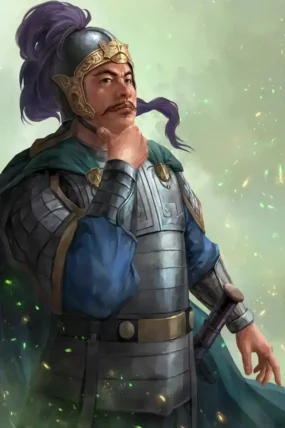
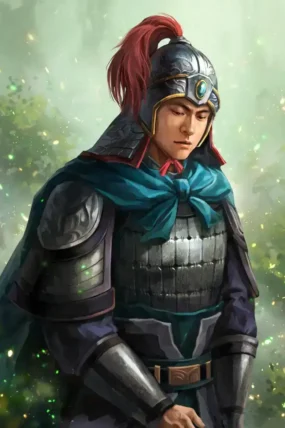
Wen Yang (238–291 AD), given name Wen Ji and later changed to Wen Yang, courtesy name Cixu, was a legendary military general of the Cao Wei and Western Jin dynasties during the Three Kingdoms period. Born in Taiyuan, Jinyang, he was the eldest son of the prominent Wei general Wen Qin. Wen Yang possessed extraordinary physical strength, unmatched martial prowess, and exceptional riding skills, often being compared by contemporaries to ancient heroes like Zhao Yun or Lü Bu for his breathtaking battlefield valor.
In 255 AD, following the execution of Xiahou Xuan and the initiation of Guanqiu Jian and Wen Qin’s rebellion in Huainan against Sima Shi’s dictatorial regency, Wen Yang participated intensely in the uprising. During the harrowing night defense and subsequent counter-offensives at Shouchun, the teenage Wen Yang made history by leading a furious solo cavalry charge into the massive sea of Sima Shi’s encamped army, slashing through thousands of enemy troops and causing absolute panic before successfully withdrawing and returning multiple times. Following the collapse of the rebellion due to superior northern forces, Wen Yang and his family fled across the Huai River to seek refuge in Eastern Wu. However, due to political frictions and court suspicions in Wu, his father Wen Qin was wrongfully executed. Seeking justice and a new path, Wen Yang and his brother Wen Hu formally surrendered to the Western Jin dynasty under Sima Zhao, who pardoned them and utilized their military genius. Wen Yang served with tremendous distinction under Western Jin, most notably leading brilliant campaigns against nomadic incursions, such as subduing the Xianbei leader Tufa Shunijian, which earned him immense fame and high regional commands. Tragically, despite his immense loyalty and service, he fell victim to vicious court power struggles and political backstabbing during the Eight Princes era, resulting in his execution along with his entire clan in 291 AD.
Role in Romance of the Three Kingdoms
In Luo Guanzhong’s historical novel Romance of the Three Kingdoms, Wen Yang is immortalized as one of the most ferocious and peerless warriors of the post-Three Kingdoms era. Introduced in Chapter 110 during the Huainan rebellion alongside his father Wen Qin, Wen Yang appears as a heroic young general clad in shining white armor, wielding a heavy steel whip and spear with terrifying efficiency. During Sima Shi’s siege of Shouchun, Wen Yang undertakes a legendary night raid: accompanied by only a handful of riders, he charges directly into the center of the Sima army camp consisting of hundreds of thousands of troops. His violent onslaught creates total chaos, destroying tents and slaughtering soldiers until earth and sky tremble. Pursued by hundreds of elite enemy generals, Wen Yang single-handedly turns around and slaughters dozens of pursuers in hand-to-hand combat, establishing a feat of martial valor that leaves even the seasoned Sima commanders paralyzed with awe.
Later in the novel, after his defection to Jin, Wen Yang’s military brilliance is repeatedly called upon to defend the frontiers and suppress foreign rebellions, symbolizing the tragic end of a brilliant martial spirit destroyed by political malice.
Notable Quotes & Famous Sayings
- “To crush an enemy army of a hundred thousand as though entering an empty courtyard—how can anyone doubt my bravery?” — Wen Yang boasting of his combat prowess before leading his legendary night charge.
- “A true hero serves where justice and strength abide; we shall take our swords to the northern court.” — Wen Yang deciding to seek service under the Jin dynasty after his family’s exile in Wu.
Wen Yang (文鴦) — Historical & Literary Timeline
Joining the Huainan Uprising
Alongside his father Wen Qin, eighteen-year-old Wen Yang takes up arms at Shouchun to resist Sima Shi’s authoritarian seizure of Cao Wei state power.
The Legendary Night Charge at Shouchun
During a night counterattack against Sima Shi’s besieging army, Wen Yang leads a small cavalry unit into the enemy camp, rampaging through tens of thousands of troops and single-handedly routing pursuers.
Flight and Exile in Eastern Wu
Overwhelmed by the collapse of the Huainan rebellion, Wen Yang flees south across the Yangtze River with his family to seek political asylum in Eastern Wu.
Surrender to Western Jin
Following his father’s wrongful execution in Wu, Wen Yang and his brother Wen Hu cross back north to surrender to Sima Zhao, entering service under the emerging Jin dynasty.
Crushing the Xianbei Rebellion
Wen Yang commands imperial Jin armies to launch a brilliant punitive expedition against the rebellious Xianbei chieftain Tufa Shunijian, securing total victory and border stability.
Tragic Execution During Court Purges
Falsely implicated in political conspiracy during the turbulent factional conflicts of the Jin imperial court, Wen Yang is executed along with his entire clan at the age of fifty-three.
For detailed historical records, archives, and official chronicles, explore Wen Yang on Wikipedia.
Key Relationships
Family
- Wen Qin (文钦, Văn Khâm) — Father and prominent Wei general; Wen Yang served under him during the Huainan rebellions before fleeing to Eastern Wu.
- Wen Hu (文虎, Văn Hổ) — Younger brother who accompanied Wen Yang during the Huainan uprising, the exile in Eastern Wu, and their eventual service to the Western Jin dynasty.
Friends
- No information
Enemies
- Sima Shi (司马师, Tư Mã Sư) — The Wei regent whose forces besieged Shouchun in 255 AD; he was the primary target of Wen Yang’s legendary solo cavalry charges.
- Tufa Shunijian (秃发树机能, Thốc Phát Thụ Cơ Năng) — Xianbei tribal leader whose rebellion was decisively crushed by Wen Yang’s military campaign in 277 AD.
- Sima Liang (司马亮, Tư Mã Lượng) — A prince of the Jin dynasty whose political maneuvering and factional conflicts during the Eight Princes era led to the false accusations and execution of Wen Yang in 291 AD.
Other
- Guanqiu Jian (毋丘俭, Vô Khâu Kiệm) — A Wei general who initiated the 255 AD Huainan rebellion against the Sima clan, serving as a strategic ally to Wen Yang’s father.
- Sima Zhao (司马昭, Tư Mã Chiêu) — The ruler of Western Jin who pardoned Wen Yang and his brother following their surrender, subsequently utilizing Wen Yang’s military expertise to secure the frontiers.
In Novel
Chapter 110
- Wen Yang (文鸯, Văn Ương): Wen Yang, the young son of Wen Qin, proposes the plan to attack Sima Shi's camp at Lejia before the Wei fortifications are complete. He divides the night assault into two forces of 2,500 men each: Wen Qin attacks from the south while Wen Yang attacks from the north. Wen Yang's troops enter the Wei camp first and cause severe disorder. He repeatedly charges through the camp with his spear and whip, killing soldiers who resist and forcing his way toward the Wei command tent. He expects his father to arrive as the second attacking force, but Wen Qin becomes separated. At dawn, Wei troops surround Wen Yang's force. His men scatter, leaving him alone on horseback. More than a hundred Wei officers pursue him, but Wen Yang repeatedly turns back, strikes down several pursuers with his whip, and breaks away. His feat is explicitly compared by the narrator to Zhao Yun's stand at Changban.
Chapter 111
- Wen Yang (文鸯, Văn Ương): Wen Yang joins his father Wen Qin and brother Wen Hu in Zhuge Dan's forces at Shouchun after Wen Qin has defected to Wu. He remains inside the besieged city as one of the Wen family's principal warriors.
Chapter 112
- Wen Yang (文鸯, Văn Ương): After Zhuge Dan kills Wen Qin, Wen Yang and Wen Hu draw their short swords and kill dozens of men around them. They leap from the wall, cross the moat, and reach the Wei camp to surrender. Sima Zhao wants Wen Yang executed because of the humiliation he suffered during Wen Yang's earlier night attack, but Zhong Hui argues that the two brothers should be pardoned because they have surrendered after their father's death. Sima Zhao accepts the advice, appoints the brothers as officers, grants them the rank of Guannei Hou, and sends them to the city wall to urge the remaining defenders to surrender. The defenders are shaken when they see that Wen Yang and Wen Hu have been pardoned and honored by Wei.
In History
Summary
- Wen Yang (文鸯, Văn Ương), courtesy name Ciming, was a famous Wei and later Jin general, son of Wen Qin (文钦, Văn Khâm).
Year: 255 AD
- Wen Yang (文鸯, Văn Ương) fought in his father's rebellion and became famous for his daring escape from the pursuing Wei army.
Year: 264 AD
- Wen Yang (文鸯, Văn Ương) entered Sima Zhao's service and was later restored to military office.
Historical Record
- Wen Yang (文鸯, Văn Ương) was a real historical commander. Later literature greatly magnifies his individual battlefield exploits.
COMMENTS (0)