

| NAME | |
|---|---|
| Chinese Name | 钟会, 鍾會, Zhōng Huì |
| Nickname | General Who Guards the West |
| Other name | Chung Hội |
| Courtesy name | 士季, 士季, Shìjì, Shi Ji, tự Sĩ Quý |
| INFORMATION | |
| Born | 225 |
| Birth Place | Changshe County, Yingchuan Commandery (颍川郡长社县; huyện Trường Xã, quận Dĩnh Xuyên) |
| Died | 264 |
| Death Reason | Killed by mutinous soldiers during his failed rebellion in Chengdu (成都; Thành Đô) (264 AD) |
| FAMILY | |
| Father | |
| Children | |
| Relatives | |
| CAREER | |
| Allegiance | Cao Wei - Western Jin |
| Battles | Suppression of Huainan, Conquest of Shu, Rebellion in Chengdu |


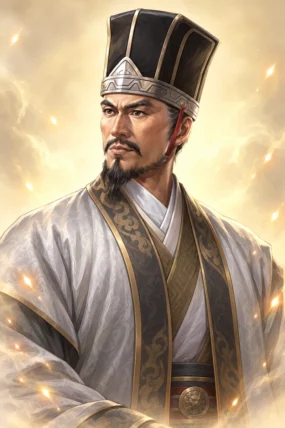


Biography & Historical Record
Zhong Hui (225–264 AD), courtesy name Shiji, was a renowned military general, strategist, and calligrapher of the Cao Wei state during the Three Kingdoms period. Born in Yuzhou, Yingchuan, he was the brilliant younger son of the famed Wei statesman Zhong Yao and the younger brother of Zhong Yu. Blessed with exceptional intellect and precocious literary talent from a young age, Zhong Hui gained rapid prominence in political and military circles. He served closely under the Sima regency, participating in critical campaigns such as the suppression of Guanqiu Jian and Wen Qin’s rebellion in Huainan, where his strategic planning earned him widespread acclaim.
In 263 AD, Zhong Hui was appointed as General Who Guards the West and commanded a massive prong of the imperial army in the grand invasion and conquest of Shu-Han, working alongside Deng Ai and Tian Xu. After successfully forcing the surrender of the last Shu ruler Liu Shan, Zhong Hui’s immense ambition, fueled by pride and rivalry with Deng Ai, led him to conspire with the captured Shu general Jiang Wei. He plotted to rebel against the Western Jin/Cao Wei authority, intending to carve out an independent kingdom in the southwest. However, his betrayal was exposed, and a mutiny broke out among his own disgruntled officers and troops in Chengdu in 264 AD, leading to his tragic execution at the age of thirty-nine.
Role in Romance of the Three Kingdoms
In Luo Guanzhong’s historical novel Romance of the Three Kingdoms, Zhong Hui is portrayed as a genius yet arrogant, overly ambitious, and cunning strategist who plays a central role in the final campaigns of the era. Introduced during the mid-to-late chapters, he acts as a trusted advisor to the Sima family, outwitting rivals and demonstrating peerless administrative and tactical acumen. In Chapter 116 and Chapter 119, Zhong Hui spearheads the northern expedition to conquer Shu-Han, engaging in fierce strategic duels with Shu’s final defender Jiang Wei at Jiange.
After the fall of Shu, Zhong Hui falls under the psychological influence of Jiang Wei, who secretly plots to use Zhong Hui’s immense pride to overthrow the northern rulers and restore the Han dynasty. Zhong Hui attempts a doomed rebellion in Chengdu, arresting Deng Ai and turning against his own army, but his plot unravels due to betrayal within his ranks, culminating in his dramatic death during the chaos in Chapter 120.
Notable Quotes & Famous Sayings
- “With the mandate of heaven and a hundred thousand elite troops, conquering Shu is as easy as turning over one’s hand.” — Zhong Hui expressing supreme confidence before launching the invasion of Shu-Han.
- “Jiang Wei is a man of extraordinary talent; only someone with my vision can truly understand and employ him.” — Zhong Hui explaining his fateful decision to trust the captured Shu general.
Zhong Hui (鍾會) — Historical & Literary Timeline
255 AD
Campaign in Huainan
Zhong Hui serves as a strategist alongside Sima Shi during the suppression of Guanqiu Jian and Wen Qin’s rebellion, offering critical advice that secures the victory.
263 AD
Launching the Invasion of Shu
Appointed as General Who Guards the West, Zhong Hui leads a massive multi-pronged army into Hanzhong, clashing fiercely with Shu commander Jiang Wei at Jiange.
263 AD
Accepting the Surrender of Shu
Following Deng Ai’s surprise advance through Yinping that leads to Liu Shan’s capitulation, Zhong Hui enters Chengdu and takes charge of the surrendered Shu territories.
264 AD
Conspiring with Jiang Wei
Influenced by Jiang Wei, Zhong Hui falsifies an imperial edict, arrests his rival Deng Ai, and openly declares a rebellion against the Jin/Wei regency in Chengdu.
264 AD
Death in Chengdu Mutiny
Dissatisfied Wei soldiers stage a sudden mutiny in Chengdu, surrounding Zhong Hui and killing him alongside Jiang Wei, ending his short-lived rebellion at the age of thirty-nine.
For detailed historical records, archives, and official chronicles, explore Zhong Hui on Wikipedia.
Key Relationships
Family
- Zhong Yao (钟繇, Chung Dao) — Father and a highly influential statesman and calligrapher of the Cao Wei state.
- Zhong Yu (钟毓, Chung Dục) — Elder brother and a fellow official serving the Cao Wei court.
Friends
- Sima Zhao (司马昭, Tư Mã Chiêu) — The powerful Cao Wei regent who recognized Zhong Hui’s strategic brilliance and entrusted him with the command of the invasion of Shu-Han.
- Jiang Wei (姜维, Khương Duy) — Originally a fierce rival during the campaign at Jiange in 263 AD, he later became a close confidant who manipulated Zhong Hui’s ambition to incite a rebellion against the Jin/Wei regency in 264 AD.
Enemies
- Deng Ai (邓艾, Đặng Ngải) — A fellow Wei general whose successful surprise advance to Chengdu in 263 AD triggered intense professional jealousy and rivalry, leading Zhong Hui to falsely accuse him of treason and have him arrested.
- Wei Mutineers (魏军叛乱者, Ngụy quân bạn loạn giả) — Subordinate officers and troops who, refusing to follow Zhong Hui’s treasonous rebellion in 264 AD, staged a mutiny in Chengdu that resulted in his death.
Other
- Liu Shan (刘禅, Lưu Thiện) — The final emperor of Shu-Han, whose surrender to the Wei forces in 263 AD marked the end of his reign and brought him under the control of Zhong Hui.
In Novel
Chapter 110
- Zhong Hui (钟会, Chung Hội): Zhong Hui appears as a court official serving Sima Shi during the Huainan rebellion. When Sima Shi is deciding how to respond to Guanqiu Jian and Wen Qin, Zhong Hui warns that the rebels are strong and that entrusting the campaign to another commander could be dangerous. His advice helps convince Sima Shi to personally lead the punitive expedition.
Chapter 112
- Zhong Hui (钟会, Chung Hội): When Zhuge Dan and the Wu army attack Wei, Zhong Hui proposes the central deception that breaks the relief attempt. He argues that Zhuge Dan's forces should not be crushed immediately from every side; instead, Wei should leave the southern gate of Shouchun open, lure the defenders into believing they can escape, and then strike the Wu forces from behind. Sima Zhao praises him as a strategist comparable to Zhang Liang. The plan contributes to the defeat and dispersal of Zhuge Dan's allies.
Chapter 115
- Zhong Hui (钟会, Chung Hội): When Sima Zhao discusses a future campaign against Shu, Zhong Hui correctly realizes that Shu, rather than Wu, is the intended target. He presents a detailed map of Shu showing routes, forts, supply positions, and lines of advance and retreat. He proposes dividing the invasion between himself and Deng Ai because Shu can be attacked by several routes. Sima Zhao appoints Zhong Hui as commander of one of the principal armies. Zhong Hui is given 100,000 troops for the Shu campaign and deliberately creates the appearance that he is preparing to attack Wu by collecting ships, thereby preventing Wu from intervening on Shu's behalf.
Chapter 116
- Zhong Hui (钟会, Chung Hội): Zhong Hui leads the main Wei invasion force into Shu. He commands 100,000 troops and has Wei officers including Wei Guan and Hu Lie under his command. At Yangping Pass he threatens the Shu defenders with destruction if they refuse to surrender. When Phu Thiem attacks with 3,000 troops, Zhong Hui withdraws, then turns back with the Wei army and defeats the Shu force after Tưởng Thư surrenders and opens the pass. Zhong Hui also personally takes the field at the dangerous approaches, and after his horse becomes trapped at a collapsing bridge he escapes on foot while his officer Xun Kai saves him by shooting Lư Tốn. Zhong Hui then captures the position and executes Xu Yi for violating military orders. At Mount Dingjun he is frightened by supernatural signs associated with Zhuge Liang's tomb, performs a sacrifice, and afterward orders his army to protect civilians and avoid killing indiscriminately.
Chapter 117
- Zhong Hui (钟会, Chung Hội): Zhong Hui continues the invasion from Hanzhong toward Jiange. When Zhuge Xu suffers defeat against Jiang Wei, Zhong Hui rebukes him and orders him arrested and sent to Luoyang. He then meets Deng Ai and asks for advice about taking Jiange. Deng Ai proposes the difficult Yinping route toward Chengdu, but Zhong Hui dismisses the plan and instead prepares a direct assault on Jiange with siege equipment. His rivalry with Deng Ai becomes increasingly visible as both commanders compete for credit for conquering Shu.
Chapter 118
- Zhong Hui (钟会, Chung Hội): After Jiang Wei announces a false surrender, Zhong Hui receives him with honor and treats him as a distinguished guest. Jiang Wei praises Zhong Hui's military talent and claims that he surrendered because of Zhong Hui rather than Deng Ai. Zhong Hui is flattered, breaks an arrow as a token of their oath, and becomes sworn brothers with Jiang Wei. He allows Jiang Wei to retain command of his troops, giving Jiang Wei the opportunity to influence him from inside the Wei camp.
Chapter 119
- Zhong Hui (钟会, Chung Hội): Zhong Hui follows Jiang Wei's advice to have Wei Guan arrest Deng Ai. He humiliates Deng Ai after the arrest, takes control of Deng Ai's troops, and openly admits to Jiang Wei that he wants to accomplish something greater than retirement. Jiang Wei encourages his ambition, and Zhong Hui decides to rebel against Wei. He fabricates a supposed edict from the late Empress Dowager Guo, forces the Wei generals to sign a declaration, and imprisons them in Chengdu. When he considers killing all of the prisoners, Hu Lie secretly learns of the plan through Qi Jian and sends a warning through Hu Lie's son Hu Yuan. The imprisoned generals and outside troops then organize a revolt. Zhong Hui attempts to have Jiang Wei kill the prisoners, but the revolt erupts before the plan can be carried out. Wei soldiers storm the palace, Zhong Hui fights back with his sword, and he is killed by a storm of arrows. His head is cut off by the mutineers. The novel then explicitly laments his death as the tragic result of ambition and greed for fame.
In History
Summary
- Zhong Hui (钟会, Chung Hội), courtesy name Shiji, was a Wei general, statesman, and strategist.
Year: 263 AD
- Zhong Hui (钟会, Chung Hội) commanded one of the principal Wei armies in the conquest of Shu Han.
Year: 264 AD
- Zhong Hui (钟会, Chung Hội) rebelled against Sima Zhao in Chengdu with the support of Jiang Wei (姜维, Khương Duy), but the rebellion collapsed and he was killed.
Historical Record
- Zhong Hui (钟会, Chung Hội) was a real historical general. The Sanguozhi records his intelligence, political ambition, conquest of Shu, and failed rebellion. citeturn0search26turn0search1
COMMENTS (0)