

| NAME | |
|---|---|
| Chinese Name | 马邈, 馬邈, Mǎ Miǎo |
| Nickname | Grand Administrator of Jiangyou |
| Other name | Mã Mạo |
| INFORMATION | |
| Birth Place | Nanzheng County, Hanzhong Commandery (汉中郡南郑县; huyện Nam Trịnh, quận Hán Trung) |
| Death Reason | Unknown; surrendered to Deng Ai in 263 and submitted to Cao Wei |
| FAMILY | |
| Spouse | |
| CAREER | |
| Allegiance | Shu Han, Cao Wei |
| Battles | Conquest of Shu by Wei, Fall of Jiangyou |
Biography & Historical Record
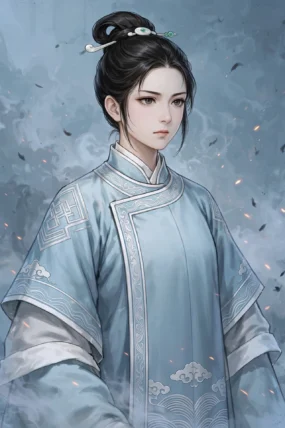
Ma Miao was a regional military commander and civil official of the Shu Han state during the late Three Kingdoms period who served as the Grand Administrator of Jiangyou (Jiangyou Taishou). Stationed at the vital gateway fortress of Jiangyou situated northwest of Chengdu, Ma Miao was tasked with garrisoning the northern interior approach against northern invaders. Documented in Chen Shou’s official dynastic history Records of the Three Kingdoms (Sanguozhi – Book of Wei, Biography of Deng Ai; Book of Shu, Biography of the Houzhu) and Sima Guang’s Zizhi Tongjian, Ma Miao is historically remembered for his immediate capitulation to the Wei expeditionary force under Grand General Deng Ai in the winter of 263, an act that fatally compromised Shu Han’s internal perimeter and accelerated the collapse of the dynasty.
In the autumn and winter of 263, the Cao Wei state launched a massive coordinated invasion of Shu Han. While the main Shu defense force under Grand General Jiang Wei successfully held the fortified mountain pass of Jiange against Zhong Hui’s primary army of over one hundred thousand troops, Deng Ai executed an unprecedented tactical maneuver. Leading an elite strike detachment across more than seven hundred li of uninhabited, treacherous mountain terrain through Yinping, Deng Ai scaled sheer cliffs, traversed freezing ravines, and emerged unexpectedly behind the Shu defense network at Jiangyou. Exhausted, freezing, and depleted of rations, Deng Ai’s force arrived before the walls of Jiangyou in a desperate condition where a resolute defense by the garrison could have trapped and destroyed the invaders.
However, when news reached Jiangyou that Wei soldiers had miraculously appeared from the untamed mountains, Ma Miao was seized with paralyzing panic. Believing that the imperial court at Chengdu was helpless and that the frontier defenses had completely failed, Ma Miao chose not to mount an armed resistance. Instead, he led his subordinate officers out of the citadel, presented the city seals and keys, and surrendered unconditionally to Deng Ai. Deng Ai accepted his submission, incorporated the garrison into his vanguard, and utilized Jiangyou’s vast grain depots and armories to feed, re-arm, and revitalize his freezing troops. With Jiangyou secured without bloodshed, Deng Ai marched directly onto Mianzhu, where he crushed the last imperial defense force led by Zhuge Zhan and Zhuge Shang, opening an unobstructed road to Chengdu and compelling the Second Emperor Liu Shan to surrender.
Role in Romance of the Three Kingdoms
In Chapter 117 of Luo Guanzhong’s classic 14th-century historical novel Romance of the Three Kingdoms, Ma Miao is dramatically contrasted with his fiercely patriotic and heroic wife, Lady Li, whose suicide in protest against his cowardice immortalizes the shame of his betrayal.
In Chapter 117, the novel portrays Ma Miao relaxing comfortably in his inner chambers at Jiangyou while the empire teeters on the brink of ruin. Hearing rumors of Wei’s invasion, Ma Miao expresses complete indifference to state affairs, remarking to his wife Lady Li: ‘The Emperor in Chengdu indulges in pleasure and trusts only the eunuch Huang Hao; disaster is imminent. If the Wei army arrives, surrender is the only sensible course; why should I throw away my life for such a ruined court?’
Upon hearing his defeatist words, Lady Li spits in fury and passionately rebukes him: ‘You are a man and hold high office, receiving the generous stipends of the state! When the nation faces mortal danger, you do not think of loyalty and sacrifice, but instead plot treason and shameful submission! How can you look upon the world without dying of shame?’ Ma Miao is left speechless and humiliated by her righteous indignation.
Shortly thereafter, scouts rush into the mansion reporting in terror that Deng Ai and his army have bypassed Jiange, tumbled down the cliffs wrapped in felt blankets, and descended upon the city gates. Overcome with dread, Ma Miao immediately rushes out to Deng Ai’s camp, prostrating himself in the dust, begging for his life, and offering the formal surrender of Jiangyou along with detailed military maps of the riverlands route to Chengdu. Deng Ai accepts his surrender, appoints him as a guide for the Wei army, and moves his troops into the city. When Deng Ai enters the administrative mansion, he inquires about the lady hanging from the central beam. Learning that Lady Li had hanged herself rather than live as the wife of a traitorous coward, Deng Ai is deeply moved by her virtue. The Wei commander sighs with profound reverence, orders Lady Li buried with high noble honors, and openly mocks Ma Miao’s spineless cowardice, declaring: ‘The wife was a hero of supreme honor, while the husband is nothing more than a shameless dog!’ Luo Guanzhong commemorates Lady Li with famous verse, cementing Ma Miao’s name as an enduring symbol of treason and cowardice in the tragic finale of the Three Kingdoms.
Ma Miao (馬邈) — Historical & Literary Timeline
Governing Jiangyou & Defeatist Sentiments
Serves as Grand Administrator of Jiangyou; expresses defeatist opinions regarding Shu Han’s corruption under Huang Hao, drawing the fierce moral condemnation of his wife Lady Li.
Unconditional Surrender to Deng Ai
Terrified by Deng Ai’s sudden descent from the Yinping mountain passes; opens the gates of Jiangyou without offering resistance, surrendering the city provisions and acting as a guide for the Wei army.
Shamed by Lady Li’s Suicide & Deng Ai’s Contempt
His wife Lady Li hangs herself in the inner courtyard to preserve her honor; Deng Ai buries Lady Li with lavish honors while publicly scorning Ma Miao’s cowardice.
For detailed historical records, archives, and official chronicles, explore Ma Miao on Wikipedia.
Key Relationships
Family
- Lady Li (李氏, Lý Thị): Wife. Virtuous and fiercely patriotic heroine who severely berated Ma Miao for his cowardice and defeatism, hanging herself in protest when Ma Miao opened the gates of Jiangyou to surrender to Wei (263 AD).
Friends
- Liu Shan (刘禅, Lưu Thiện): Second and final Emperor of Shu Han (Houzhu). Sovereign whom Ma Miao abandoned by surrendering the critical mountain fortress of Jiangyou without firing a single arrow in 263 AD.
- Huang Hao (黄皓, Hoàng Hạo): Corrupt chief palace eunuch of Shu Han. Mismanaged imperial governance and suppressed urgent military intelligence, which Ma Miao cited to his wife as justification for defecting to Cao Wei.
Enemies
- Deng Ai (邓艾, Đặng Ngải): Grand General of Cao Wei. Successfully led an elite strike force through 700 *li* of treacherous mountain terrain via Yinping; accepted Ma Miao’s bloodless surrender at Jiangyou (263 AD) and utilized his maps to march directly on Chengdu.
- Jiang Wei (姜维, Khương Duy): Grand General of Shu Han. Successfully held the impassable mountain stronghold of Jiange against Zhong Hui’s 100,000-man army, but saw his entire northern defense line neutralized when Ma Miao surrendered Jiangyou in his rear (263 AD).
- Zhuge Zhan (诸葛瞻, Gia Cát Chiêm): General of Shu Han (son of Zhuge Liang). Mobilized the imperial guard to confront Deng Ai’s advancing army at Mianzhu Pass following Ma Miao’s defection, perishing heroically in battle (263 AD).
- Zhuge Shang (诸葛尚, Gia Cát Thượng): Young commander of Shu Han (grandson of Zhuge Liang). Bitterly denounced Ma Miao’s betrayal as the root cause of the dynasty’s doom before dying alongside his father at Mianzhu (263 AD).
Others
- No information
In Novel
Chapter 65
- Ma Miao (马邈, Mã Mạo): Ma Miao serves as an official in Shu during the final invasion by Deng Ai. When Wei's forces advance rapidly toward Chengdu, Ma Miao abandons the Shu cause and submits. His surrender contributes to the rapid collapse of Shu's remaining local resistance.
History
- Ma Miao (马邈, Mã Mạo) was a Shu-associated official in the final period of the kingdom.
- He was stationed in the western region during the Wei invasion of 263.
- When Wei forces advanced into Shu territory, Ma Miao surrendered rather than continue resistance.
- His surrender contributed to the rapid collapse of local Shu defenses during the final campaign.
Classification
- Historical / Briefly Attested.
COMMENTS (0)