

| NAME | |
|---|---|
| Chinese Name | 金尚, 金尚, Jīn Shàng |
| Other name | Kim Thượng |
| Courtesy name | 元休, 元休, Yuánxiū, Yuan Xiu, tự Nguyên Hưu |
| INFORMATION | |
| Birth Place | Jingzhao Commandery, Sili (司隶京兆尹; Kinh Triệu Doãn, Tư Lệ) |
| Died | 197 |
| Death Reason | Executed by Yuan Shu after refusing to serve as Grand Commandant for his usurping regime and attempting to flee to Emperor Xian |
| FAMILY | |
| Children | |
| CAREER | |
| Allegiance | Eastern Han Dynasty |
| Battles | Cao Cao's Seizure of Yan Province, Yuan Shu's Seven-Pronged Campaign Against Xu Province |
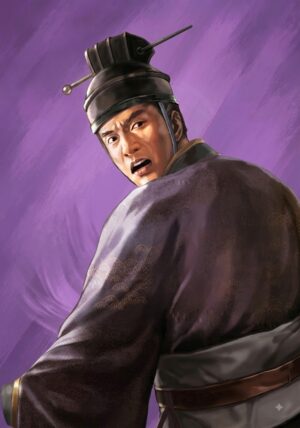
Biography & Historical Record
Jin Shang, courtesy name Yuanxiu, was a distinguished Eastern Han dynasty scholar-official, imperial magistrate, and Inspector of Yan Province (Yanzhou Cishi) who served as a resolute loyalist to the Han imperial house during the turbulent early Three Kingdoms era. Hailing from Duling County in Jingzhao Commandery (modern-day Xi’an, Shaanxi Province), Jin Shang was celebrated across central China for his incorruptible integrity, scholarly refinement, and moral fortitude, earning an illustrious reputation alongside Wei Duan and Feng Shu as one of the Three Xiuhs of Jingzhao (Jingzhao San Xiu). Documented in Chen Shou’s Records of the Three Kingdoms (Sanguozhi – Book of Wei, Biography of Wu Shuang citing Yingxiong Ji), Fan Ye’s Book of Later Han (Hou Han Shu – Biography of Yuan Shu), and Luo Guanzhong’s classic historical novel Romance of the Three Kingdoms, Jin Shang is historically remembered as a steadfast Han loyalist who chose public execution rather than legitimizing Yuan Shu’s unlawful imperial usurpation.
In May 192 AD, following the death of Yan Province Inspector Liu Dai in battle against the Yellow Turban insurgents, the Eastern Han imperial court in Chang’an (then controlled by Li Cui and Guo Si) officially issued an imperial decree appointing Jin Shang as the legitimate Inspector of Yan Province. However, upon Jin Shang’s arrival in Yan Province to assume his governorship, Cao Cao’s strategists Xun Yu and Cheng Yu had already rallied local gentry leaders to elevate Cao Cao as the de facto ruler of Yan Province. Refusing to yield his newly acquired territorial base to an imperial appointee, Cao Cao dispatched his vanguard troops to intercept Jin Shang’s procession, decisively defeating Jin Shang’s escort near Shouzhang. Stripped of his gubernatorial office and unable to reach his provincial seat, a destitute Jin Shang fled south across the Huai River to seek temporary asylum under the powerful warlord Yuan Shu in Huainan.
Although Yuan Shu welcomed Jin Shang to Shouchun to enhance his own prestige, Jin Shang maintained a strict moral distance from Yuan Shu’s growing autocratic ambitions. In early 197 AD, Yuan Shu committed high treason by declaring himself Emperor of the short-lived Zhong Dynasty and launching a massive, seven-pronged military invasion against Lu Bu in Xu Province. Desperate to legitimize his illegal regime and secure reliable logistical management for his seven invasion columns, Yuan Shu issued an imperial decree unilaterally appointing Jin Shang as Grand Commandant (Taiwei) in charge of army provisions. Filled with deep contempt for Yuan Shu’s treasonous usurpation, Jin Shang flatly refused the appointment, adamantly rejecting the official seals of office and refusing to draft victory memorials for the rogue court.
Secretly conspiring with fellow Han loyalists in Shouchun, Jin Shang plotted an undercover escape from Huainan, intending to travel north to Xu City to report Yuan Shu’s treason directly to Emperor Xian. However, his escape plot was betrayed to Yuan Shu by an informant. Enraged by Jin Shang’s unyielding defiance and public condemnation, Yuan Shu ordered Jin Shang immediately dragged to the marketplace and beheaded in mid-197 AD as a stern warning to his court. Jin Shang’s unblemished martyrdom earned him national reverence as a paragon of Han loyalty. Decades later, his son Jin Yi inherited his father’s fierce devotion to the Han dynasty, leading the heroic 218 AD loyalist uprising at Xu City against Cao Cao alongside Ji Ben and Wei Huang.
Role in Romance of the Three Kingdoms
In Luo Guanzhong’s novel Romance of the Three Kingdoms, Jin Shang appears in Chapter 17 as a noble, courageous Han scholar-official whose tragic martyrdom highlights the moral decay and tyranny of Yuan Shu’s usurping regime. Introduced in Chapter 17 as a former Han Inspector of Yan Province residing in Huainan, Jin Shang is thrust into the political spotlight when Yuan Shu proclaims himself Emperor of the Zhong Dynasty and launches his disastrous seven-pronged invasion of Xu Province. Seeking to force respected Han ministers into submission, Yuan Shu appoints Jin Shang as Grand Commandant overseeing grain transport for his seven armies. Jin Shang openly spurns the appointment, cursing Yuan Shu as a treasonous rebel and secretly attempting to flee Huainan to join Emperor Xian at Xu City. When his escape is discovered, Yuan Shu orders Jin Shang executed in front of his assembled generals. Jin Shang’s heroic death in Chapter 17 serves as a poignant literary testament to the unyielding virtue of Han loyalists who chose death over dishonor during the collapse of the Han empire.
Jin Shang (金尚) — Historical & Literary Timeline
Appointed Inspector of Yan Province & Defeated by Cao Cao
Appointed Inspector of Yan Province by the Han court following Liu Dai’s death; attacked and routed by Cao Cao’s forces at Shouzhang, forcing him to flee south to Yuan Shu in Huainan.
Refusing Appointment as Grand Commandant
Strongly rejects Yuan Shu’s appointment as Grand Commandant in charge of grain logistics for the seven-pronged campaign against Lu Bu, openly denouncing Yuan Shu’s imperial usurpation.
Attempted Escape to Xu City & Execution by Yuan Shu
Plots a secret escape to Xu City to report Yuan Shu’s treason to Emperor Xian; betrayed and executed at Shouchun by an enraged Yuan Shu, dying a martyr for the Han Dynasty.
For detailed historical records, archives, and official chronicles, explore Jin Shang on Wikipedia.
Key Relationships
Family
- Jin Yi (金祎, Kim Y): Son of Jin Shang. Inherited his father’s fierce devotion to the Han dynasty and later led a loyalist insurrection against Cao Cao at Xu City in 218 AD alongside Ji Ben and Wei Huang.
Friends
- Wei Duan (韦端, Vi Đoan): Renowned scholar from Jingzhao Commandery who, alongside Jin Shang and Feng Shu, was honored as one of the intellectual “Three Xiuhs of Jingzhao.”
- Feng Shu (冯恕, Phùng Thứ): Esteemed scholar-official from Jingzhao who shared moral and intellectual renown with Jin Shang as one of the “Three Xiuhs of Jingzhao.”
Enemies
- Yuan Shu (袁术, Viên Thuật): Warlord of Huainan who declared himself Emperor of the Zhong Dynasty in 197 AD; after Jin Shang adamantly refused his appointment as Grand Commandant and attempted an undercover escape to the imperial court, Yuan Shu had him publicly executed at Shouchun.
- Cao Cao (曹操, Tào Tháo): Warlord who seized de facto control of Yan Province in 192 AD, intercepting and defeating Jin Shang’s gubernatorial escort near Shouzhang to block his imperial appointment as Inspector.
Other
- Emperor Xian of Han (汉献帝, Hán Hiến Đế): Sovereign of the Eastern Han Dynasty to whom Jin Shang remained unswervingly loyal, ultimately sacrificing his life in 197 AD in an attempt to reach him at Xu City to report Yuan Shu’s treason.
In Novel
Chapter 17
- Jin Shang (金尚, Jīn Shàng): After Yuan Shu declares himself emperor and prepares a massive seven-route invasion of Xu Province, he appoints Jin Shang, the Governor of Yan Province, as Grand Commandant and orders him to supervise the transport of provisions for the seven armies. Jin Shang refuses to cooperate with Yuan Shu's usurpation and military scheme. Yuan Shu responds by ordering Jin Shang killed. His death illustrates Yuan Shu's increasingly ruthless treatment of officials who refuse to support his imperial ambitions.
In History
Summary
- Jin Shang (金尚, Kim Thượng) was a Han official appointed to administer the region of Yizhou during the period of growing warlord competition.
Appointment to Yizhou
- The central Han government attempted to send Jin Shang to take up authority in Yizhou, but the province was already dominated by the local warlord Liu Zhang's family.
- Jin Shang therefore became caught in the struggle between nominal Han authority and established regional power.
Conflict with Liu Zhang
- He was unable to establish effective control over Yizhou and was ultimately killed during the political struggle surrounding the province.
Historical Record
- Classification: Historical.
COMMENTS (0)