

| NAME | |
|---|---|
| Chinese Name | 公孙康, 公孫康, Gōngsūn Kāng |
| Other name | Công Tôn Khang |
| INFORMATION | |
| Birth Place | Xiangping County, Liaodong Commandery (辽东郡襄平县; huyện Tương Bình, quận Liêu Đông) |
| Died | c. 221 |
| Death Reason | Died of illness in office as ruler of Liaodong |
| FAMILY | |
| Father | |
| Children | |
| Relatives | |
| CAREER | |
| Allegiance | Eastern Han Dynasty, Independent Warlord of Liaodong |
| Battles | Expedition against Goguryeo, Campaign in the Korean Peninsula |


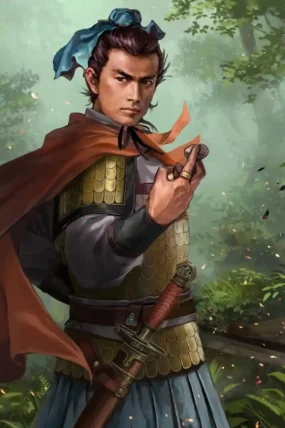

Biography & Historical Record
Gongsun Kang was a powerful, sagacious, and fiercely independent warlord who ruled the separatist regime of Liaodong in the far northeastern frontier during the late Eastern Han dynasty and the early Three Kingdoms period. He was the eldest son of Gongsun Du, the formidable founder of the independent Liaodong state. Documented in Chen Shou’s official dynastic history Records of the Three Kingdoms (Sanguozhi – Book of Wei, Biography of Gongsun Du and Gongsun Kang) and Sima Guang’s Zizhi Tongjian, Gongsun Kang inherited his father’s iron-fisted rule upon the elder’s death in 204 AD, successfully maintaining complete political independence and military hegemony over the northeastern territories while the Central Plains tore themselves apart in civil war.
Gongsun Kang’s most celebrated historical achievement occurred in 207 AD, following Cao Cao’s decisive northern campaigns against the Wuhuan tribes. The defeated and desperate sons of Yuan Shao—Yuan Shang and Yuan Xi—fled north to Liaodong, hoping to find refuge and rebuild their military forces. Following the strategic counsel of his younger brother Gongsun Gong, who argued that harboring the fugitive brothers would invite a devastating punitive invasion by Cao Cao while executing them would secure peace and imperial favor, Gongsun Kang executed a brilliant political maneuver. He invited Yuan Shang and Yuan Xi into a banquet under false pretenses, ambushed and slaughtered them both, and preserved their severed heads in salt to be dispatched to Cao Cao’s headquarters in Xuchang. Impressed by this calculated act of submission, Cao Cao warmly rewarded Gongsun Kang, officially confirming his administration and enfeoffing him as the Marquis of Xiangping and General of the Left.
With his northern borders secured through diplomatic pragmatism and his rear protected against Cao Cao, Gongsun Kang turned his immense military focus toward territorial expansion across the Korean peninsula and surrounding tribal lands. In 209 AD, he personally led a massive military expedition against the rising kingdom of Goguryeo, successfully breaching their territory, setting fire to their capital at Hwando, and forcing the Goguryeo monarch into submission and tributary status. Furthermore, Gongsun Kang capitalized on the regional vacuum to carve out the Daifang Commandery in the southern Korean peninsula, subduing the local Han and Yi tribes and establishing tight administrative control over lucrative trade routes. He ruled his prosperous northern kingdom with absolute authority until his death from illness around 221 AD. Because his sons Gongsun Huang and Gongsun Yuan were too young to assume power at the time of his passing, the gentry of Liaodong elevated his younger brother Gongsun Gong to succeed him, leaving behind a heavily fortified and wealthy frontier state.
Role in Romance of the Three Kingdoms
In Chapter 33 of Luo Guanzhong’s classic 14th-century historical novel Romance of the Three Kingdoms, Gongsun Kang appears as a calculating and pragmatic frontier lord who holds the balance of power in the northeast. The novel vividly dramatizes the tense political drama surrounding the arrival of Yuan Shao’s fugitive sons, Yuan Shang and Yuan Xi, after their defeat at Mount Bailu. Following Guo Jia’s brilliant strategic advice of ‘watching the tigers fight from the mountain,’ Cao Cao deliberately halts his pursuit, allowing the Yuan brothers to enter Liaodong while trusting that Gongsun Kang’s natural suspicions will lead to their elimination.
The novel captures the execution scene with striking dramatic flair: when Yuan Shang and Yuan Xi arrive in Xiangping seeking military assistance, Gongsun Kang—acting on the internal advice of his brother Gongsun Gong—pretends to welcome them warmly. During the formal banquet, as the unsuspecting brothers let down their guards, Gongsun Kang suddenly signals his hidden executioners. The brothers are bound, dragged outside, and beheaded, with their bloody heads promptly dispatched to Cao Cao as a token of absolute allegiance. Luo Guanzhong uses this episode to illustrate the ruthless political survival instincts of regional warlords during the chaotic twilight of the Han dynasty, cementing Gongsun Kang’s literary legacy as a cold, pragmatic sovereign whose calculated betrayal secured his family’s safety amidst the rise of Cao Wei.
Gongsun Kang (公孫康) — Historical & Literary Timeline
Succeeding to Rule Liaodong
Inherits the administration of the independent Liaodong warlord state following the death of his father, Gongsun Du; assumes absolute control over the northeastern frontier.
Slaughtering Yuan Shang & Yuan Xi
Accepts Gongsun Gong’s counsel; lures the fleeing Yuan brothers into a banquet, slaughters them both, and sends their salted heads to Cao Cao to secure political peace.
Expedition Against Goguryeo & Establishing Daifang
Leads a massive military campaign eastward; defeats the Goguryeo kingdom, burns their capital at Hwando, and establishes the Daifang Commandery on the Korean peninsula.
Passing Away in Liaodong
Passes away peacefully of illness in office; leaves behind a prosperous, secure, and expanded frontier state, paving the way for his brother Gongsun Gong to succeed him.
For detailed historical records, archives, and official chronicles, explore Gongsun Kang on Wikipedia.
Key Relationships
Family
- Gongsun Du (公孙度, Công Tôn Độ): Father; founder of the independent Liaodong warlord regime whose administrative authority and military power Gongsun Kang inherited in 204.
- Gongsun Gong (公孙恭, Công Tôn Cung): Younger brother; served as a key strategic adviser who urged the elimination of the Yuan brothers in 207 and succeeded Gongsun Kang as ruler of Liaodong around 221.
- Gongsun Huang (公孙晃, Công Tôn Hoảng): Eldest son; was deemed too young to assume rule upon Gongsun Kang’s death and was subsequently bypassed in the succession.
- Gongsun Yuan (公孙渊, Công Tôn Uyên): Younger son; passed over during succession around 221 due to youth, but later seized power from his uncle Gongsun Gong.
Friends
- No information
Enemies
- Yuan Shang (袁尚, Viên Thượng): Rival and fugitive; fled to Liaodong seeking refuge in 207, where Gongsun Kang ambushed, beheaded, and salted his head to send to Cao Cao.
- Yuan Xi (袁熙, Viên Hi): Rival and fugitive; sought sanctuary in Liaodong with his brother in 207 and was executed alongside Yuan Shang at Gongsun Kang’s banquet trap.
- King Sansang of Goguryeo (高延优, Cao Diên Ưu): Regional adversary; ruler of Goguryeo whose territory was invaded and whose capital at Hwando was sacked by Gongsun Kang’s forces in 209.
Other
- Cao Cao (曹操, Tào Tháo): Imperial chancellor and warlord; received the severed heads of the Yuan brothers from Gongsun Kang in 207 and rewarded him with titles including Marquis of Xiangping and General of the Left.
- Guo Jia (郭嘉, Quách Gia): Cao Cao’s strategist; correctly foresaw that Gongsun Kang would eliminate the Yuan brothers on his own initiative if Wei forces halted their advance.
In Novel
Chapter 33
- Gongsun Kang (公孙康, Công Tôn Khang): Gongsun Kang is the governor of Liaodong and son of Gongsun Du. Yuan Xi and Yuan Shang flee to him after their defeat by Cao Cao. Gongsun Kang initially considers keeping them as allies in case Cao Cao attacks, but his brother Gongsun Gong advises him to eliminate them if Cao Cao remains outside Liaodong. When he learns that Cao Cao has not advanced, Gongsun Kang invites the Yuan brothers in, has hidden soldiers surround them and orders their heads cut off. He sends their heads to Cao Cao, who rewards him with the title of Xiangping Marquis and General of the Left. The entire episode is in Chapter 33. citeturn4search0turn4search1
History
Summary
- Gongsun Kang (公孙康, Công Tôn Khang) was the son of Gongsun Du and ruler of Liaodong during the late Eastern Han and early Three Kingdoms period.
Rule of Liaodong
- He succeeded his father around 204 and continued the Gongsun family's autonomous rule in Liaodong.
- He maintained a relationship with Cao Cao while preserving substantial local independence.
Relations with Goguryeo
- Gongsun Kang intervened in the affairs of the Korean peninsula and attacked Goguryeo, contributing to the relocation of its capital.
Later Career
- He was granted important titles by the Cao Wei regime after Cao Cao's rise.
- After his death, his younger brother Gongsun Gong initially ruled because his sons were still young.
- Classification: Historical.
COMMENTS (0)