


Biography & Historical Record
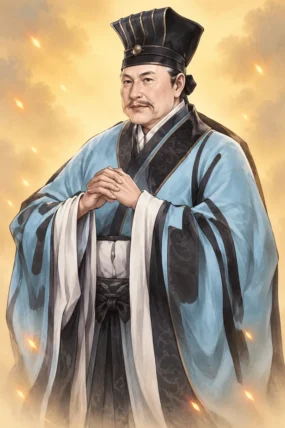
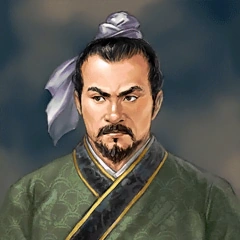
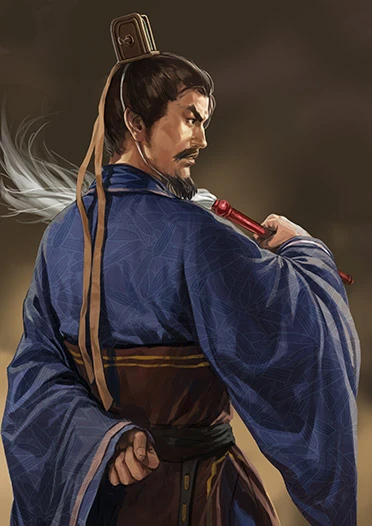
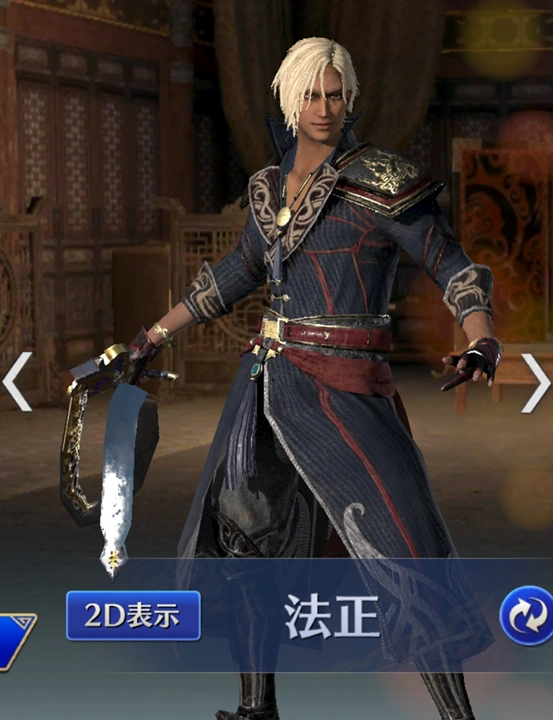
Fa Zheng (174–220 AD), courtesy name Xiaozhi, was a brilliant chief strategist, general, and key minister under the warlord Liu Bei during the late Eastern Han dynasty. Originally hailing from Mei County in Fufeng Commandery (present-day Mei County, Shaanxi), Fa Zheng descended from a distinguished family of scholars; his grandfather Fa Zhen was a highly respected hermit scholar of the era.
Due to severe famine striking Fufeng during the late Han era, Fa Zheng migrated south alongside his close friend Meng Da to Yi Province (Yizhou) to seek refuge under the local governor Liu Zhang. However, Liu Zhang failed to recognize Fa Zheng’s exceptional strategic talents, assigning him only minor administrative posts such as Prefect of Xindu and later Military Captain. Disillusioned and alienated by Liu Zhang’s indecisiveness and incompetence, Fa Zheng secretly conspired with Zhang Song to locate a more capable ruler worthy of Yizhou.
When Zhang Song recommended sending Fa Zheng as an envoy to Liu Bei in 211 AD, Fa Zheng accepted enthusiastically. Deeply impressed by Liu Bei’s vision, charisma, and benevolent demeanor, Fa Zheng pledged his secret allegiance and drafted a master plan for Liu Bei to seize Yizhou. During Liu Bei’s subsequent invasion of Yi Province (212–214 AD), Fa Zheng served as chief tactical advisor. His psychological tactics and strategic insight—including issuing a famous public letter to Liu Zhang urging surrender—were pivotal in forcing Liu Zhang’s capitulation at Chengdu in 214 AD.
Following the conquest of Yi Province, Liu Bei appointed Fa Zheng as Administrator of Shu Commandery and Master of Writing. During his administrative tenure, Fa Zheng exercised ruthless power, taking personal vengeance against local elites and former colleagues who had previously slighted or insulted him. Although many officials appealed to Zhuge Liang to discipline Fa Zheng for abusing law and authority, Zhuge Liang famously refused to intervene, recognizing that Fa Zheng’s monumental contributions in establishing Liu Bei’s domain far outweighed his personal flaws.
The Hanzhong Campaign & Military Feats
In 217 AD, Fa Zheng foresaw the strategic necessity of conquering Hanzhong from Cao Cao’s forces, advising Liu Bei that securing Hanzhong was essential for defending Yizhou and launching future northern expeditions. During the grueling campaign, Fa Zheng acted as Liu Bei’s primary battlefield advisor.
At the Battle of Mount Dingjun in 219 AD, Fa Zheng engineered the brilliant tactical scheme that brought total victory to Shu. He advised Liu Bei and Huang Zhong to seize Mount Tiandang and Mount Dingjun, using decoy maneuvers to divide and distract enemy forces. Observing the tactical error of Wei general Xiahou Yuan, who had personally descended to repair defensive palisades, Fa Zheng waited for the exact psychological moment before ordering Huang Zhong to charge downhill with full force. Huang Zhong killed Xiahou Yuan in the assault, routing the main Wei army and securing Hanzhong for Liu Bei.
When Cao Cao personally led massive reinforcements to recapture Hanzhong, Fa Zheng’s masterly defensive positioning and ambush tactics completely thwarted the Wei offensive, forcing Cao Cao to retreat empty-handed. Impressed and exasperated by the brilliant strategies opposing him, Cao Cao remarked upon hearing of Fa Zheng’s presence: “I thought I had assembled all the finest talents in the world, but how could I have missed Fa Zheng?”
Upon declaring himself King of Hanzhong in 219 AD, Liu Bei elevated Fa Zheng to Chief of Staff and General Who Protects the Army. Tragically, Fa Zheng fell gravely ill and passed away in 220 AD at the age of 47 (45 in traditional age counting). Liu Bei wept bitterly for days over Fa Zheng’s death and bestowed upon him the posthumous title of Marquis Yi (Marquis of Wing), making Fa Zheng the only official to receive a posthumous peerage directly from Liu Bei during his lifetime.
In 222 AD, after Liu Bei suffered a catastrophic disaster at the Battle of Yiling against Eastern Wu, Zhuge Liang lamented profoundly: “If Fa Xiaozhi were still alive, he could have restrained our Lord from undertaking the eastern campaign; even had our Lord gone, he would surely have prevented such total disaster.”
Role in Romance of the Three Kingdoms
In Luo Guanzhong’s classic epic novel Romance of the Three Kingdoms, Fa Zheng’s depictions closely mirror his historical career, portraying him as an exceptionally clever, sharp, and vengeance-driven strategist. His narrative highlights include collusion with Zhang Song and Meng Da in Chapter 60 to deliver Yizhou to Liu Bei, his psychological warfare against Liu Zhang, and his battlefield synergy with Huang Zhong at Mount Dingjun in Chapters 70–71.
Notable Quotes & Famous Sayings
- “Your Highness possesses supreme talent yet Liu Zhang lacks willpower. Rely on Zhang Song as an insider and Yizhou’s vast riches will easily be yours.” — Fa Zheng persuading Liu Bei to take Yi Province.
- “Now is the precise moment to strike!” — Fa Zheng giving the signal to Huang Zhong at Mount Dingjun.
- “I thought I had gathered all the deceitful minds in the land, but how could I not have Fa Zheng?” — Cao Cao’s famous admission of Fa Zheng’s brilliant mind.
- “If Fa Xiaozhi were still alive, he would have prevented our Lord from marching east, or at least averted total ruin.” — Zhuge Liang’s famous lament after the disaster at Yiling.
Fa Zheng (法正) — Historical & Literary Timeline
Migration to Yi Province
Fleeing famine in Fufeng, Fa Zheng and Meng Da travel to Yi Province to serve Liu Zhang, but Fa Zheng remains unappreciated in minor roles.
Alliance with Liu Bei
Zhang Song recommends Fa Zheng as ambassador to Liu Bei; Fa Zheng meets Liu Bei and secretly plots the takeover of Yizhou.
Conquest of Yi Province
Advises Liu Bei throughout the Yizhou campaign; writes a denouncing letter to Liu Zhang that breaks his morale, leading to Liu Zhang’s surrender at Chengdu.
Hanzhong Campaign
Urges Liu Bei to launch the Hanzhong Campaign against Cao Cao to secure Yizhou’s northern barrier.
Battle of Mount Dingjun
Directs the tactical assault at Mount Dingjun; signals Huang Zhong to strike and slay Xiahou Yuan; repels Cao Cao’s counteroffensive.
Death of Fa Zheng
Passes away from illness at age 47; Liu Bei weeps for days and grants him the posthumous title Marquis Yi.
For detailed historical records, archives, and official chronicles, explore Fa Zheng on Wikipedia.
Key Relationships
Family
- Fa Zhen (法真, Pháp Chân) — Grandfather and a highly respected hermit scholar of Fufeng who established the family’s scholarly reputation.
- Fa Yan (法衍, Pháp Diễn) — Father of Fa Zheng.
- Fa Miao (法邈, Pháp Mạc) — Son of Fa Zheng who inherited his father’s title as Guannei Marquis and served as an official in the Shu-Han government.
Friends
- Zhang Song (张松, Trương Tùng) — Close friend and co-conspirator who worked with Fa Zheng to invite Liu Bei into Yizhou to replace the incompetent Liu Zhang.
- Meng Da (孟达, Mạnh Đạt) — Longtime friend who migrated with Fa Zheng from Fufeng to Yizhou; they shared the initial frustration of being overlooked by Liu Zhang.
- Huang Zhong (黄忠, Hoàng Trung) — Veteran general who acted as the primary tactical executor for Fa Zheng’s plans, most notably during the successful ambush at the Battle of Mount Dingjun in 219 AD.
- Pang Tong (庞统, Bàng Thống) — Fellow strategist who collaborated with Fa Zheng during the initial stages of the invasion of Yizhou.
Enemies
- Liu Zhang (刘璋, Lưu Chương) — Former lord whom Fa Zheng served in Yizhou; Fa Zheng grew disillusioned with his incompetence and eventually betrayed him to facilitate Liu Bei’s conquest in 214 AD.
- Xiahou Yuan (夏侯渊, Hạ Hầu Uyên) — Wei general defeated and killed at the Battle of Mount Dingjun in 219 AD after falling for a tactical trap orchestrated by Fa Zheng.
- Cao Cao (曹操, Tào Tháo) — Major rival warlord who personally led forces in the Hanzhong Campaign; he was outmaneuvered by Fa Zheng’s defensive strategies and famously lamented not having Fa Zheng in his own service.
Other
- Liu Bei (刘备, Lưu Bị) — Sovereign and King of Hanzhong; he held Fa Zheng in high personal regard, appointed him as Chief of Staff, and wept bitterly upon his death in 220 AD.
- Zhuge Liang (诸葛亮, Gia Cát Lượng) — Prime Minister of Shu who maintained a professional respect for Fa Zheng, famously noting after the Battle of Yiling in 222 AD that Fa Zheng’s presence would have prevented the disaster.
In Novel
Chapter 60
- Fa Zheng (法正, Pháp Chính): Advisor to Liu Zhang (刘璋, Lưu Chương), courtesy name Xiaozhi (孝直), who became disillusioned with Liu Zhang's weak governance and secretly conspired with Zhang Song (张松, Trương Tùng) to deliver Yizhou to Liu Bei (刘备, Lưu Bị).
Chapter 62
- Fa Zheng (法正, Pháp Chính): Formally served as Liu Bei's (刘备, Lưu Bị) chief military counselor during the conquest of the Riverlands, devising the operational strategies to capture Fu Pass, Luocheng, and Mianzhu.
Chapter 65
- Fa Zheng (法正, Pháp Chính): Appointed Administrator of Shu Commandery and General of the Household upon the pacification of Chengdu, co-authoring the Riverlands legal code (Shu Ke).
Chapter 71
- Fa Zheng (法正, Pháp Chính): Masterminded the Mount Dingjun campaign against Cao Wei, directing Huang Zhong (黄忠, Hoàng Trung) from the mountain peak with signal flags to execute the surprise strike that decapitated Xiahou Yuan (夏侯渊, Hạ Hầu Uyên).
Chapter 72
- Fa Zheng (法正, Pháp Chính): Devised strategic ambushes in Hanzhong that forced Cao Cao (曹操, Tào Tháo) to withdraw his grand army north across the Xie Gorge.
Chapter 81
- Fa Zheng (法正, Pháp Chính): Remembered by Chancellor Zhuge Liang (诸葛亮, Gia Cát Lượng) during the disastrous Battle of Xiaoting as the only advisor capable of dissuading Liu Bei (刘备, Lưu Bị) from launching the eastern invasion of Wu.
In History
Summary
- Fa Zheng (法正, Pháp Chính), courtesy name Xiaozhi, was an adviser to Liu Bei (刘备, Lưu Bị) and one of the key strategists behind Liu Bei's conquest of Yi Province and victory at Hanzhong.
Year: 211 AD
- Fa Zheng (法正, Pháp Chính) defected from Liu Zhang (刘璋, Lưu Chương) and joined Liu Bei, providing strategic advice concerning the conquest of Yi Province.
Year: 219 AD
- Fa Zheng (法正, Pháp Chính) advised Liu Bei during the Hanzhong campaign and helped formulate the strategy that defeated Xiahou Yuan (夏侯渊, Hạ Hầu Uyên) at Mount Dingjun.
Year: 220 AD
- Fa Zheng (法正, Pháp Chính) died. Liu Bei reportedly mourned him deeply and granted him the posthumous title Marquis Yi.
Historical Record
- Fa Zheng (法正, Pháp Chính) was a real historical adviser. His historical biography is preserved in the Sanguozhi, while the novel expands his strategic role.
Gallery

COMMENTS (0)