
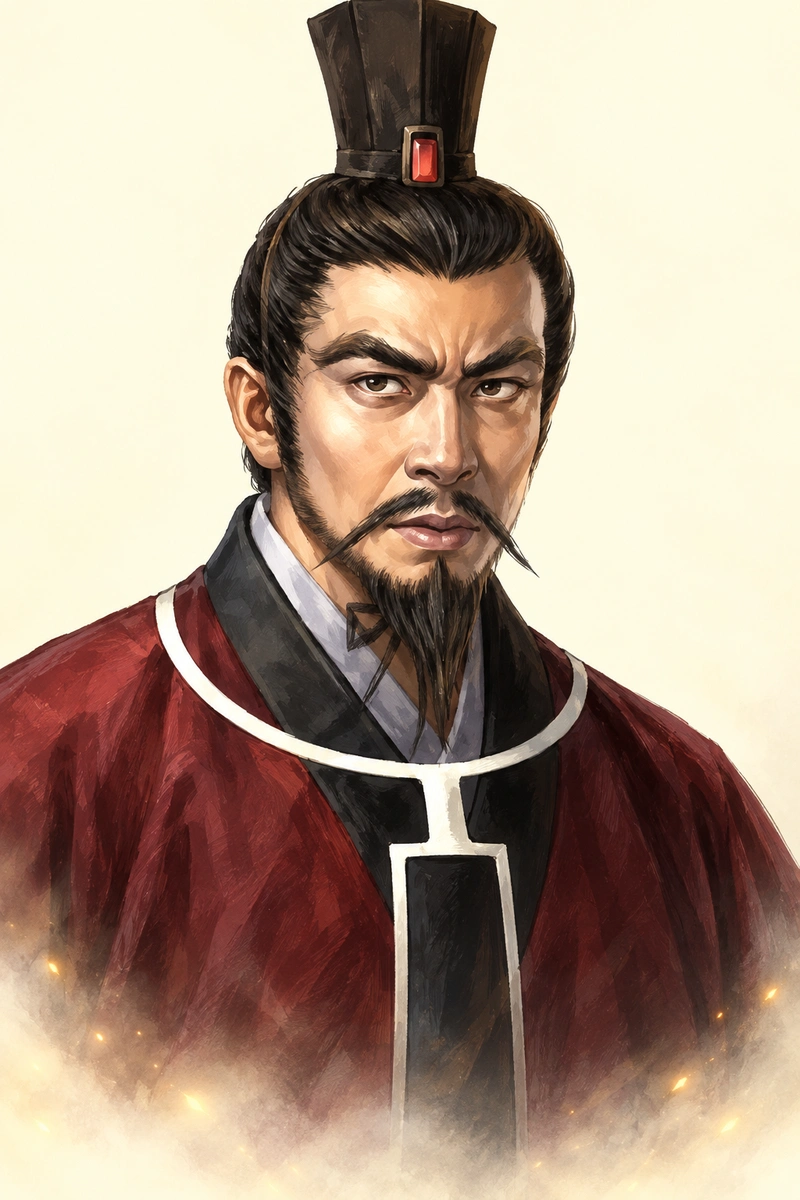
| NAME | |
|---|---|
| Chinese Name | 许混, 許混, Xǔ Hùn |
| Nickname | Secretary of the Ministry of Personnel (Shangshu Xuanbu Lang) |
| Other name | Hứa Hỗn |
| Courtesy name | 公爽, 公爽, Gōngshuǎng, Gong Shuang, tự Công Sảng |
| INFORMATION | |
| Born | Circa 195 AD |
| Birth Place | Pingyu County, Runan Commandery (汝南郡平舆县; huyện Bình Dư, quận Nhữ Nam) |
| Died | Mid-3rd Century |
| Death Reason | Natural causes |
| FAMILY | |
| Father | |
| Relatives | |
| CAREER | |
| Allegiance | Cao Wei Dynasty |
| Battles | Evaluation, vetting, and appointment of imperial ministers under Cao Pi and Cao Rui |


Biography & Historical Record
Xu Hun (许混, Hứa Hỗn) was a prominent statesman, aristocratic evaluator, and high-ranking minister of the Cao Wei Dynasty. He was the son of the legendary character critic Xu Shao (许劭, Hứa Thiệu — founder of the famed Monthly Assessment / 月旦评, who famously judged Cao Cao as “an able minister in times of peace, a treacherous villain in times of chaos”).
Inheriting his father’s keen psychological insight and impeccable family pedigree from Runan, Xu Hun rose to high office at the imperial court of Luoyang during the reigns of Cao Pi (曹丕) and Cao Rui (Cao Rui / 曹叡). He held the vital position of Secretary in the Ministry of Personnel (Shangshu Xuanbu Lang / 尚书选部郎), responsible for vetting candidates for bureaucratic elevation under the newly instituted Nine-Rank System (九品中正制). Later serving as Prefectural Administrator, Xu Hun was celebrated for his fair appointments, promoting virtuous scholars of true ability while curbing the influence of sycophantic cliques.
Role in Romance & Historical Chronicles
“The mirror of Runan did not crack with the passing of Xu Shao; his son Xu Hun held the scales of the Ministry of Personnel, weighting the talent of the realm with unyielding fairness.”
— Weilüe (Brief History of Wei)
In historical accounts of the Cao Wei bureaucracy, Xu Hun represents the continuation of Confucian moral criticism into institutional civil service examinations.
Xu Hun (许混) — Historical Timeline
Heritage of the Monthly Assessment
Grows up in Runan amidst the prestigious scholarly traditions of character evaluation established by Xu Shao and Xu Jing.
Ministry of Personnel Service
Appointed Secretary in the Ministry of Personnel under Emperor Wen of Wei, vetting candidates under the Nine-Rank system.
Frontier Commandery Administrator
Governs key commanderies under Emperor Ming of Wei, lauded for upright governance and patronage of local schools.
Key Relationships
Family
- Father: Xu Shao (许劭, Hứa Thiệu) — Legendary character critic of the Monthly Assessment.
- Uncle: Xu Jing (许靖, Hứa Tĩnh) — Senior minister of Shu Han, cousin of Xu Shao.
Friends / Allies
- Imperial Patron: Cao Pi (Emperor Wen of Wei) (曹丕) — Valued the Xu family’s judgment of talent.
- Colleague: Chen Qun (陈群) — Creator of the Nine-Rank System who worked alongside Xu Hun in personnel administration.
Enemies / Rivals
- Sycophantic Factions: Factions seeking unearned imperial favors through court bribery.
Other
- Runan Gentry: The intellectual gentry clans of Runan Commandery.
In Chronicles
Weilüe (Brief History of Wei)
- Xu Hun (许混, Hứa Hỗn): Documented by Yu Huan in the Weilüe as a worthy successor to Xu Shao, administering imperial personnel selections with rigor and integrity.
In History
Summary
- Xu Hun (许混) was a senior personnel official of Cao Wei, directly continuing the celebrated critical traditions of the Runan Xu clan.
Historical Record
- Records of the Three Kingdoms (三国志), Volume 68 (Pei Songzhi annotations citing Weilüe): Dedicated notes on Xu Hun's official appointments and character.
- Book of the Later Han (后汉书), Volume 68: Concluding notes on Xu Shao's descendants.
COMMENTS (0)