

| NAME | |
|---|---|
| Chinese Name | 刘晔, 劉曄, Liú Yè |
| Other name | Lưu Diệp |
| Courtesy name | 子扬, 子揚, Zǐyáng, Zi Yang, tự Tử Dương |
| INFORMATION | |
| Birth Place | Chengde County, Huainan Commandery (淮南郡成德县; huyện Thành Đức, quận Hoài Nam) |
| Died | 234 |
| Death Reason | Died of natural causes and old age (234 AD) |
| FAMILY | |
| Father | |
| Children | |
| Relatives | |
| CAREER | |
| Allegiance | Cao Wei |
| Battles | Battle of Guandu; Hanzhong Campaign |

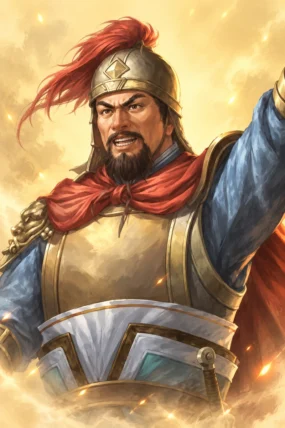


Biography & Historical Record
Liu Ye (died 234 AD), courtesy name Ziyang, was a brilliant strategist, inventor, and senior statesman serving the state of Cao Wei during the Three Kingdoms period. Hailing from Huainan, Huainan Commandery, he was a direct imperial descendant of Emperor Guangwu of Han through Liu Yan, Prince of Fuling. From his youth, Liu Ye displayed extraordinary resolve and fierce decisiveness; at the age of thirteen, fulfilling his dying mother’s final wish, he executed his father’s corrupt and tyrannical officer. In his adulthood, when local warlord Zheng Bao plotted to force regional elites into rebellion, Liu Ye hosted a banquet, personally assassinated Zheng Bao, and pacified his thousands of followers, demonstrating remarkable courage and political intelligence.
Initially serving local administrative posts, Liu Ye eventually joined Cao Cao, who quickly recognized his genius for strategy and engineering. Liu Ye served as a chief strategist across decades of campaigns. During the Siege of Yecheng and later the Battle of Guandu, Liu Ye invented stone-hurling catapults mounted on armored carts, known as ‘Thunder Carts’ (霹靂車), which successfully destroyed Yuan Shao’s wooden siege towers. He also served as a chief strategist during Cao Cao’s conquest of Zhang Lu in Hanzhong, advising an immediate invasion into Shu right after taking Hanzhong before Liu Bei could consolidate his position. Under Cao Pi and Cao Rui, Liu Ye held prestigious offices including Minister of Imperial Household and Director of the Secretariat. Renowned for his keen insight into human psychology and geopolitics, he accurately predicted Guan Yu’s defeat at Jing Province, Liu Bei’s punitive invasion of Wu leading to Yiling, and the impossibility of Meng Da’s rebellion succeeding. In his twilight years, amidst court politics and failing health, he retired and passed away in Luoyang in 234 AD, posthumously honored as Marquis Jing.
Role in Romance of the Three Kingdoms
In Luo Guanzhong’s historical novel Romance of the Three Kingdoms, Liu Ye is introduced in Chapter 10 upon the recommendation of Guo Jia as a scholar of imperial blood and brilliant intellect. He becomes a vital member of Cao Cao’s inner advisory corps. His crowning moment of military innovation occurs in Chapter 30 during the Battle of Guandu, where he designs and deploys the famous ‘Thunder Carts’ to smash Yuan Shao’s archery towers. Throughout the narrative, Liu Ye acts as a top-level geopolitical advisor, correctly foreseeing major strategic shifts including Liu Bei’s invasion of Wu in Chapter 81 and advising Cao Pi to attack Eastern Wu while Lu Xun and Liu Bei were locked in battle at Yiling. He remains a pillar of Cao Wei’s court through the reigns of Cao Cao, Cao Pi, and Cao Rui.
Liu Ye (劉曄) — Historical & Literary Timeline
Entry into Cao Cao’s Service
Recommended to Cao Cao by Guo Jia; joins the central advisory staff as a strategist of royal descent.
Invention of the Thunder Carts at Guandu
Designs armored stone-hurling catapults (‘Thunder Carts’) to counter Yuan Shao’s high archery towers, crushing Yuan Shao’s siege weapons and turning the tide at Guandu.
Hanzhong Campaign against Zhang Lu
Advises Cao Cao during the pacification of Hanzhong and urges an immediate follow-up attack into Shu against Liu Bei.
Predicting the Battle of Yiling
Accurately predicts that Liu Bei will attack Eastern Wu to avenge Guan Yu despite Wu’s diplomatic gestures; advises Cao Pi to exploit the conflict by invading Wu.
Death
Passes away peacefully in Luoyang after decades of distinguished service to three generations of Cao Wei rulers.
For detailed historical records, archives, and official chronicles, explore Liu Ye on Wikipedia.
Key Relationships
Family
- Liu Yan (刘延, Lưu Diên) — Ancestor; a Prince of Fuling and son of Emperor Guangwu of Han, establishing Liu Ye’s status as a direct imperial descendant.
- Liu Huan (刘涣, Lưu Hoán) — Father; a senior official of the Eastern Han Dynasty.
- Liu Zhi (刘治, Lưu Trị) — Son; a scholar and official who served the state of Cao Wei.
- Liu Shu (刘舒, Lưu Thư) — Son; an official who served in Cao Wei and continued his service into the Jin Dynasty.
Friends
- Guo Jia (郭嘉, Quách Gia) — Fellow strategist who recognized Liu Ye’s brilliance and recommended him to Cao Cao, facilitating his entry into the central advisory staff.
- Man Chong (满宠, Mãn Sủng) — Fellow strategist and administrator who served alongside Liu Ye in the Cao Wei government.
- Lu Qian (吕虔, Lã Kiền) — Associate and fellow official who operated within the same administrative and military circles during the early years of the Cao Wei regime.
Enemies
- Zheng Bao (郑宝, Trịnh Bảo) — A regional warlord in Huainan whom Liu Ye personally assassinated during his youth to prevent a forced rebellion.
- Yuan Shao (袁绍, Viên Thiệu) — Northern warlord whose siege towers were destroyed by Liu Ye’s “Thunder Carts” during the Battle of Guandu in 200 AD.
- Zhang Lu (张鲁, Trương Lỗ) — Ruler of Hanzhong whom Liu Ye helped Cao Cao subdue during the 215 AD campaign.
- Liu Bei (刘备, Lưu Bị) — Rival strategist and founder of Shu Han; Liu Ye accurately predicted his punitive invasion of Wu in 221 AD and advised Cao Pi on how to exploit the conflict.
Other
- Cao Cao (曹操, Tào Tháo) — Sovereign and founder of Wei who relied on Liu Ye as a chief strategist and engineer for decades, notably during the Siege of Yecheng and the Battle of Guandu.
- Cao Pi (曹丕, Tào Phi) — Second ruler of Wei who valued Liu Ye’s geopolitical insights, particularly regarding the conflict between Shu and Wu.
- Cao Rui (曹叡, Tào Duệ) — Third ruler of Wei whom Liu Ye served as a senior statesman and advisor until his death in 234 AD.
In Novel
Chapter 25
- Liu Ye (刘晔, Lưu Diệp): Liu Ye serves as a Wei adviser and participates in Cao Cao's strategic discussions. He is valued for his ability to assess military conditions and the intentions of rival commanders.
Chapter 33
- Liu Ye (刘晔, Lưu Diệp): Liu Ye advises Cao Cao during the northern campaigns and helps evaluate the changing balance among the descendants of Yuan Shao.
Chapter 40
- Liu Ye (刘晔, Lưu Diệp): Liu Ye remains one of Cao Cao's advisers as Wei consolidates Jingzhou and prepares for the larger confrontation with Liu Bei and Sun Quan.
Chapter 55
- Liu Ye (刘晔, Lưu Diệp): Liu Ye serves Cao Cao after Red Cliffs and participates in the strategic assessment of the defeated Wei army's position.
Chapter 67
- Liu Ye (刘晔, Lưu Diệp): Liu Ye advises Cao Cao during the western campaign and the struggle for Hanzhong.
Chapter 72
- Liu Ye (刘晔, Lưu Diệp): Liu Ye participates in Cao Cao's decision-making as the Hanzhong campaign deteriorates and Wei considers withdrawal.
Chapter 80
- Liu Ye (刘晔, Lưu Diệp): Liu Ye remains a senior adviser after Cao Pi's succession and contributes to the political and military decisions of the new Wei court.
Chapter 87
- Liu Ye (刘晔, Lưu Diệp): Liu Ye continues to advise Cao Pi as Wei evaluates the conflict among Shu, Wu and Wei.
In History
Summary
- Liu Ye (刘晔, Lưu Diệp), courtesy name Ziyang (子扬), was a highly regarded strategist and political adviser who served Cao Cao and the Cao Wei state.
- He came from a prominent family in Huainan and was known for strategic analysis, especially concerning the strengths and weaknesses of rival states.
Early Career
- Liu Ye became involved in regional politics during the late Han and eventually entered Cao Cao's service.
- He gained a reputation for clear strategic assessments and was repeatedly consulted on major military questions.
Strategic Advice
- Liu Ye advised Cao Cao on campaigns against rival powers and later advised Cao Pi and Cao Rui on relations with Shu Han and Eastern Wu.
- His recommendations often focused on the practical military balance rather than ceremonial considerations, making him a valuable strategic analyst at court.
Service under Cao Wei
- After 220, Liu Ye remained an important adviser to the Wei emperors. His career demonstrates the continuity of Cao Cao's advisory network into the imperial state.
- He was particularly associated with assessments of the military capabilities of Liu Bei, Zhuge Liang, and the Wu regime.
Historical Record
- Liu Ye was a historical figure. His biography is preserved in Wei Book 14 of the Records of the Three Kingdoms.
COMMENTS (0)