

| NAME | |
|---|---|
| Chinese Name | 何质, 何質, Hé Zhì |
| Other name | Hà Thực |
| Courtesy name | 元干, 元幹, Yuángān, Yuan Gan, tự Nguyên Cán |
| INFORMATION | |
| Birth Place | Danyang Commandery, Yang Province (扬州丹杨郡; quận Đan Dương, Dương Châu) |
| Death Reason | Died of natural causes after surrendering to the Jin Dynasty |
| FAMILY | |
| Father | |
| Relatives | |
| CAREER | |
| Allegiance | Eastern Wu, Jin Dynasty |
| Battles | Suppression of Xi Xi's Rebellion, Fall of Eastern Wu |


Biography & Historical Record
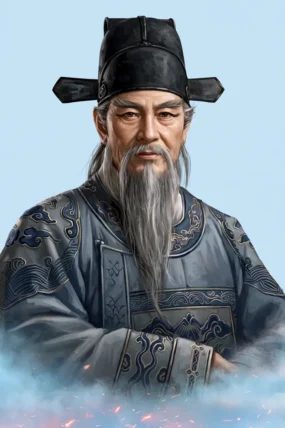
He Zhi, courtesy name Yuangan, was an influential high-ranking court official, military commander, and imperial relative of Eastern Wu during the late Three Kingdoms period. Hailing from Danyang Commandery, He Zhi belonged to a humble family that rose to extraordinary national prominence purely through imperial matrimonial alliance. His father, He Sui, was originally a common cavalryman in the Wu military. However, He Zhi’s elder sister, Lady He, was taken as a concubine by Sun He, the Crown Prince of Eastern Wu, and gave birth to Sun Hao. When Sun Hao ascended the throne in 264 AD as the fourth and final emperor of Eastern Wu, the He family was elevated to the highest ranks of the imperial nobility, and He Zhi rapidly advanced through the military and civil administrative ranks due to his status as the emperor’s maternal uncle.
Documented in Chen Shou’s official dynastic history Records of the Three Kingdoms (Sanguozhi – Book of Wu, Biographies of the Imperial Consorts and Sun Hao) and Sima Guang’s Zizhi Tongjian, He Zhi served as Commander Protecting the Sea (Bihai Du) during a turbulent era marked by civil unrest and dark rumors concerning the court. In the late 270s AD, rampant discontent with Sun Hao’s tyrannical rule sparked widespread rumors in the coastal regions that Emperor Sun Hao had died and been replaced by an impostor. Capitalizing on these rumors, Xi Xi, the Grand Administrator of Linhai Commandery, launched an armed rebellion against the throne. He Zhi was dispatched at the head of imperial forces to quell the insurrection. Displaying swift military decisiveness, He Zhi crushed Xi Xi’s rebel forces, executed Xi Xi, and wiped out the traitor’s three familial lines, effectively extinguishing the revolt and dispelling the rumors threatening the court’s authority.
In August 279 AD (the third year of the Tianji era), He Zhi reached the pinnacle of civil authority when Sun Hao appointed him to the supreme office of Minister over the Masses (Situ), one of the esteemed Three Ducal Ministers (San Gong) of the realm. However, his tenure at the apex of government was brief, as Eastern Wu faced imminent existential collapse. In early 280 AD, the Jin Dynasty launched a massive, coordinated six-pronged invasion under generals Wang Hun and Wang Jun. As Wu’s frontier river defenses collapsed and Jin legions reached the gates of the capital city, Jianye, Sun Hao recognized that the state was beyond salvation. Sun Hao penned a heartbreaking final lament to He Zhi, mourning that the empire built by his heroic ancestors Sun Ce and Sun Quan had been destroyed during his own reign. Sun Hao then ordered Minister over the Masses He Zhi, alongside General Who Displays Awe Sun Yan, to carry the imperial jade seals, state maps, and official surrender memorials to the encampment of Jin Grand General Wang Hun. By formally surrendering the imperial regalia, He Zhi officially brought an end to the state of Eastern Wu, concluding the Three Kingdoms period and enabling the Jin Dynasty to unify China.
Role in Romance of the Three Kingdoms
In Chapter 120 of Luo Guanzhong’s classic 14th-century historical novel Romance of the Three Kingdoms, He Zhi appears as a prominent court minister who carries out the final diplomatic act of surrender that concludes the entire novel. As Jin armies under Wang Jun and Wang Hun envelop Jianye, Sun Hao weeping bitterly consults his court regarding the nation’s end.
Following the advice of scholar Xue Ying, Sun Hao resolves to surrender unconditionally to prevent further bloodshed. In Chapter 120, Sun Hao commands Minister over the Masses He Zhi and General Sun Yan to bind themselves as captives and carry the imperial seals, treasury books, and formal submission documents directly to Jin commander Wang Hun’s headquarters. Wang Hun receives He Zhi with proper ceremonial courtesy, unties his bonds, accepts the imperial regalia, and forwards the surrender documents to Sima Yan in Luoyang. He Zhi’s historic delivery of the seals in Chapter 120 serves as the dramatic narrative seal that fulfills the ultimate mandate of heaven: ‘The empire, long divided, must unite,’ formally bringing the epic saga of the Three Kingdoms to its grand conclusion.
He Zhi (何植) — Historical & Literary Timeline
Crushing Xi Xi’s Rebellion in Linhai
Serving as Commander Protecting the Sea, He Zhi leads imperial forces to suppress the rebellion of Linhai Administrator Xi Xi, executing the rebels and restoring order to the coastal provinces.
Elevation to Minister over the Masses
Appointed by his nephew, Emperor Sun Hao, to the supreme office of Minister over the Masses (Situ), assuming leadership over civil administration as one of the Three Ducal Ministers.
Delivering Surrender Credentials to Wang Hun
Dispatched by Sun Hao during the fall of Jianye to carry the imperial jade seals and surrender memorials to Jin General Wang Hun, formally ending Eastern Wu and unifying China under Jin.
For detailed historical records, archives, and official chronicles, explore He Zhi on Wikipedia.
Key Relationships
Family
- He Sui (何随, Hà Tùy) — Father; a common cavalryman whose family rose to imperial nobility after his sister entered the Wu royal household.
- Lady He (何氏, Hà Thị) — Elder sister; taken as a concubine by Crown Prince Sun He and mother of Emperor Sun Hao.
- Sun He (孙和, Tôn Hoà) — Brother‑in‑law; former Crown Prince of Eastern Wu and father of Sun Hao.
- Sun Hao (孙皓, Tôn Hạo) — Nephew; fourth and last Emperor of Eastern Wu who elevated He Zhi to the highest offices.
Friends
- Sun Yan (孙演, Tôn Diễn) — General Who Displays Awe; accompanied He Zhi in delivering the imperial seals and surrender documents to Jin General Wang Hun in 280 AD.
- Xue Ying (薛瑛, Tiết Anh) — Senior minister of Wu; part of the court that advised Emperor Sun Hao on surrender, working alongside He Zhi during the final diplomatic mission.
Enemies
- Xi Xi (席羲, Tiệc Hy) — Grand Administrator of Linhai; launched a rebellion against Sun Hao in the late 270s AD; He Zhi defeated and executed him, ending the revolt.
Other
- Wang Hun (王浑, Vương Hoàn) — Grand General of Jin; received the imperial jade seals and surrender memorials from He Zhi, marking the end of Eastern Wu.
- Wang Jun (王浚, Vương Tuấn) — Jin Admiral; led the naval forces that captured Jianye, prompting He Zhi’s surrender mission.
- Sima Yan (司马炎, Tư Mã Diêm) — Emperor Wu of Jin; accepted Eastern Wu’s surrender after He Zhi delivered the regalia.
In Novel
He Zhi (何质, Hà Thực) does not have a securely verified named appearance in the supplied edition under the exact Chinese name 何质. No chapter is assigned without an exact textual match.
History
Identification
- He Zhi (何质, Hà Thực) is a minor figure in the Three Kingdoms tradition.
Historical Evidence
- The exact-name evidence available for this entry is limited and does not support a substantial independent biography.
- Because the surname He was shared by many officials and generals, similarly named individuals should not be merged without exact-name evidence.
Classification
- Briefly Attested / Needs Audit.
COMMENTS (0)