
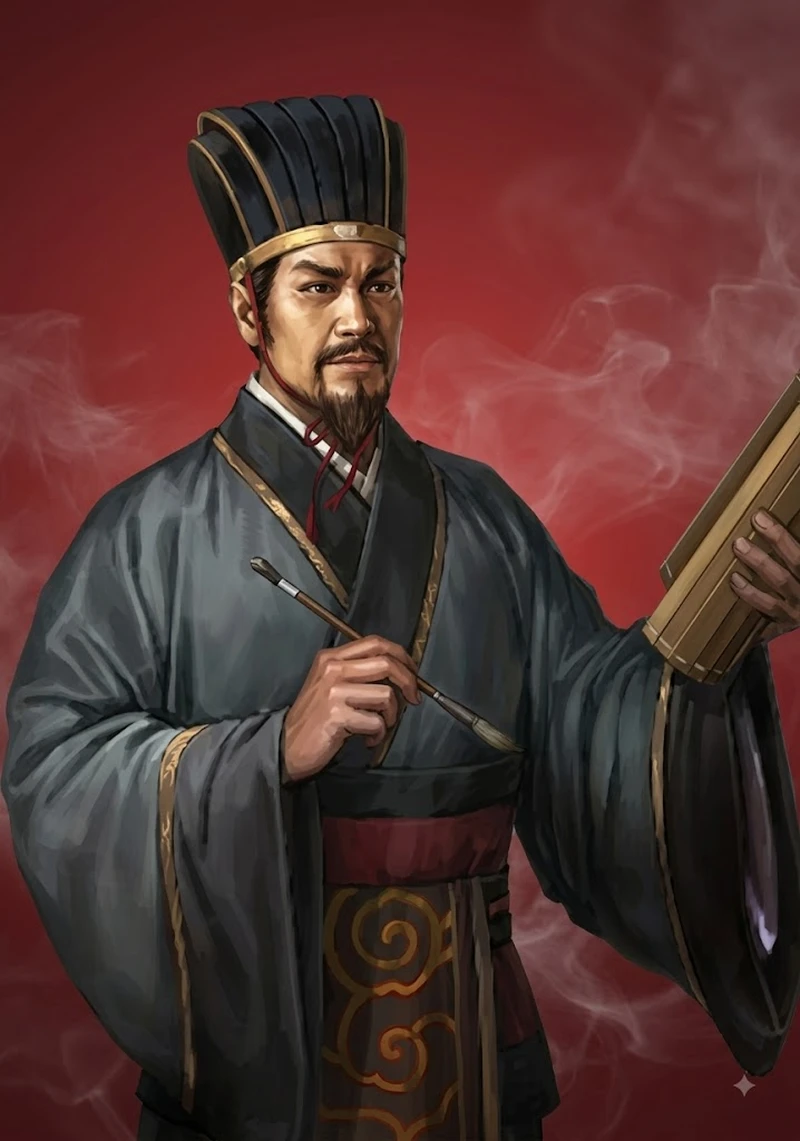
| NAME | |
|---|---|
| Chinese Name | 韩非, 韓非, Hán Fēi |
| Nickname | Han Feizi (Master Han Fei) |
| Other name | Hán Phi |
| INFORMATION | |
| Born | 280 BC |
| Birth Place | State of Han (韩国; nước Hàn) |
| Died | 233 BC |
| Death Reason | Forced to commit suicide by drinking poison in prison at the instigation of Li Si. |
| FAMILY | |
| Father | |
| Relatives | |
| CAREER | |
| Allegiance | State of Han, State of Qin |

Biography & Historical Record
Han Fei (韩非, Hán Phi) was the greatest philosopher of the Legalist school during the Warring States period. A prince of the royal house of the State of Han (韩, Hàn), he suffered from a stutter which hindered his ability to engage in public debate, leading him to focus on writing. His works, collectively known as the Han Feizi, synthesized the theories of his predecessors—Shang Yang (商鞅, Thương Ưởng) regarding law (Fa), Shen Buhai (申不害, Thân Bất Hại) regarding administrative technique (Shu), and Shen Dao (慎到, Thận Đáo) regarding power/position (Shi). Han Fei argued that the ruler must maintain absolute authority through a system of strict laws and incentives, dismissing Confucian morality as impractical for the governance of a warring state.
Despite his brilliance, his home state of Han failed to implement his reforms. After Qin Shihuang (秦始皇, Tần Thủy Hoàng) read Han Fei’s essays, he was so impressed that he launched a military campaign against Han specifically to force the state to send Han Fei to Qin. Upon arriving in Qin, Han Fei became a victim of professional jealousy. His former fellow student, Li Si (李斯, Lý Tư), fearing that Han Fei would surpass him in the Emperor’s favor, accused him of being disloyal to Qin because of his origin in Han. Consequently, Han Fei was imprisoned and ultimately coerced into committing suicide by drinking poison. His philosophy later became the foundational ideology for the first unified Chinese empire under the Qin Dynasty.
Role in Romance of the Three Kingdoms
While Han Fei lived centuries before the events of the Three Kingdoms, his Legalist teachings on ‘Shu’ (administrative control) and ‘Fa’ (law) deeply influenced the governing styles of warlords like Cao Cao (曹操, Tào Tháo), who utilized Legalist methods to maintain order and consolidate power during the chaos of the Han collapse.
Han Fei — Historical & Literary Timeline
280 BC
Birth of a Philosopher
Born into the royal family of the State of Han, he grew up witnessing the steady decline of his state under the pressure of the rising State of Qin.
234 BC
Arrival in Qin
Following Qin’s aggressive maneuvers, Han Fei travels to the Qin court, where his political acumen earns the admiration of the future First Emperor.
233 BC
Death of a Visionary
Li Si (李斯, Lý Tư) orchestrates the downfall of Han Fei through political intrigue, leading to Han Fei’s suicide in a Qin prison.
For detailed historical records, archives, and official chronicles, explore Han Fei on Wikipedia.
Key Relationships
- Historical Peers & Rivals
- Li Si (李斯, Lý Tư): A fellow student under the Confucian master Xunzi (荀子, Tuân Tử). Li Si eventually betrayed Han Fei to protect his own political position in the Qin court.
- Qin Shihuang (秦始皇, Tần Thủy Hoàng): The ruler of Qin who deeply admired Han Fei’s intellect and philosophy, though he ultimately failed to save him from court intrigues.
- Xunzi (荀子, Tuân Tử): The famous Confucian scholar who served as a teacher to both Han Fei and Li Si, though his pupils turned toward Legalism instead of his own teachings.
COMMENTS (0)