

| NAME | |
|---|---|
| Chinese Name | 耿纪, 耿紀, Gěng Jì |
| Other name | Cảnh Kỷ |
| Courtesy name | 季行, 季行, Jìxíng, Ji Xing, tự Quý Hành |
| INFORMATION | |
| Birth Place | Maoling County, Youfufeng (右扶风茂陵县; huyện Mậu Lăng, Hữu Phù Phong) |
| Died | 218 |
| Death Reason | Executed alongside his clan by Cao Cao following the Xuchang Uprising |
| FAMILY | |
| Relatives | |
| CAREER | |
| Allegiance | Eastern Han Dynasty |
| Battles | Xuchang Uprising |
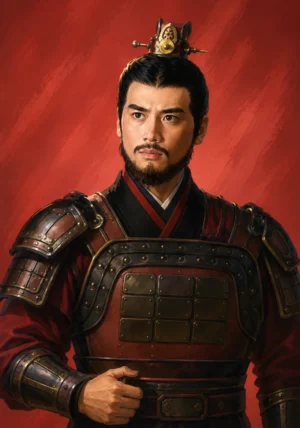
Biography & Historical Record
Geng Ji, courtesy name Jixing, was a high-ranking imperial court official, loyalist statesman, and Minister of the Household (Shaofu) of the Eastern Han dynasty. Hailing from Fufeng Commandery (modern-day Xianyang, Shaanxi Province), he was a direct descendant of Geng Yan, one of the famous Twenty-Eight Generals of Yuntai who restored the Han dynasty under Emperor Guangwu. Documented in Fan Ye’s Book of Later Han (Hou Han Shu – Biographies of Geng Yan and Geng Ji), Chen Shou’s Records of the Three Kingdoms (Sanguozhi – Book of Wei, Biography of Wu Zhi, citing San Guo Zhi), and Luo Guanzhong’s Romance of the Three Kingdoms, Geng Ji was celebrated across China for his uncompromising Confucian virtue, noble scholarly lineage, and unflinching martyrdom in defense of the Han imperial house against the usurpation of Cao Cao.
In his youth during the late Eastern Han dynasty, Geng Ji entered imperial service due to his noble family heritage and exceptional erudition, serving as Gentleman of the Yellow Gate (Huangmen Shilang) and Palace Attendant (Shizhong). He was subsequently elevated to Minister of the Household (Shaofu), a prestigious position managing the imperial treasury, personal royal estate, and domestic affairs of Emperor Xian in the imperial capital of Xuchang. Deeply committed to the Han restoration, Geng Ji observed with immense anguish as Cao Cao consolidated total autocracy over the Han court following his victories at Guandu and Tong Pass. In 216 AD, Cao Cao coerced Emperor Xian into granting him the royal title King of Wei (Wei Wang), erecting a royal ancestral temple, and adopting imperial robes and ceremonial rites. Recognizing that Cao Cao’s usurpation of the Han throne was imminent, Geng Ji resolved to sacrifice his life to launch an armed counter-coup to liberate Emperor Xian.
In late 217 AD, Geng Ji secretly forged an underground alliance with Minister Attendant Wei Huang, Imperial Physician Jin Yi, and the brothers Ji Miao and Ji Mu (the sons of former imperial physician Ji Ping, who had died in a previous anti-Cao conspiracy). The conspirators formulated a daring tactical plan: taking advantage of the Lantern Festival on the fifteenth day of the first lunar month in 218 AD, when the capital gates of Xuchang were opened for celebrations and city guards were relaxed, they would launch an armed uprising. Their operational plan was to assemble loyal household guards and private troops, set fire to the headquarters of Cao Cao’s trusted garrison commander Wang Bi, capture the imperial city, escort Emperor Xian into the open court, and issue an imperial mandate summoning Liu Bei from Yizhou to lead a royalist army to restore the Han Empire.
On the night of the Lantern Festival in February 218 AD, Geng Ji, Wei Huang, Jin Yi, Ji Miao, and Ji Mu launched the revolt, setting fire to the city gates and charging Wang Bi’s garrison. Ji Miao led an assault squad that stormed Wang Bi’s residence, shooting Wang Bi in the shoulder with an arrow. Streets across Xuchang erupted in flames and shouts of ‘Slay the traitor Cao Cao and save the Han dynasty!’ However, Wang Bi managed to flee under cover of darkness to the outer encampment of Senior General Xiahou Dun. Xiahou Dun immediately mobilized elite veteran troops, sealed the city gates, and launched a brutal counter-offensive. The ill-equipped household troops of the conspirators were overwhelmed after fierce night fighting, and Geng Ji, Wei Huang, Jin Yi, Ji Miao, and Ji Mu were captured alive.
Upon receiving news of the uprising at his capital in Yecheng, Cao Cao was furious and ordered the conspirators brought to the banks of the Zhang River for public interrogation. Standing before the executioners, Geng Ji remained entirely fearless. Pointing at Cao Cao, Geng Ji shouted cursing insults, declaring that he had acted as an imperial loyalist replacing Heaven to slay a usurper. Enraged by his unyielding defiance, Cao Cao ordered Geng Ji, Wei Huang, Jin Yi, Ji Miao, and Ji Mu executed by decapitation, along with the complete extermination of their clans to the third generation. Geng Ji died an honorable martyr, leaving an immortal legacy as one of the ultimate Five Ministers Who Died for Loyalty.
Role in Romance of the Three Kingdoms
In Luo Guanzhong’s classic novel Romance of the Three Kingdoms, Geng Ji appears in Chapter 69 as the heroic leader of the Xuchang loyalist uprising. Angered by Cao Cao forcing Emperor Xian to grant him the title King of Wei and adopting imperial ceremonies, Geng Ji meets secretly with his close soulmate Wei Huang, Imperial Physician Jin Yi, and the brothers Ji Miao and Ji Mu. Together, they plot an armed coup during the Lantern Festival of 218 AD. On the night of the festival, Geng Ji and his co-conspirators raise fires across Xuchang and assault Wang Bi’s garrison, wounding Wang Bi with an arrow and filling the capital with cries of ‘Slay Cao Cao!’. However, Wang Bi escapes to Xiahou Dun’s outer camp, and Xiahou Dun enters the city with elite forces, surrounding and capturing Geng Ji and his companions after a heroic struggle. Brought before Cao Cao at the Zhang River, Geng Ji glares with fiery eyes and shouts: ‘You old traitorous thief! I was not rebelling; I was executing Heaven’s justice to slay a traitor and rescue the Han! Alas, that my plot failed to hack you into ten thousand pieces to appease the empire!’ Cao Cao orders Geng Ji and his fellow ministers executed and their clans exterminated. Luo Guanzhong honors Geng Ji with an immortal eulogy poem praising his radiant loyalty that shines beside the stars.
Geng Ji (耿紀) — Historical & Literary Timeline
Forming the Anti-Cao Coalition in Xuchang
Outraged by Cao Cao assuming the title King of Wei, Geng Ji secretively allies with Wei Huang, Jin Yi, Ji Miao, and Ji Mu to plan an armed uprising during the Lantern Festival.
Storming Wang Bi’s Garrison and Setting Fire to Gates
Launches the night uprising on the Lantern Festival; sets fire to Xuchang city gates, assaults Wang Bi’s residence, and fills the capital with cries to restore the Han Empire.
Overwhelmed and Captured in Battle
Fights heroically against Xiahou Dun’s counter-attacking imperial troops after Wang Bi escapes; overwhelmed due to numerical inferiority and captured alongside his fellow conspirators.
Defying Cao Cao at Execution Ground & Martyrdom
Brought to the Zhang River for execution; fearlessly berates Cao Cao as a traitor to his face before being decapitated alongside his entire clan.
For detailed historical records, archives, and official chronicles, explore Geng Ji on Wikipedia.
Key Relationships
Family
- Geng Yan (耿弇, Cảnh Yểm) — Ancestor; celebrated founding general of the Eastern Han dynasty and one of the Twenty-Eight Generals of Yuntai under Emperor Guangwu.
Friends
- Wei Huang (韦晃, Vi Hoảng) — Close friend, fellow court official, and co-organizer of the 218 AD Xuchang uprising who fought alongside Geng Ji and was executed with him.
- Jin Yi (金祎, Kim Y) — Imperial official and core co-conspirator in the 218 AD Lantern Festival plot aimed at eliminating Cao Cao’s garrison in Xuchang.
- Ji Miao (吉邈, Cát Mạc) — Ally and co-conspirator who led the assault force against Wang Bi’s garrison during the 218 AD coup.
- Ji Mu (吉穆, Cát Mục) — Ally and younger brother of Ji Miao who participated in the planning and night assault during the 218 AD uprising.
Enemies
- Cao Cao (曹操, Tào Tháo) — King of Wei whose autocratic power and impending usurpation Geng Ji sought to overthrow in 218 AD; after the rebellion was crushed, Cao Cao ordered Geng Ji executed and his clan exterminated.
- Wang Bi (王必, Vương Tất) — Cao Cao’s trusted chief clerk and capital garrison commander whose headquarters Geng Ji and his allies assaulted and set on fire during the 218 AD uprising.
- Xiahou Dun (夏侯惇, Hạ Hầu Đôn) — Senior Wei general stationed outside Xuchang who deployed elite forces into the city to crush the 218 AD revolt, resulting in Geng Ji’s capture.
Other
- Emperor Xian of Han (汉献帝, Hán Hiến Đế) — Sovereign of the Eastern Han dynasty whom Geng Ji served as Minister of the Household (Shaofu) and sacrificed his life attempting to rescue from Cao Cao’s control.
- Liu Bei (刘备, Lưu Bị) — Imperial uncle and warlord in Yizhou whom Geng Ji and his fellow conspirators intended to summon via imperial decree to lead a royalist army to restore the Han court.
In Novel
Chapter 66
- Geng Ji (耿纪, Gěng Jì): Geng Ji is one of the Han loyalists who secretly plans to rescue Emperor Xian from Cao Cao's control. He joins Wei Huang, Jin Yi and other conspirators and prepares an armed attack on Cao Cao's residence. The conspiracy is discovered after the rebels attack at night. Geng Ji fights desperately but is eventually captured.
Chapter 67
- Geng Ji (耿纪, Gěng Jì): Cao Cao interrogates Geng Ji and the surviving conspirators. Geng Ji refuses to beg for his life and declares his loyalty to Emperor Xian. Cao Cao orders him executed together with Wei Huang and the other conspirators, and their families are also punished.
In History
Summary
- Geng Ji (耿纪, Cảnh Kỷ), courtesy name Jixing (季行), was a Han loyalist who led a failed uprising against Cao Cao in 218.
Han Loyalist Conspiracy
- Geng Ji served in the imperial court under Emperor Xian and opposed Cao Cao's domination of the Han government.
- In 218 he conspired with Wei Huang, Jin Yi and others to seize control of Xu Chang and restore greater imperial authority.
Defeat and Death
- The conspiracy initially achieved surprise but was quickly defeated by Cao Cao's forces.
- Geng Ji was captured and executed. His death made him a symbol of resistance to Cao Cao among later Han-loyalist narratives.
Historical Record
- Classification: Historical. His uprising and execution are firmly recorded in the Wei histories.
COMMENTS (0)