

| NAME | |
|---|---|
| Chinese Name | 段煨, 段煨, Duàn Wēi |
| Other name | Đoàn Ổi |
| Courtesy name | 忠明, 忠明, Zhōngmíng, Zhong Ming, tự Trung Minh |
| INFORMATION | |
| Birth Place | Guzang County, Wuwei Commandery (武威郡姑臧县; huyện Cô Tang, quận Vũ Uy) |
| Died | 209 |
| Death Reason | Died of illness |
| FAMILY | |
| Relatives | |
| CAREER | |
| Allegiance | Eastern Han Dynasty |
| Battles | Protection of Emperor Xian at Huayin; Campaign against Li Jue; Suppression of Liang Province Rebels |
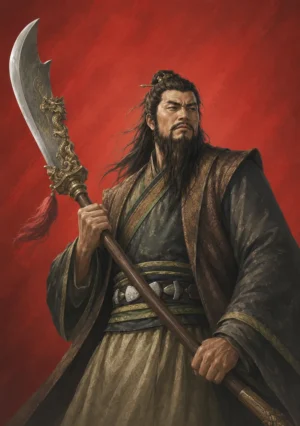
Biography & Historical Record
Duan Wei, courtesy name Zhongming, born in Wuwei Commandery, Liang Province, was a celebrated military general and high-ranking court minister of the Eastern Han dynasty who died of natural causes in 209 AD. Unlike many of his contemporary commanders hailing from Dong Zhuo’s Liang Province army, who were widely despised for rampant violence and looting, Duan Wei was highly acclaimed by ancient historians for his unwavering loyalty to the Han imperial house, strict military discipline, and profound compassion for the civilian population. Early in his military career, following Dong Zhuo’s assassination in 192 AD, Duan Wei was stationed at Huayin County near Mount Hua to garrison the strategic eastern approaches to Chang’an.
At Huayin, Duan Wei refused to emulate the predatory practices of rival Liang generals. Instead, he strictly enforced agricultural rehabilitation, encouraging his soldiers and local peasants to clear fields, plant crops, and restore grain production. Under his command, the army observed impeccable discipline, maintaining a defensive posture characterized by unbuckling armor to rest soldiers and arraying troops without provoking conflict. His troops were strictly forbidden from plundering or harassing civilians, allowing Huayin to flourish as a peaceful haven of abundance amidst widespread civil war. In 195 AD, when Emperor Xian fled Chang’an to escape the clutches of Li Jue and Guo Si, his imperial procession passed through Huayin. Duan Wei personally welcomed the emperor, presenting vast quantities of clothing, silk, and grain supplies to sustain the destitute imperial court. However, because Duan Wei maintained his dignity and did not dismount to greet General Yang Feng, Yang Feng’s faction falsely accused Duan Wei of treason and attacked his camp for several days. Exercising immense self-restraint for the imperial cause, Duan Wei ordered his troops to hold firm strictly on the defensive without retaliating, ensuring no harm befell Emperor Xian and ultimately proving his loyalty to the throne.
In 198 AD (3rd year of Jian’an), Cao Cao dispatched Imperial Clerk Pei Mao to command a joint western alliance to exterminate Li Jue’s final stronghold in Liang Province. Duan Wei was selected as the chief vanguard general for the offensive. Leading a ferocious assault on Li Jue’s fortress, Duan Wei completely routed the rebel forces, personally killing Li Jue in battle and severing his head. To permanently eliminate the threat of Liang Province rebellions, Duan Wei executed Li Jue’s three-generation family clan and sent Li Jue’s severed head to the capital at Xuchang to be publicly displayed. In recognition of his monumental victory in pacifying Quan-Zhong, the Han court enfeoffed Duan Wei as Marquis of Wenxiang and promoted him to General Who Pacifies the East (or General Who Pacifies the South). He was subsequently recalled to the capital to hold high imperial offices, including Grand Herald (Dahonglu) and Master of Splendor. Duan Wei passed away peacefully of illness in 209 AD, enjoying a rare, honorable, and tranquil death among Liang Province military commanders of the late Han era.
Role in Romance of the Three Kingdoms
In Luo Guanzhong’s classic 14th-century historical novel Romance of the Three Kingdoms, Duan Wei represents the steadfast Confucian integrity and martial discipline that stood against the rampant tyranny of Dong Zhuo’s former warlord factions. Appearing in Chapter 13, Chapter 14, and Chapter 20, Duan Wei’s narrative highlights his crucial role during Emperor Xian’s flight from Chang’an to Luoyang. When the imperial court faced starvation and military harassment, Duan Wei provided crucial grain and clothing supplies at Huayin, maintaining a disciplined defense against Yang Feng’s unwarranted jealousy. His subsequent heroic campaign in Chapter 20, where he exterminated Li Jue and presented his head to Cao Cao at Xuchang, marks the definitive end of Dong Zhuo’s remnant scourge and the restoration of imperial authority in the western passes.
In Chapter 13 and Chapter 20 of Romance of the Three Kingdoms, Duan Wei’s disciplined garrison at Huayin and his decisive execution of the murderous warlord Li Jue demonstrate his unwavering loyalty to the Han throne, standing as a rare beacon of order and virtue among the Liang Province generals.
Duan Wei (段煨) — Literary & Historical Timeline
192 AD
Garrisoning Huayin and Restoring Agriculture
Stationed at Huayin County following Dong Zhuo’s death; strictly enforces agricultural production and troop discipline, protecting local civilians from wartime devastation.
195 AD
Supplying Emperor Xian and Withstanding Yang Feng’s Siege
Welcomes Emperor Xian’s fleeing court at Huayin with grain and silk; attacked by jealous general Yang Feng but refuses to retaliate, preserving imperial safety.
198 AD
Exterminating Li Jue and Displaying Head at Xuchang
Serves as vanguard general under Pei Mao; assaults Li Jue’s stronghold, slays Li Jue, exterminates his clan, and sends his severed head to Cao Cao at Xuchang.
209 AD
High Ministerial Elevation and Peaceful Death
Enfeoffed as Marquis of Wenxiang and appointed Grand Herald in Xuchang, dying peacefully of illness at an advanced age in 209 AD.
Key Relationships
- Family:
- Duan Jiong — Famous Grand Commandant and Liang Province general of the Han court, clan elder of Duan Wei.
- Comrades / Allies:
- Emperor Xian of Han — Last emperor of the Eastern Han dynasty whom Duan Wei faithfully protected and supplied at Huayin.
- Pei Mao — Imperial Clerk who co-commanded the western campaign to exterminate Li Jue alongside Duan Wei.
- Jia Xu — Famed strategist and fellow Wuwei countryman who temporarily sought refuge with Duan Wei at Huayin.
- Cao Cao — Supreme warlord who rewarded Duan Wei with the title Marquis of Wenxiang and high court offices.
- Enemies / Opponents:
- Li Jue — Tyrannical Liang Province warlord who held Emperor Xian hostage and was ultimately slain and beheaded by Duan Wei.
- Guo Si — Rogue warlord and co-conspirator of Li Jue whose forces devastated Chang’an.
- Yang Feng — Imperial escort general who falsely accused Duan Wei of treason and attacked his camp at Huayin out of jealousy.
- Dong Zhuo — Tyrannical warlord under whose initial Liang Province army Duan Wei originally served.
For detailed historical records, archives, and official chronicles, explore Duan Wei on Wikipedia.
In Novel
Chapter 17
- Duan Wei (段煨, Duàn Wēi): After Cao Cao returns to Xuchang from the campaign against Yuan Shu, a messenger reports that Duan Wei has killed Li Jue and sent his head to Cao Cao. Duan Wei also captures more than two hundred members of Li Jue's household and sends them to Xuchang, where Cao Cao orders the entire group executed. Cao Cao then appoints Duan Wei as General Who Quells Bandits and sends him back to guard Chang'an.
In History
Summary
- Duan Wei (段煨, Đoàn Ổi) was a historical military commander of the late Eastern Han.
Period I — Service under Dong Zhuo
- Duan Wei served in the military establishment of the northwestern frontier and became associated with the political-military circle surrounding Dong Zhuo.
- He was known as a capable commander and maintained his own military position during the instability following Dong Zhuo's rise.
Period II — After Dong Zhuo
- Following the collapse of Dong Zhuo's regime, Duan Wei continued to maneuver within the fragmented political environment of the Guanzhong region.
- His later career brought him into the orbit of the Han court and the emerging Cao Cao administration.
Historical Record
- Duan Wei was historical. His career is documented in the late-Han historical sources and should be distinguished from the more dramatic novel portrayal of northwestern commanders.
COMMENTS (0)