
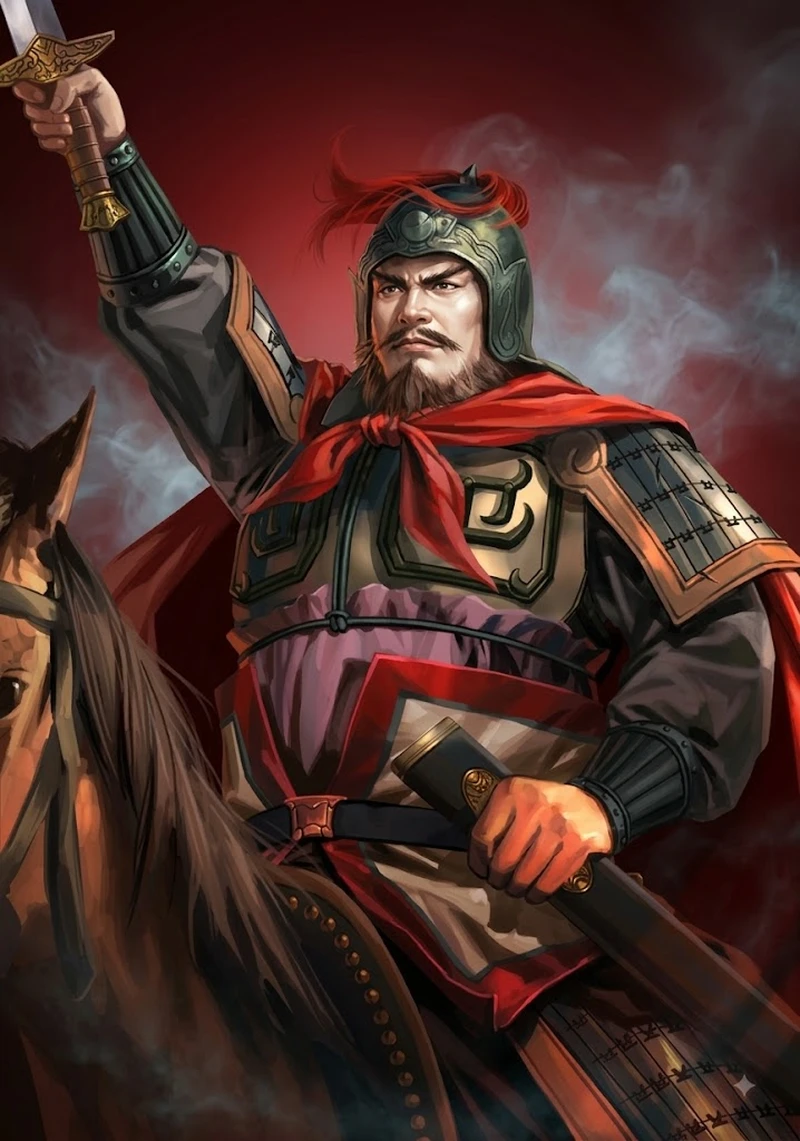
| NAME | |
|---|---|
| Chinese Name | 白起, 白起, Bái Qǐ |
| Nickname | Nhân đồ (Người đồ tể), Vũ An Quân |
| Other name | Bạch Khởi |
| Courtesy name | 公孙, 公孫, Gōngsūn, Gong Sun, tự Công Tôn |
| INFORMATION | |
| Birth Place | Mei County, State of Qin (秦国郿县; huyện Mê, nước Tần) |
| Died | 257 BC |
| Death Reason | Bị Tần Chiêu Tương Vương ép tự sát tại Đỗ Bưu sau khi bị tước hết quan tước vì bất mãn với việc đình chiến. |
| CAREER | |
| Allegiance | Nước Tần (Thời Chiến Quốc) |
| Battles | Trận Y Khuyết, Trận Yên Dĩnh, Trận Trường Bình |
Biography & Historical Record
Bai Qi (白起 , Bạch Khởi), born in Mei County, was a brilliant grand commander of the Qin state during the late Warring States period. Widely regarded as one of the four greatest military generals of the era—alongside Lian Po (廉颇 , Liêm Pha), Li Mu (李牧 , Lý Mục), and Wang Jian (王翦 , Vương Tiễn)—Bai Qi (白起 , Bạch Khởi) served the Qin military for over thirty years without suffering a single tactical defeat. He was awarded the noble title of Lord Wu’an (武安君 , Vũ An Quân) for his vast conquests and terrorizing strategic efficiency.
Bai Qi (白起 , Bạch Khởi) emerged under the patronage of Prime Minister Wei Ran (魏冉 , Nguỵ Nhiễm) during the reign of King Zhaoxiang of Qin (秦昭襄王 , Tần Chiêu Tương Vương). In 293 BC, he rose to prominence at the Battle of Yique (伊阙之战), where he smashed the combined coalition forces of Han and Wei, decapitating approximately 240,000 enemy combatants and capturing their commander Gongsun Xi. This decisive campaign established Qin’s unquestioned dominance east of the Yellow River.
Between 279 BC and 278 BC, Bai Qi (白起 , Bạch Khởi) led a deep invasion into the southern superpower Chu. He diverted rivers to flood the strategic city of Yan, causing massive casualties, before capturing the Chu capital of Ying (郢). He looted and burned the ancestral burial tombs of the Chu royal family at Yiling, forcing the Chu royal court to flee eastward to Chen. For this monumental triumph, King Zhaoxiang of Qin (秦昭襄王 , Tần Chiêu Tương Vương) enfeoffed him as Lord Wu’an (武安君 , Vũ An Quân).
The pinnacle—and most infamous chapter—of Bai Qi (白起 , Bạch Khởi)’s military career took place during the Battle of Changping (长平之战) in 260 BC. Facing the formidable Zhao army initially led by defensive specialist Lian Po (廉颇 , Liêm Pha), Qin secretly deployed Bai Qi (白起 , Bạch Khởi) to take supreme command after Qin intelligence engineered the replacement of Lian Po (廉颇 , Liêm Pha) with the arrogant, inexperienced Zhao Kuo (赵括 , Triệu Quát). Bai Qi (白起 , Bạch Khởi) feigned retreat, lured Zhao Kuo (赵括 , Triệu Quát) into an ambitious pursuit, and severed the Zhao army’s supply lines and internal communications with light cavalry strike teams. After a 46-day siege, Zhao Kuo (赵括 , Triệu Quát) was slain in battle, and over 400,000 Zhao soldiers surrendered. Fearing that such a vast host of prisoners could revolt inside Qin territory, Bai Qi (白起 , Bạch Khởi) ordered the execution and mass live burial of the captured Zhao troops, leaving only 240 young soldiers alive to return home and spread terror.
Despite his unblemished combat record, political friction led to Bai Qi (白起 , Bạch Khởi)’s downfall. Following Changping, Prime Minister Fan Ju (范雎 , Phạm Thư) became envious of Bai Qi (白起 , Bạch Khởi)’s growing influence and persuaded King Zhaoxiang of Qin (秦昭襄王 , Tần Chiêu Tương Vương) to accept a cease-fire proposed by Zhao and Han. When King Zhaoxiang of Qin (秦昭襄王 , Tần Chiêu Tương Vương) later attempted to resume the siege of Handan in 258 BC, Bai Qi (白起 , Bạch Khởi) refused command, arguing that the moment of strategic advantage had passed and Qin forces would suffer catastrophe. When the campaign indeed turned into a bitter retreat, the enraged king demoted Bai Qi (白起 , Bạch Khởi) to a common soldier and banished him from Xianyang. Shortly after, egged on by Fan Ju (范雎 , Phạm Thư), the king dispatched an envoy with a royal sword to Duyou (杜邮), ordering Bai Qi (白起 , Bạch Khởi) to commit suicide.
Before taking his own life in 257 BC, Bai Qi (白起 , Bạch Khởi) held the sword, looked up to the heavens, and lamented:
“What crime have I committed against Heaven to deserve this end? Indeed, I deserve death. At Changping, hundreds of thousands of Zhao soldiers surrendered to me, yet I used deceit to bury them alive. This alone is sufficient cause for my death.”
Over his career, Bai Qi (白起 , Bạch Khởi) was credited with destroying over one million enemy soldiers across the Warring States period, earning him the terrifying moniker ‘Ren Tu’ (人屠 , Nhân Đồ – Human Butcher). His military doctrines laid the foundation for Qin’s eventual unification of China under Qin Shi Huang.
Role in Romance of the Three Kingdoms
Because Bai Qi (白起 , Bạch Khởi) lived centuries prior to the late Han Dynasty, he does not appear as an active character in Luo Guanzhong’s historical novel Romance of the Three Kingdoms. However, his name and tactical legacy are repeatedly cited by historical figures, strategists, and scholars throughout the era as the ultimate benchmark for martial supreme command, lethal efficiency, and tragic political downfall.
“Bai Qi (白起 , Bạch Khởi) and Han Xin (韩信 , Hàn Tín) possessed unmatched military capability, sweeping through armies like wind across dry leaves, yet both met untimely deaths due to suspicion and envy at court.”
Strategists such as Zhuge Liang (诸葛亮 , Gia Cát Lượng) and Cao Cao (曹操 , Tào Tháo) frequently studied the campaigns of Bai Qi (白起 , Bạch Khởi), referencing his encirclement tactics at Changping and his deep-thrust logistics during the Chu invasion as foundational lessons in total warfare and psychological manipulation.
Bai Qi — Historical & Literary Timeline
293 BC
Victory at the Battle of Yique
Bai Qi (白起 , Bạch Khởi) leads Qin armies against the allied forces of Han and Wei at Yique, annihilating 240,000 enemy troops and capturing commander Gongsun Xi.
279 BC — 278 BC
Southern Campaign against Chu & Enfeoffment
Inwades the southern kingdom of Chu, capturing its capital Ying, burning the royal tombs at Yiling, and forcing the Chu state to relocate its capital. Bai Qi (白起 , Bạch Khởi) is granted the title Lord Wu’an (武安君 , Vũ An Quân).
273 BC
Battle of Huayang
Defeats the combined armies of Wei and Zhao at Huayang, slaughtering 130,000 enemy soldiers and drowning 20,000 Wei troops in the river.
260 BC
The Massacre of Changping
Secretly assumes command against Zhao, surrounding Zhao Kuo (赵括 , Triệu Quát) and forcing the surrender of 400,000 Zhao soldiers, whom Bai Qi (白起 , Bạch Khởi) orders to be buried alive.
258 BC
Rift with King Zhaoxiang & Fan Ju
Refuses to lead the siege of Handan due to tactical disagreements and illness, drawing severe displeasure from King Zhaoxiang of Qin (秦昭襄王 , Tần Chiêu Tương Vương) and Prime Minister Fan Ju (范雎 , Phạm Thư).
257 BC
Banishment and Forced Suicide
Stripped of rank and banished to Duyou, Bai Qi (白起 , Bạch Khởi) receives a royal sword sent by King Zhaoxiang of Qin (秦昭襄王 , Tần Chiêu Tương Vương) and commits suicide.
For detailed historical records, archives, and official chronicles, explore Bai Qi on Wikipedia.
Key Relationships
- Monarchs & Superior Ministers:
- King Zhaoxiang of Qin (秦昭襄王 , Tần Chiêu Tương Vương): Sovereign of Qin who elevated Bai Qi to supreme command, but later ordered his suicide due to political alienation.
- Wei Ran (魏冉 , Nguỵ Nhiễm): Prime Minister of Qin and Marquis of Rang who recognized Bai Qi’s talent and sponsored his early career.
- Fan Ju (范雎 , Phạm Thư): Subsequent Prime Minister of Qin whose rivalry and jealousy contributed to Bai Qi’s political downfal and eventual execution order.
- Rival Commanders & Enemies:
- Zhao Kuo (赵括 , Triệu Quát): Inexperienced Zhao commander defeated and slain by Bai Qi at the Battle of Changping.
- Lian Po (廉颇 , Liêm Pha): Renowned Zhao general whose defensive posture stalled Qin until his replacement by Zhao Kuo.
- Descendants:
- Bai Zhong (白仲): Son of Bai Qi, who was later enfeoffed at Taiyuan by King Zhuangxiang of Qin in recognition of Bai Qi’s historic achievements.
COMMENTS (0)