

| NAME | |
|---|---|
| Chinese Name | 周仓, 周倉, Zhōu Cāng |
| Nickname | Faithful Shadow of Guan Yu |
| Other name | Châu Thương |
| INFORMATION | |
| Birth Place | Runan Commandery, Yu Province (豫州汝南郡; quận Nhữ Nam, Dự Châu) |
| Died | 220 |
| Death Reason | Committed suicide upon hearing of Guan Yu's (关羽, Quan Vũ) death (220 AD) |
| CAREER | |
| Allegiance | Yellow Turbans, Peasant Bandit, Guan Yu, Liu Bei, Shu Han |
| Battles | Campaigns of Guan Yu, Battle of Fancheng |
Biography & Historical Record
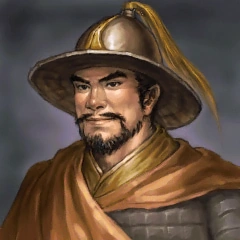
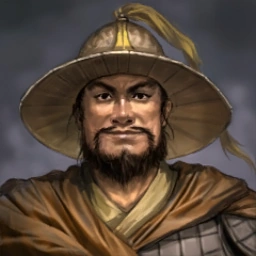
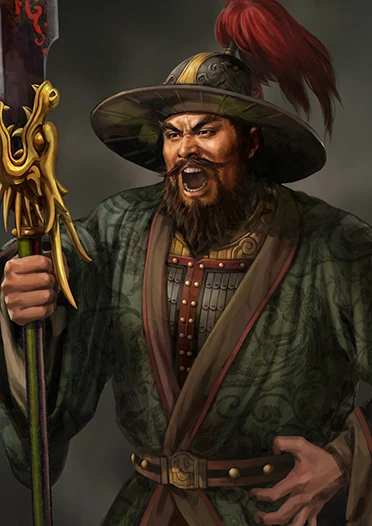
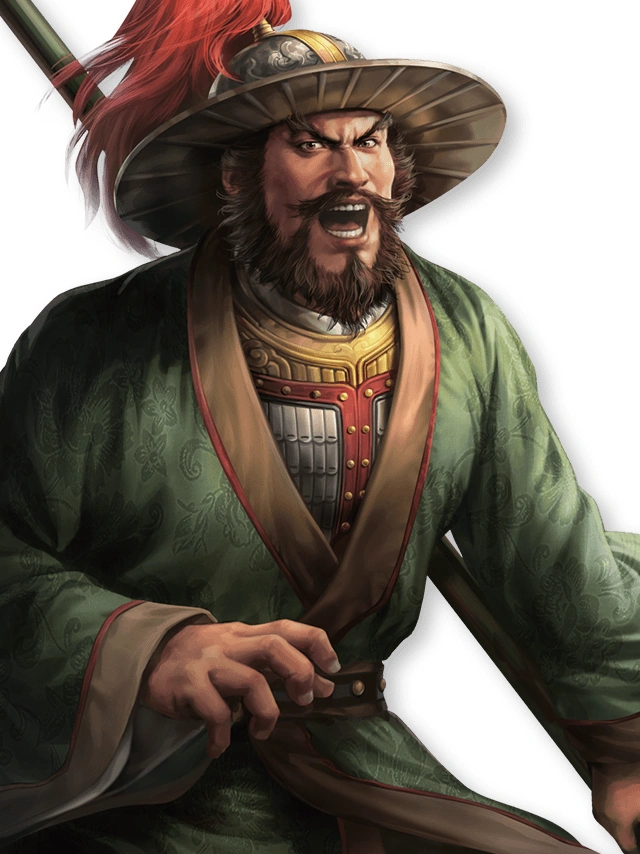
Zhou Cang (died 220 AD) was a fictionalized military general and loyal bodyguard in Luo Guanzhong’s historical novel *Romance of the Three Kingdoms*, though later folk religion elevated him alongside Guan Ping as a divine guardian deity and attendant of Guan Yu (Lord Guan). Originally a former Yellow Turban rebel and mountain bandit in Mount Pan, Zhou Cang possessed a dark complexion, immense physical strength, and unshakeable loyalty. After crossing paths with Guan Yu while the latter was escorting Liu Bei’s two wives across China, Zhou Cang was instantly captivated by Guan Yu’s righteousness, immediately abandoning his bandit life to become his devoted follower and weapon bearer.
In the novel, Zhou Cang proved his immense valor and aquatic prowess on multiple occasions, famously capturing the veteran Wu general Pan Zhang’s subordinate Xiahou Dun’s officer or subduing enemy commanders in the waters around Fancheng. When Guan Yu and Guan Ping were captured and executed by Eastern Wu forces at Maicheng in 220 AD, Zhou Cang was overcome with grief and unwavering loyalty; upon hearing the news of his master’s execution, Zhou Cang committed suicide by dashing his head against a stone wall to follow Guan Yu in death. Following his passing, folk traditions revered him as a steadfast protector, frequently depicted alongside Guan Yu holding the Green Dragon Crescent Blade.
Role in Romance of the Three Kingdoms
In Luo Guanzhong’s epic historical novel Romance of the Three Kingdoms, Zhou Cang is introduced in Chapter 28 as a mountain bandit leader who pledges his absolute allegiance to Guan Yu. His narrative runs through the middle and late chapters of the novel, highlighting his comedic yet deeply touching loyalty, his legendary swimming skills during the floods of Fancheng where he captured Pang De alive, and his tragic death by suicide upon learning of Guan Yu’s martyrdom.
Notable Quotes & Famous Sayings
- “I am Zhou Cang of Runan! I would rather die following Lord Guan than live a thousand years as a thief!” — Zhou Cang pledging his lifelong loyalty to Guan Yu.
- “My lord has perished; how can I alone survive?” — Zhou Cang’s sorrowful final words before committing suicide upon hearing of Guan Yu’s death.
Zhou Cang (周仓) — Historical & Literary Timeline
Surrender to Guan Yu
Meets Guan Yu at Gucheng while operating as a mountain bandit; deeply inspired by Guan Yu’s righteousness, he surrenders and becomes his personal bodyguard and weapon carrier.
Guarding Jing Province
Serves as Guan Yu’s loyal vanguard and lieutenant during the defense and administration of Jing Province.
Capturing Pang De at Fancheng
Utilizes his exceptional swimming skills during the flooding of Fan Castle to capture the fierce Wei general Pang De alive in the waters.
Tragic Suicide at Maicheng
Receives the tragic news of Guan Yu and Guan Ping’s execution by Eastern Wu; overcome with grief and devotion, commits suicide by dashing his head against a wall.
For detailed historical records, archives, and official chronicles, explore Zhou Cang on Wikipedia.
Key Relationships
Family
- No information
Friends
- Guan Yu (关羽, Quan Vũ): His master and idol, to whom he pledged absolute loyalty after abandoning his life as a bandit; he served as his devoted bodyguard and weapon bearer until his death in 220 AD.
- Guan Ping (关平, Quan Bình): A fellow loyal officer and the adopted son of Guan Yu, with whom he served closely during the defense of Jing Province.
Enemies
- Pang De (庞德, Bàng Đức): A Wei general whom Zhou Cang captured alive in the waters during the flooding of Fancheng in 219 AD.
- Eastern Wu Forces (东吴, Đông Ngô): The faction responsible for the capture and execution of Guan Yu and Guan Ping in 220 AD, an event that led directly to Zhou Cang’s suicide.
Other
- Liu Bei (刘备, Lưu Bị): The sovereign of Shu Han, whom Zhou Cang served indirectly through his unwavering devotion to Guan Yu.
Appearance

In Novel
Chapter 28
- Zhou Cang (周仓, Châu Thương): Former Yellow Turban warrior from Mount Wolong who pledged his eternal devotion to Guan Yu (关羽, Quan Vũ), serving as his loyal weapon-bearer carrying the Green Dragon Crescent Blade.
Chapter 39
- Zhou Cang (周仓, Châu Thương): Assisted Guan Yu (关羽, Quan Vũ) during the river ambushes at the Battle of Bowang Slope.
Chapter 40
- Zhou Cang (周仓, Châu Thương): Participated in the flood ambush at the Battle of Xinye.
Chapter 65
- Zhou Cang (周仓, Châu Thương): Accompanied Guan Yu (关羽, Quan Vũ) during the single-blade meeting at Lukou, carrying Guan Yu's blade and skillfully intervening to break the standoff.
Chapter 73
- Zhou Cang (周仓, Châu Thương): Served as a chief military aide under Guan Yu (关羽, Quan Vũ) during the siege of Fan City.
Chapter 74
- Zhou Cang (周仓, Châu Thương): Demonstrated master aquatic combat skills by leaping into the flooded waters of Fan City to capture Cao Wei's champion general Pang De (庞德, Bàng Đức) alive.
Chapter 77
- Zhou Cang (周仓, Châu Thương): Defended Maicheng with Wang Fu; upon learning that Guan Yu (关羽, Quan Vũ) and Guan Ping (关平, Quan Bình) had been captured and executed by Eastern Wu, Zhou Cang slit his own throat from the fortress walls to die alongside his lord.
In History
Summary
- Zhou Cang (周仓, Châu Thương) is a fictional character created by the literary tradition surrounding Romance of the Three Kingdoms. He is portrayed as a loyal attendant and weapon bearer of Guan Yu (关羽, Quan Vũ).
Historical Record
- Zhou Cang (周仓, Châu Thương) does not appear as Guan Yu's attendant in the Sanguozhi. His famous role, including serving Guan Yu and capturing Pang De (庞德, Bàng Đức), belongs to later literary and folkloric tradition.
- Therefore this entry should be classified as Fictional / Literary.
Gallery










COMMENTS (0)