
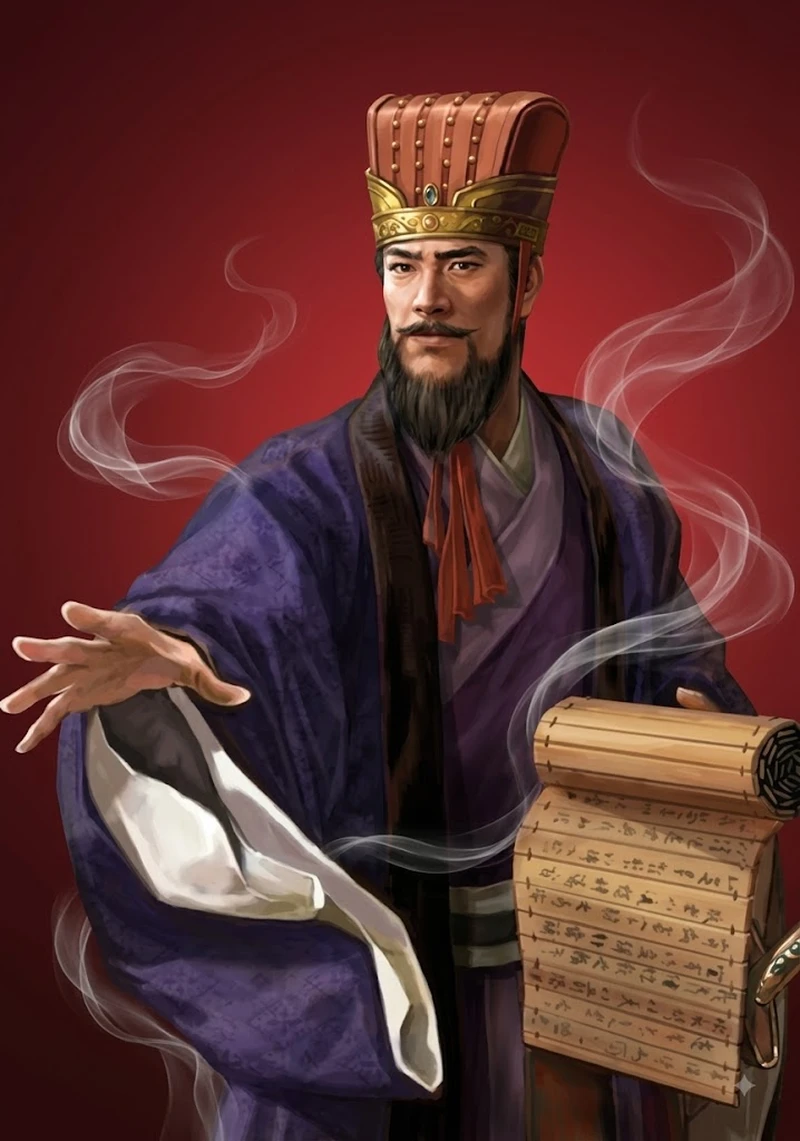
| NAME | |
|---|---|
| Chinese Name | 吕不韦, 呂不韋, Lǚ Bùwéi |
| Nickname | Chancellor of State (Xiangbang) |
| Other name | Lã Bất Vi |
| INFORMATION | |
| Born | 292 BC |
| Birth Place | Puyang, State of Wey (卫国濮阳; Bộc Dương, nước Vệ) |
| Died | 235 BC |
| Death Reason | Forced suicide by drinking poison after being stripped of his titles and exiled by Qin Shi Huang. |
| FAMILY | |
| Spouse | |
| Relatives | |
| CAREER | |
| Allegiance | State of Qin |
| Battles | Conquest of Eastern Zhou |


Biography & Historical Record
Lu Buwei (吕不韦, Lã Bất Vi) was one of the most influential and controversial political figures in Chinese history, transitioning from a wealthy merchant to the Chancellor of the State of Qin during the late Warring States period. He is primarily known for his ‘investment’ in Prince Yiren (异人, Dị Nhân), later King Zhuangxiang of Qin (秦庄襄王, Tần Trang Tương Vương), which fundamentally changed the destiny of the Qin state.
As a merchant in Handan, he encountered Prince Yiren, who was held as a political hostage. Recognizing Yiren’s potential, Lu Buwei orchestrated a sophisticated political strategy involving vast financial resources and diplomatic maneuvering, including the manipulation of the powerful Lady Huayang (华阳夫人, Hoa Dương phu nhân), to ensure Yiren’s succession to the throne. His influence peaked when he became the regent for the young Ying Zheng (嬴政, Doanh Chính), the future Qin Shi Huang (秦始皇, Tần Thủy Hoàng).
He is the patron of the Lüshi Chunqiu (吕氏春秋, Lã Thị Xuân Thu), a monumental encyclopedia compiled by his retainers, covering philosophy, politics, and natural science. His famous quote, ‘A valuable commodity is worth hoarding’ (奇货可居, Kì hóa khả cư), remains a cornerstone idiom regarding strategic investment.
Role in Romance of the Three Kingdoms
While Lu Buwei predates the Three Kingdoms period by centuries, he is frequently cited by historians and strategists within the narratives of Luo Guanzhong (罗贯中, La Quán Trung) as a cautionary tale regarding the dangers of court politics, the power of patronage, and the precarious nature of absolute authority.
Lu Buwei — Historical & Literary Timeline
292 BC
Birth
Born in the State of Wey, he begins his career as a highly successful merchant.
260 BC
Meeting Yiren
Lu Buwei meets the hostage prince Yiren in Handan and launches his plan to place him on the Qin throne.
249 BC
Rise to Power
Upon the death of King Xiaowen, Yiren ascends the throne, and Lu Buwei is appointed Chancellor of State.
235 BC
Downfall and Death
After the scandal involving Lao Ai (嫪毐, Lao Ái) and the Queen Dowager Zhao, Lu Buwei is implicated, exiled to Sichuan, and forced to commit suicide.
For detailed historical records, archives, and official chronicles, explore Lu Buwei on Wikipedia.
Key Relationships
- Qin Royalty
- King Zhuangxiang of Qin (秦庄襄王, Tần Trang Tương Vương): The subject of Lu Buwei’s political gamble.
- Qin Shi Huang (秦始皇, Tần Thủy Hoàng): The First Emperor of China; historically rumored to be the biological son of Lu Buwei.
- Queen Dowager Zhao (赵姬, Triệu Cơ): Lu Buwei’s former concubine whom he gifted to Prince Yiren, later the mother of Qin Shi Huang.
- Political Rivals
- Lao Ai (嫪毐, Lao Ái): A false eunuch and rival who gained favor with the Queen Dowager, leading to the destabilization of the court and Lu Buwei’s ultimate ruin.
COMMENTS (0)