

| NAME | |
|---|---|
| Chinese Name | 刘渊, 劉淵, Liú Yuān |
| Nickname | Emperor Guangwen of Han Zhao (汉光文帝 / 汉赵高祖) |
| Other name | Lưu Uyên |
| Courtesy name | 元海, Yuánhǎi, tự Nguyên Hải |
| INFORMATION | |
| Born | c. 251 AD |
| Birth Place | Xinxian, Shanxi (山西忻州 / 离石) |
| Died | 310 AD |
| Death Reason | Illness |
| FAMILY | |
| Father | |
| Children | |
| Relatives | |
| CAREER | |
| Allegiance | Han Zhao (Former Zhao) / Southern Xiongnu |
| Battles | War of the Eight Princes, Conquest of Luoyang campaigns |

Biography & Historical Record
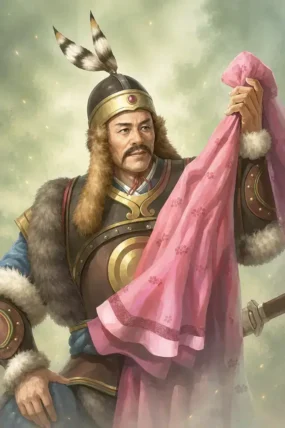
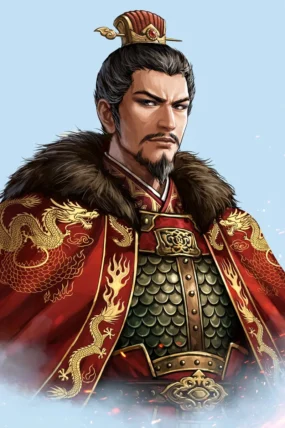
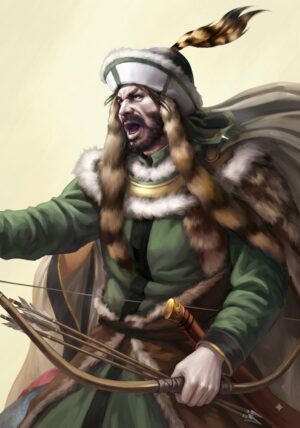
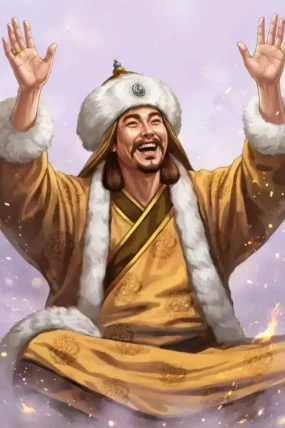
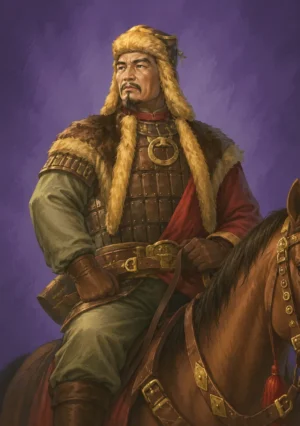
Liu Yuan (刘渊, 劉淵, Lưu Uyên), courtesy name Yuanhai (元海, Nguyên Hải), was a Xiongnu chieftain and the founding emperor of the Han Zhao dynasty (汉赵 / 前赵, Tiền Triệu; reigned 304–310 AD). Born in Central Shanxi to the Luanti clan (挛鞮氏), the supreme ruling lineage of the Southern Xiongnu, he was the son of Left Worthy King Liu Bao (刘豹, Lưu Báo), grandson of Chanyu Yufuluo (于夫罗, Ư Phu La), and nephew of Huchuquan (呼厨泉, Hô Trù Tuyền). Due to the ancient Han dynasty marriage alliances (Heqin) granted to the early Chanyus, his clan adopted the imperial surname Liu (刘), claiming kin connection to the Han emperors.
Endowed with exceptional physique, heroic stature, and profound intellect, Liu Yuan grew up as a hostage prince (Zhizi) in Luoyang during the Western Jin dynasty. He studied classical Han Chinese literature and military treatises under renowned scholars, mastering the Zuo Zhuan, Mao Shi, Sunzi, and Wuzi. His martial prowess, archery skills, and magnetic charisma earned him the deep admiration of Jin grandees such as Wang Hun and Wang Ji, though chancellor Yang Jun and prince Sima Zhao remained wary of his towering ambitions.
Following the death of his father Liu Bao, Liu Yuan returned to northern Shanxi to assume leadership of the Southern Xiongnu Left Section and was later appointed Northern Commander of the Five Sections by the Jin court. During the catastrophic War of the Eight Princes (八王之乱) that gutted Jin imperial authority, Sima Ying enlisted Liu Yuan’s steppe cavalry. Seizing this historic turning point in 304 AD, Liu Yuan united the Five Sections of the Xiongnu at Lishi (离石) and formally proclaimed himself King of Han (汉王).
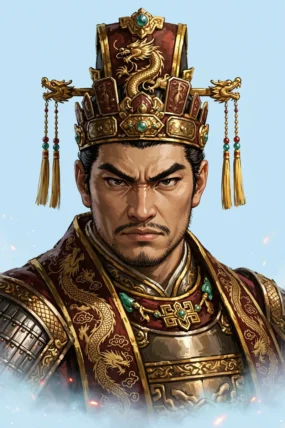
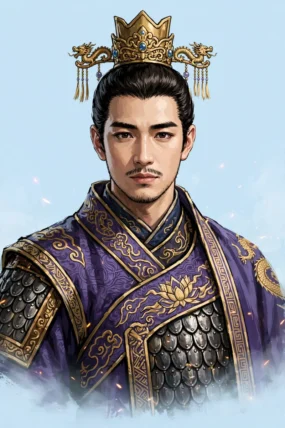
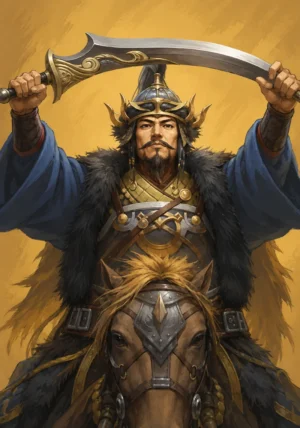
Invoking the ancestral legacy of Emperor Gaozu of Han, Emperor Guangwu, and Emperor Zhaolie Liu Bei (刘备), Liu Yuan established ancestral shrines for the Han imperial line, successfully rallying millions of Han Chinese, Xiongnu, Jie, Di, and Qiang followers. In 308 AD, he formally declared himself Emperor of Han (汉皇帝) at Pingyang, establishing the Han Zhao state. He mobilized formidable commanders—including his brilliant sons Liu Cong and Liu He, alongside general Shi Le (石勒)—launching sweeping northern campaigns that shattered Western Jin armies and paved the way for the fall of Luoyang. Liu Yuan passed away from illness in 310 AD and was posthumously honored as Emperor Guangwen (光文皇帝) with the temple name Gaozu (高祖).
Role in Romance of the Three Kingdoms
End of the Three Kingdoms & Steppe Dynasties: In literary, folk, and historiographical traditions surrounding the aftermath of the Three Kingdoms era, Liu Yuan (刘渊, Lưu Uyên) is celebrated as the visionary chieftain who united steppe martial might with Han dynastic legitimacy. Emerging from the heritage of Liu Bao and Yufuluo, Liu Yuan bridged the late Han borderlands to the founding of the Sixteen Kingdoms, fulfilling the cycle of rise and fall that began with the decline of the Han dynasty.
Liu Yuan (刘渊) — Historical & Literary Timeline
Birth in Northern Borderlands
Born to Xiongnu Left Worthy King Liu Bao and Lady Huyan, heir to the Chanyu ruling dynasty.
Hostage & Classical Scholar in Luoyang
Resides at the Western Jin court; masters Chinese Confucian classics, military strategy, and statecraft.
Commander of the Five Sections
Succeeds his father as chieftain; navigates the War of the Eight Princes to consolidate tribal military autonomy.
Proclamation of Han Kingdom
Raises banner of revolt at Lishi, proclaims himself King of Han, and honors Han Gaozu and Liu Bei as ancestors.
Imperial Coronation & Legacy
Ascends imperial throne at Pingyang, founding Han Zhao; passes away in 310 AD, honored as Emperor Guangwen.
See Book of Jin 101 (Biography of Liu Yuanhai); Zizhi Tongjian 85–87; Sanguozhi 30 (Pei Songzhi commentary).
Key Relationships
Family
- Father Liu Bao (刘豹, Lưu Báo): Left Worthy King of the Southern Xiongnu.
- Grandfather Yufuluo (于夫罗, Ư Phu La): Chanyu of the Southern Xiongnu.
- Uncle Huchuquan (呼厨泉, Hô Trù Tuyền): Last unified Chanyu of the Southern Xiongnu.
- Relative Huchuwen (呼厨温, Hô Trù Ôn): Xiongnu royal lineage chieftain.
- Relative Liu Gaorenfu (刘高仁辅): Southern Xiongnu nobleman.
- Son Liu He (刘和, Lưu Hòa): Eldest son and crown prince of Han Zhao.
- Son Liu Cong (刘聪, Lưu Thông): Second emperor of Han Zhao, conqueror of Luoyang.
- Son Liu Yu (刘裕, Lưu Dụ): Qi Prince of Han Zhao.
- Son Liu Ai (刘乂, Lưu Nghệ): Northern Han Zhao imperial prince.
Allies & Generals
- Shi Le (石勒): General under Liu Yuan, later founder of Later Zhao.
- Wang Mi (王弥): Han general who allied with Liu Yuan’s imperial cause.
In Historical Accounts
- Book of Jin (晋书, Tấn Thư): Recorded in Vol. 101: "Liu Yuanhai, son of Liu Bao, was eight feet four inches tall with arm span reaching past his knees. In his youth he excelled in learning, widely reading the Classics and histories. Wang Hun praised him saying: 'The capacity and brilliance of this man cannot be measured by ordinary standards.'"
- Zizhi Tongjian (资治通鉴): Recorded in Vol. 85: "Yuan said: 'The Han dynasty ruled all under heaven for generations with deep benevolence to the people. I am a nephew of the Han, our fraternal compact endures. Shall I not revive my brother's enterprise?' Thereupon he proclaimed the Han state."
In History
Summary
- Liu Yuan (刘渊, Lưu Uyên; c. 251–310 AD) was a Xiongnu monarch, founder and first emperor of the Han Zhao dynasty (Former Zhao). He united steppe forces with Han legitimacy, initiating the Sixteen Kingdoms era.
Year: 304–310 AD
- In 304 AD, established the state of Han (Han Zhao) at Lishi, Shanxi.
- In 308 AD, declared himself Emperor at Pingyang, adopting the era name Yongfeng (永凤).
- Died in 310 AD; posthumously designated Emperor Guangwen (光文皇帝) with temple name Gaozu (高祖).
Historical Record
- Book of Jin (晋书), Volume 101: Biography of Liu Yuanhai (刘元海载记).
- Zizhi Tongjian (资治通鉴), Volumes 85, 86, 87 (Jin Chronicle).
- Spring and Autumn Annals of the Sixteen Kingdoms (十六国春秋), Record of Former Zhao.
COMMENTS (0)