

| NAME | |
|---|---|
| Chinese Name | 胡班, 胡班, Hú Bān |
| Other name | Hồ Ban |
| INFORMATION | |
| Died | 219 |
| Death Reason | Killed in battle at the Siege of Fancheng (樊城之战, Trận Phàn Thành) (219 AD) |
| FAMILY | |
| Father | |
| CAREER | |
| Allegiance | Shu Han |
| Battles | Battle of Fancheng |
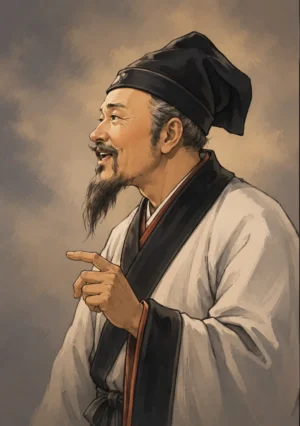
Biography & Historical Record
Hu Ban (died 219 AD) is a military officer appearing in Luo Guanzhong’s classic historical novel Romance of the Three Kingdoms. In the novel, he is introduced as a righteous subordinate officer serving under Wang Zhi, the Grand Administrator of Xingyang Commandery. Hu Ban is the son of Hu Hua, a venerable elder who had previously provided hospitality and assistance to Guan Yu during his early journey.
In 200 AD, during Guan Yu’s legendary journey escorting Liu Bei’s wives (Lady Cam and Lady Mi) across northern Wei territory, Wang Zhi plotted to avenge his relative Han Fu by burning Guan Yu alive. Wang Zhi instructed Hu Ban to lead 1,000 imperial guards to surround Guan Yu’s guest house at midnight, stack firewood and oil against the walls, and ignite the building. Intrigued by Guan Yu’s grand martial reputation, Hu Ban secretly slipped into the courtyard to catch a glimpse of the legendary hero. Guan Yu noticed him, invited him inside, and recognized him as Hu Hua’s son. Guan Yu presented a family letter sent by Hu Hua urging Hu Ban to uphold righteousness. Deeply moved by Guan Yu’s nobility, Hu Ban exposed Wang Zhi’s arson plot and secretly opened the city gates, allowing Guan Yu’s party to escape safely under cover of darkness.
Impressed by Hu Ban’s integrity and courage, Guan Yu later recommended Hu Ban to join Liu Bei’s forces. Hu Ban joined Liu Bei in Jing Province and served loyally as an officer under Guan Yu. In 219 AD, during Guan Yu’s campaign against Cao Ren at the Battle of Fancheng, Hu Ban served as a naval and siege commander, assisting in the famous water attack that inundated Cao Wei’s seven armies. Tragically, Hu Ban was killed in action during the fierce naval and land engagements surrounding the siege of Fancheng.
Historically, Hu Ban is entirely a literary creation of Luo Guanzhong, as Guan Yu’s transit through Xingyang and the arson plot were fictional dramatizations.
Role in Romance of the Three Kingdoms
In Luo Guanzhong’s Romance of the Three Kingdoms, Hu Ban’s pivotal character arc unfolds in Chapters 27 and 73–75. In Chapter 27, Hu Ban is tasked by Wang Zhi with executing a murderous fire-trap to burn Guan Yu alive in a guest house. Curiosity leads Hu Ban to gaze upon Guan Yu’s majestic posture, prompting Guan Yu to deliver a personal letter from Hu Ban’s father, Hu Hua. Awakened to virtue, Hu Ban betrays Wang Zhi, warns Guan Yu, and guides his convoy out of Xingyang. Reappearing in Chapters 73 and 75, Hu Ban joins Guan Yu’s staff during the Jing Province campaigns, serving valiantly in the Siege of Fancheng until falling in battle.
Hu Ban (胡班) — Literary Timeline
Foiling Wang Zhi’s Arson Trap
Ordered by Wang Zhi to burn Guan Yu’s guest house; meets Guan Yu privately, receives his father Hu Hua’s letter, exposes the plot, and secretes Guan Yu out of Xingyang.
Rejoining Guan Yu in Jing Province
Arrives in Jing Province with recommendations; welcomed warmly by Guan Yu and appointed as a field commander in the Shu Han army.
Battle of Fancheng and Death
Participates in the water attack and siege operations against Cao Ren at Fancheng; killed in fierce combat during the siege.
For detailed historical records, archives, and official chronicles, explore Hu Ban on Wikipedia.
Key Relationships
Family
- Hu Hua (胡华, Hồ Hoa) — His father, a venerable elder whose letter to his son served as the catalyst for Hu Ban’s decision to uphold righteousness and aid Guan Yu.
Friends
- Guan Yu (关羽, Quan Vũ) — The legendary general whom Hu Ban saved from an arson plot in 200 AD; Hu Ban later defected to serve under him in Jing Province during the 219 AD campaigns.
- Guan Ping (关平, Quan Bình) — A fellow officer in the Shu Han army who served alongside Hu Ban during the Jing Province campaigns and the Siege of Fancheng.
- Liao Hua (廖化, Liêu Hóa) — A fellow officer in the Shu Han army who fought alongside Hu Ban during the campaigns under Guan Yu.
Enemies
- Wang Zhi (王植, Vương Thực) — The Grand Administrator of Xingyang who ordered Hu Ban to execute a murderous fire-trap against Guan Yu in 200 AD; Hu Ban betrayed him to save the general.
- Cao Ren (曹仁, Tào Nhân) — A senior Wei general whom Hu Ban fought against during the 219 AD Siege of Fancheng.
- Pang De (庞德, Bàng Đức) — A Wei vanguard general whom Hu Ban encountered during the intense naval and land engagements of the 219 AD Battle of Fancheng.
Other
- Liu Bei (刘备, Lưu Bị) — The ruler of Shu Han whom Hu Ban joined following a personal recommendation from Guan Yu.
Appearance

In Novel
Chapter 27
- Hu Ban (胡班, Hú Bān): Hu Ban is the clerk serving Wang Zhi at Xingyang. Wang Zhi orders him to prepare a secret night attack by surrounding Guan Yu's lodging with dry firewood and setting it ablaze. After receiving a letter from Guan Yu's father Hu Hua, however, Hu Ban becomes deeply moved by Guan Yu's loyalty and realizes that he is about to help murder a righteous man. He secretly warns Guan Yu and allows him to escape the fire.
Chapter 73
- Hu Ban (胡班, Hú Bān): Hu Ban later comes to Jingzhou and submits to Guan Yu. Guan Yu remembers that Hu Ban saved his life at Xingyang and treats him favorably. He sends Hu Ban with Fei Shi to Chengdu to meet Liu Bei and receive an appointment.
In History
Summary
- Hu Ban (胡班, Hồ Ban) is a character associated with Guan Yu's Five Passes episode in Romance of the Three Kingdoms.
Historical Record
- The novel presents Hu Ban as the son of Hu Hua and the person who secretly helps Guan Yu escape Wang Zhi's attempted burning of the inn.
- This father-son relationship and the Xingyang episode are literary material and should not be treated as established history without separate evidence.
COMMENTS (0)