
Here is the detailed biography and chronological timeline of Cai Yong (蔡邕), courtesy name Bojie (伯喈) (132–192 AD), one of the most celebrated Han dynasty scholars, calligraphers, musicians, and court historians in Luo Guanzhong’s historical novel Romance of the Three Kingdoms alongside his complete historical record.
Biography Overview
In both history and Romance of the Three Kingdoms, Cai Yong was an esteemed intellectual of the Late Han dynasty, master of the guqin (Chinese zither), creator of the Clerical Script (Lishu), and the father of the famed poetess Cai Yan (Cai Wenji). Revering his immense literary prestige, the tyrannical tyrant Dong Zhuo forced him back into government under threat of execution, rapidly promoting him through multiple ranks in a single month.
Despite Dong Zhuo’s cruelty toward the empire, Cai Yong genuinely appreciated Dong Zhuo’s personal respect for his scholarship. Following Wang Yun and Lü Bu’s assassination of Dong Zhuo in 192 AD, Cai Yong unconsciously let out a sigh of grief over his patron’s corpse during a feast. Outraged by this perceived disloyalty to the Han court, Wang Yun ignored all pleas from scholars and executed Cai Yong in prison, an act widely lamented across the nation.
Cai Yong (蔡邕) — Historical & Literary Timeline
132 AD–177 AD — Early Life & Court Service
Literary Genius & The Xiping Stone Classics
Famed for his filial piety, mathematical insight, and mastery of music, Cai Yong becomes a Household Scholar. Noticing discrepancies in Confucian texts, he manually carves the complete set of Seven Classics in his standardized Clerical Script on forty stone steles outside Luoyang’s Imperial Academy (The Xiping Stone Classics), drawing thousands of scholars to copy his work.
178 AD–188 AD — Chapter 1
Memorial on Omens & Exile
When a black serpent falls onto Emperor Ling’s throne, the emperor consults scholars on the cause of supernatural omens. Cai Yong courageously submits a memorial directly blaming eunuch corruption and royal in-laws. Enraged eunuchs frame him, leading to his exile in Shu and Wu for over a decade, during which he crafts the legendary Jiaowei guqin from scorched paulownia wood.
189 AD — Chapter 4
Forced Recall by Dong Zhuo
After seizing control of Luoyang, Dong Zhuo seeks legitimacy by summoning renowned scholars. When Cai Yong declines the summons, Dong Zhuo threatens to exterminate his entire clan. Upon Cai Yong’s return, Dong Zhuo treats him with exceptional reverence, promoting him three times in three days until he reaches the rank of High Minister.
192 AD — Chapter 9
Dong Zhuo’s Fall & The Fatal Sigh
Following Wang Yun’s honey-trap plot that induces Lü Bu to assassinate Dong Zhuo, Wang Yun hosts a victory banquet. During the celebration, news arrives of Dong Zhuo’s desecrated corpse exposed in the market. Moved by gratitude for Dong Zhuo’s personal favor, Cai Yong sighs deeply in sorrow.
192 AD — Chapter 9
Imprisonment & Death
Wang Yun angrily confronts Cai Yong, accusing him of siding with a traitor, and orders his arrest. Many grandees and scholars beg Wang Yun to spare Cai Yong, asking that he be allowed to complete his official History of the Han Dynasty as punishment. Wang Yun refuses, fearing he will write a biased account, and Cai Yong dies tragically in prison at age 60.
Historical Context & Cultural Legacy
Cai Yong is documented extensively in Chen Shou’s Records of the Three Kingdoms (Sanguozhi) and Fan Ye’s Book of the Later Han (Hou Hanshu). Historians universally regretted his untimely death, regarding Wang Yun’s refusal to spare him as a disastrous loss for Chinese historical documentation. His daughter, Cai Yan (Cai Wenji), inherited his genius, later rescued from the Xiongnu by Cao Cao to reconstruct hundreds of her father’s lost scholarly manuscripts entirely from memory.
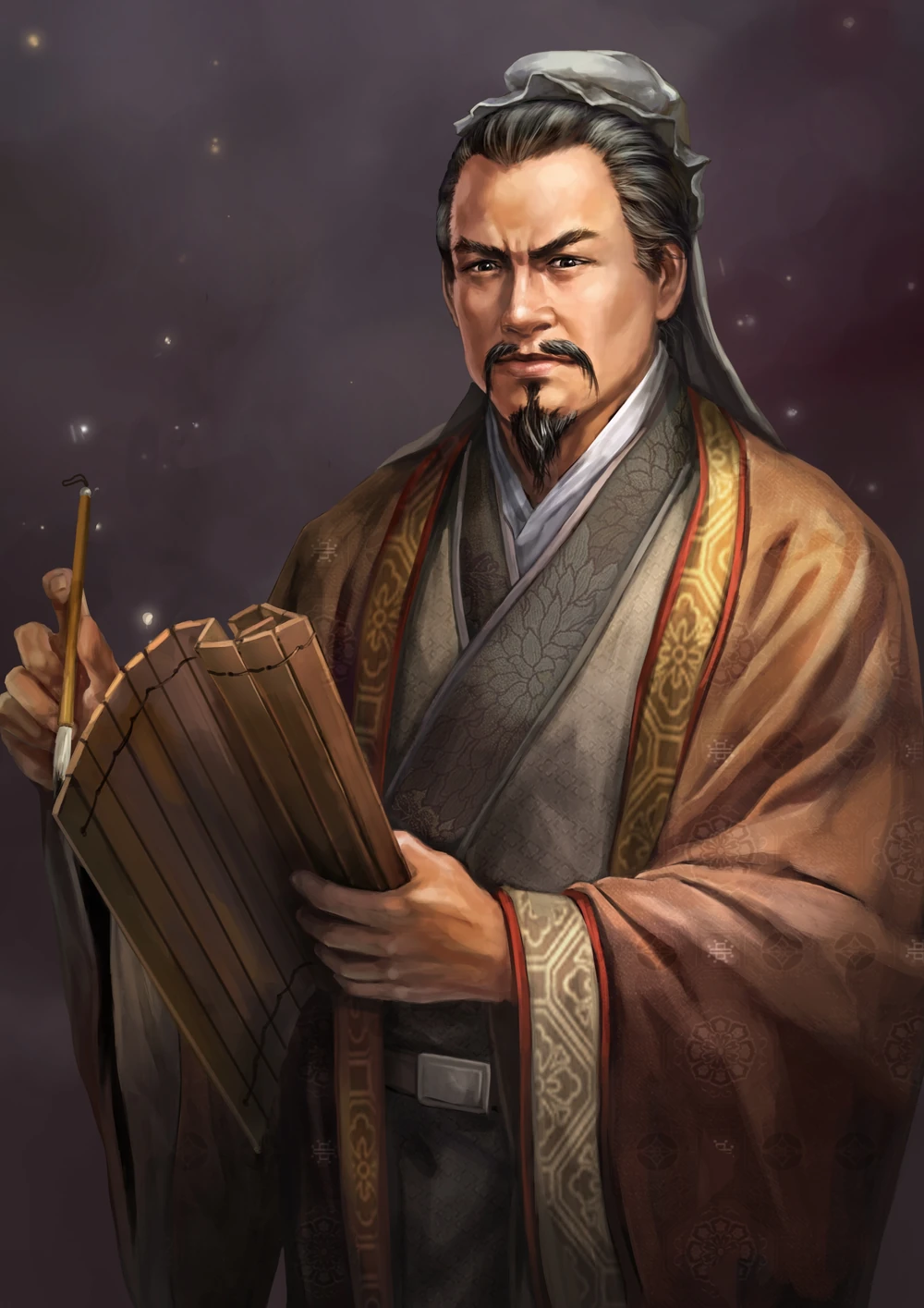


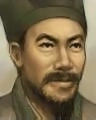


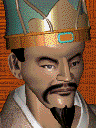

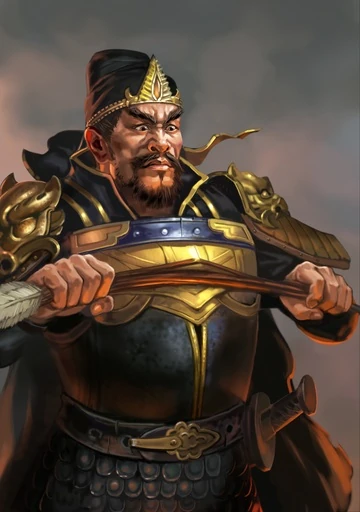
Trong tiểu thuyết Tam Quốc Diễn Nghĩa của La Quán Trung cũng như trong lịch sử, Thái Ung (蔡邕), tự Bác Giai (伯喈), là một danh sĩ, nhà văn, nhà thư pháp và nhạc sĩ lỗi lạc thời Đông Hán.
Thông tin chi tiết về quê quán, gia đình, vợ con của ông:
1. Quê quán và Nơi sinh
2. Vợ / Thê thiếp
3. Con cái
Thái Ung có các con được ghi nhận trong lịch sử và tác phẩm:
4. Thái Ung trong tác phẩm Tam Quốc Diễn Nghĩa
Historical Information
Cai Yong was born in Chenliu (present-day Qi county, Kaifeng, Henan). When his father, Cai Leng died, Cai Yong moved to stay with his uncle, Cai Zhi. When his mother died, Cai Yong gained recognition due to how he prepared her funeral. After his mother’s death, Cai Yong became the student of Hu Guang, one of the highest ranked officials of the time, and Cai Yong would study mathematics, astronomy, composition and the pitch pipes under Hu.
For his skills with the drums and the guqin, senior eunuchs recommended Cai Yong to Emperor Huan during the 160s, but Cai Yong feigned illness on the way, and returned home to study further. After a decade, he began working for Qiao Xuan as a clerk and duly impressed his employer. In 175, Cai Yong and a group of scholars requested that the Five Classics of Confucianism be engraved on stone. Emperor Ling approved of the petition, and the result was the Xiping Stone Classics, which would be completed by 183. As his political career went on, Cai Yong was often given tasks regarding setting up ceremonies and festivals, and Cai Yong began speaking more often against the influence of the eunuchs.
In 178, the eunuchs accused Cai Yong and his uncle of extortion, and the two were initially sentenced to death, but they were exiled to the northern frontiers instead. Cai Yong later was allowed to return to the capital when he stated that his records on dynastic history and classics would be threatened due to the fighting in the area, but he offended the sibling of an influential eunuch, and fled south to the lands of Wu. He would end up staying at the south for more than a decade, and many people became his students, among whom was Gu Yong. After twelve years, Dong Zhuo, who had taken control of the emperor, demanded that Cai Yong return to the capital. Cai Yong initially declined, but Dong Zhuo relented that he could “eliminate whole clans”, and Cai Yong reluctantly accepted Dong’s request.
During his service under Dong Zhuo, the warlord admired Cai Yong’s scholarly and musical skills, but Cai Yong was often alert and concerned regarding Dong Zhuo’s temper. He once considered sneaking back home, but quickly brushed off the idea when he realized he was too famous to do so without incident. In 192, Wang Yun killed Dong Zhuo in a plot to return power back to the emperor, and declared that any who dared to claim Dong Zhuo’s corpse, or openly grieved for Dong Zhuo would be put to death. Cai Yong challenged the order, and was subsequently imprisoned awaiting death sentence despite pleas that Cai Yong be allowed to finish his records before death. It was said that Wang eventually began regretting the order, but Cai Yong had died in prison by that time.
After his death, many of his works were lost in the succeeding wars. Parts of his library survived through his student Wang Can and were later recorded into the Book of the Later Han. Cai Yan memorized four hundred of the four thousand books that were left to her at Cao Cao‘s request.
Soure: https://koei.fandom.com/wiki/Cai_Yong
1. Thân thế & Gia tộc (Sử sách ghi chép)
2. Sự nghiệp & Đóng góp lịch sử
Thái Ung không chỉ là một chính trị gia thời Đông Hán mà còn là biểu tượng văn hóa kiệt xuất:
3. Các giai thoại nổi tiếng
4. Nguồn tài liệu & Trích dẫn tham khảo
Thái Ung (chữ Hán: 蔡邕; 133-192), cũng gọi Sái Ung, biểu tự Bá Giai (伯喈), là một danh sĩ trứ danh vào cuối thời Đông Hán trong lịch sử Trung Quốc. Ông được biết đến không chỉ là một danh sĩ đương thời mà còn là phụ thân của nữ sĩ Thái Diễm (Thái Văn Cơ).
Thời Hán Hoàn Đế
Thái Ung người quận Trần Lưu (nay là huyện Kỷ, Hà Nam, Trung Quốc), tổ Thái Huề (蔡攜), tự Thúc Nghiệp (叔業), cha là Thái Lăng (蔡棱), tự Bá Trực (伯直), mẹ Viên thị là em gái của Tư đồ Viên Bàng (袁滂). Thời trẻ Thái Ung thờ mẹ có hiếu. Sau khi mẹ qua đời, sống với chú và em họ. Lòng hiếu thảo của ông được mọi người khen ngợi.[1] Thái Ung có tài học rộng, theo thụ giáo thầy Thái phó Hồ Quảng học kinh thuật và từ chương, thiên văn, âm luật, trở nên nổi tiếng về học thuật của mình.
Thời Hán Hoàn Đế, các hoạn quan Từ Hoàng, Tả Tá chuyên quyền. Nghe nói Thái Ung giỏi đánh đàn, họ bèn tâu lên Hán Hoàn Đế. Hoàn Đế bèn lệnh cho Thái thú quận Trần Lưu đốc thúc ông về Lạc Dương. Thái Ung không muốn làm quan nhưng không thể từ chối, đành phải lên đường. Do dọc đường trèo đèo lội suối vất vả, đi tới Yển Sư, ông cáo ốm và quay về.[2]
Thời Hán Linh Đế
Sửa Lục kinh
Năm 170 thời Hán Linh Đế, Thái Ung lại được triệu vào cung làm việc cùng Từ đồ Kiều Huyền, được Kiều Huyền trọng dụng. Ít lâu sau ông được phong làm Hà Nam bình trưởng, Triệu bái lang trung, Hiệu thư Đông Quán, rồi thăng làm Nghị lang.
Tại Đông Quán có nhiều sách vở của triều đình, Thái Ung có điều kiện tiếp cận. Ung nhận thấy sách trong Đông Quán có nhiều sai sót do người đời trước có sự kiến giải khiên cưỡng gây hiểu lầm cho người sau, vì vậy ông muốn đính chính lại. Năm 175, cùng các đại thần Đường Khê, Mã Nhật Đê, Trương Thuần, Hàn Thuyết, Đan Lậu tâu lên Hán Linh Đế đề nghị đính chính lại văn tự “Lục kinh”. Linh Đế ưng thuận.
Thái Ung cùng các cộng sự kiên trì rà soát và điều chỉnh lại kinh sách, cuối cùng ra được văn bản chính thức để. Ung tự tay viết lên bia đá, mời thợ giỏi về khắc chữ. Công trình hoàn thành, các tấm bia đá được dựng ngoài cổng nhà Thái học. Nhiều kẻ sĩ các nơi tới xem và sao chép, có tới hàng ngàn cỗ xe đến làm đường phố kinh thành tắc nghẽn.[2]
Các bản kiến nghị
Thời Đông Hán thực hiện chế độ Tam hỗ, nghĩa là hai nhà thông gia của hai châu không được làm quan tại nơi cư trú của nhau. Do các nhà thế tộc có nhiều quan hệ họ hàng nên quy định này gây khó khăn cho việc bổ nhiệm quan chức, khiến một số nơi như U châu và Ký châu không đủ quan lại.[3]
Thấy tình trạng đó, Thái Ung bèn làm sớ kiến nghị Hán Linh Đế bỏ chế độ Tam hỗ. Nhưng Hán Linh Đế không chấp thuận.
Ít lâu sau ông lại dâng lên Hán Linh Đế một kiến nghị khác để cải thiện tình hình chính trị đang xuống dốc khi đó. Kiến nghị của ông có 7 điểm:
Kiến nghị của Thái Ung thống thiết dài vài ngàn chữ, được Linh Đế coi trọng. Linh Đế chuyển những người giúp việc cho Thái tử không có thực tài sang làm thái tử xá nhân vu úy – chức nhỏ ở địa phương. Vì việc này, nhiều người bị động chạm quyền lợi nên thù hằn Ung.[4]
Năm 176, có nhiều điềm tai dị xảy ra, khiến vua Linh Đế lo lắng. Thời đó những điềm tai dị được xem là có liên hệ tới việc chính trị. Vì vậy, Linh Đế triệu Ung cùng các đại thần Mã Nhật Đê, Dương Tứ, Trường Hoa, Đan Cấu cùng hoạn quan Tào Tiết, Vương Phủ vào hỏi nguyên nhân. Linh Đế ban đặc chiếu cho ông, đề nghị kiến giải những chuyện tai dị vì ông là người có học thức sâu rộng. Thái Ung cảm động, tự mình soạn một bản tấu, thẳng thắn vạch ra những điểm chưa tốt của nền chính trị lúc đó, ông cho rằng do xây cất cung thất quá nhiều gây tốn kém, có nhiều tiểu nhân đắc chí làm quan lớn, tham nhũng nhiều; nên ông đề nghị bãi miễn những người này, bổ nhiệm người tài đức.[4]
Bị trả thù
Thái Ung biết bản kiến nghị của mình đụng chạm tới nhiều người, nên ông đề nghị Linh Đế giữ kín. Linh Đế xem xong thở dài, khiến hoạn quan Tào Tiết hầu cận để ý. Nhân lúc Linh Đế đi thay áo, Tào Tiết xem trộm rồi nói lại với những người cùng phe cánh. Do đó trong triều càng thêm nhiều người thù ghét Thái Ung.
Dương Cầu thù oán ông bèn chủ mưu cùng các hoạn quan làm hại ông. Ít lâu sau, hoạn quan Trình Hoàng sai người trình bản tấu kể tội Thái Ung đang có ý định cùng chú là Thái Chất muốn trả thù tư đồ Lưu Lân vì nhờ một việc riêng tư không được. Thái Ung dâng biểu phân trần nhưng không được chấp nhận, ông bị tống giam vì “kết oán với người làm việc công, hãm hại đại thần”, chuẩn bị mang xử tử.
Việc khép tội Thái Ung khiến nhiều người không phục.[5] Trung thường thị Lã Cường tâu Hán Linh Đế rằng Thái Ung vô tội và xin tha cho ông. Linh Đế xem lại án nhưng chỉ tha cho ông tội chết nhưng vẫn đày ông đi Sóc Phương ở biên cương phía bắc, vĩnh viễn không cho trở về.
Dương Cầu chủ mưu giết ông, bèn thuê thích khách đuổi theo để giết ông. Nhưng thích khách biết ông là người thẳng thắn chính trực nên không cam tâm hạ thủ. Dương Cầu thấy ý định không thành bèn hối lộ cho quan địa phương nhờ hãm hại ông, nhưng viên quan này cũng không làm theo, báo cho ông biết để đề phòng. Do được những người ngay thẳng giúp đỡ, Thái Ung giữ được tính mạng, đến sống tại An Dương, Sóc Phương.
Một thời gian sau, Thái Ung dâng thư lên Hán Linh Đế xin được trở về quê để viết nốt sách Hậu Hán ký mà trước đây khi ở Đông Quán ông đang cùng Lư Thực, Hàn Thuyết soạn chưa xong. Linh Đế thấy ông có tài, bèn nhân kỳ đại xá năm 177 cho ông được trở về quê.
Thái thú Vương Trí thấy ông được tha bèn bày tiệc đãi ông. Vương Trí vốn là em trai hoạn quan Vương Phủ trong triều, ngày thường kiêu ngạo, vì vậy Thái Ung coi thường. Vương Trí tức giận quát mắng Thái Ung, ông liền phẩy tay áo bỏ về.
Vương Trí bèn viết thư về triều nói rằng Thái Ung bất mãn trong lúc bị lưu đày, thường phỉ báng triều đình. Thái Ung biết mình đã gây thù oán với nhiều đại thần trong triều, không thể dâng thư biện bạch mà vẫn có thể bị bức hại, nên ông không trở về quê nữa mà đi sang vùng Ngô Việt (Triết Giang). Cuộc sống lưu lạc của Thái Ung kéo dài 12 năm.
Thời Hán Hiến Đế
Năm 189, Hán Linh Đế mất, con là Hán Thiếu Đế lên thay. Đổng Trác vào triều cầm quyền, phế Thiếu Đế lập Hiến Đế. Để thu phục nhân tâm, Đổng Trác cho gọi Thái Ung về kinh phong chức. Thái Ung bị hại nhiều lần trên quan trường nên dâng sớ cáo ốm. Đổng Trác nổi giận hạ lệnh sẽ tru di cả họ Thái Ung, ép ông phải trở về. Thái Ung bèn trở về Lạc Dương.
Đổng Trác rất quý trọng Thái Ung, chỉ trong 3 ngày đã phong ông làm các chức Tế tửu, Thị ngự sử, Thượng thư, rồi Thị trung.
Sang năm 190, chư hầu do Viên Thiệu cầm đầu nổi lên thảo phạt Đổng Trác vì tội giết vua Thiếu Đế. Cùng lúc, thủ hạ của Đổng Trác muốn tôn Trác làm Thượng phụ. Đổng Trác bèn hỏi Thái Ung. Ông khuyên Đổng Trác chưa nên xưng hiệu vì thiên hạ đang rối ren không phục. Đổng Trác nghe theo ông.
Thái Ung biết Đổng Trác trọng dụng ông, nhưng họ Đổng tàn bạo chuyên quyền, mất lòng người, ông sẽ bị liên lụy khi Đổng Trác diệt vong.[6] Vì vậy ông định bỏ trốn đến Ký châu. Nhưng em ông là Thái Cốc khuyên rằng ông có tướng mạo khác thường, rất dễ bị nhận diện. Vì vậy Thái Ung bèn thôi ý định bỏ trốn.
Đổng Trác bị chư hầu đánh bại phải mang triều đình bỏ chạy về Tràng An. Năm 192, Đổng Trác bị tư đồ Vương Doãn và tướng Lã Bố giết chết.
Mọi người đều hả hê vì cái chết của Đổng Trác, riêng Thái Ung lại tỏ ra buồn bã. Tư đồ Vương Doãn bèn sai bắt Thái Ung trị tội. Thái úy Mã Nhật Đê thấy vậy vội nói với Vương Doãn rằng Thái Ung là người có tư cách và tài năng, nên để ông sống để viết nốt sử nhà Hán. Nhưng Vương Doãn không đồng tình, dẫn gương Tư Mã Thiên viết Sử ký phỉ báng triều đình, vì vậy quyết không tha cho Thái Ung.
Ít lâu sau Thái Ung qua đời trong ngục. Ông là người sinh cùng năm và mất cùng năm với Đổng Trác, lúc đó 61 tuổi.
Một người học trò của ông là Cố Ung về sau trở thành thừa tướng nước Đông Ngô thời Tam Quốc.
Trong Tam Quốc diễn nghĩa
Thái Ung được nhắc tới trong tiểu thuyết Tam Quốc diễn nghĩa của La Quán Trung rất ngắn trong hồi 9.
Cái chết của Thái Ung được đề cập khi ông chạy tới khóc bên xác Đổng Trác, do đó bị Vương Doãn bắt mang chém. Thái Ung xin được nhận hình phạt chặt chân để viết nốt sử nhà Hán nhưng không được Vương Doãn chấp nhận.
(Theo Wikipedia)
Cai Yong (132/133[1] – c. June 192[2]), courtesy name Bojie, was a Chinese astronomer, calligrapher, historian, mathematician, musician, politician, and writer of the Eastern Han dynasty. He was well-versed in calligraphy, music, mathematics and astronomy. One of his daughters, Cai Yan / Cai Wenji, was also a famous poet and musician.
Early life
Cai Yong was born in a substantial local family in Yu County (圉縣), Chenliu Commandery (陳留郡), which is around present-day Qi County, Kaifeng, Henan. The Cai family had a reputation of not having their territory divided for three generations. When his father Cai Leng (蔡棱) died, Cai Yong lived with his uncle Cai Zhi (蔡質) while taking great care for his own mother for her last three years. When she died, Cai Yong became known for his arrangement of his mother’s tomb. After that, Cai Yong studied composition, mathematics, astronomy, pitch-pipes and music under Hu Guang (胡廣), one of the highest-ranking officials in the Han imperial court.
Service under Emperor Ling
In the early 160s, Cai Yong was recommended to Emperor Huan (r. 146–168) by the senior eunuchs for his skill with the drums and the guqin. On his way to the capital, Cai Yong feigned illness to return home to study in seclusion. Ten years later in the early 170s, Cai Yong served as a clerk under the official Qiao Xuan, who greatly admired his abilities. Afterwards, Cai Yong served as a county magistrate and then a Consultant in the capital, in charge of editing and collating the text in the library. Known for his literary skills, he was constantly commissioned to write eulogies, memorial inscriptions, and the like.
In 175, in fear of parties trying to alter the Confucian classics to support their views, Cai Yong and a group of scholars petitioned to have the Five Classics engraved in stone. Emperor Ling (r. 168–189) approved, and the result was the Xiping Stone Classics completed in 183, which set the canon for future generations of scholars.
Throughout his political career, he was an advocate of restoring ceremonial practices and often criticised against the eunuchs’ influence in politics. He was successful in persuading the emperor to participate in a ritual in the winter of 177 through his memorials, but his attacks on the eunuchs were not so successful.
In the autumn of 178, the scholars were asked for advice on recent ill omens. Cai Yong responded with criticisms of eunuch pretensions. The eunuchs learnt of the attack, and accused Cai Yong and his uncle Cai Zhi of extortion. They were thrown into prison and sentenced to death, but the sentence was later remitted to exile in the northern frontiers.[3] Nine months later, he cited to the throne that his work on the dynastic history and classics were at risk from enemy raids, and was allowed back to the capital. However, he offended the sibling of an influential eunuch during a farewell banquet before his return, which put his position in the capital at risk. Cai Yong fled south to Wu (吳) and Kuaiji commanderies and stayed there for 12 years.
Service under Dong Zhuo
When the warlord Dong Zhuo came to power in 189 and controlled the central government, he summoned Cai Yong back to the imperial capital Luoyang. At first Cai Yong was unwilling, but Dong Zhuo enforced his demand with the threat “I can eliminate whole clans”, Cai Yong had no choice but to comply. Under Dong Zhuo, Cai Yong was appointed Left General of the Household, and became in charge of revising rituals for Dong Zhuo’s new government. Despite Dong Zhuo’s admiration of Cai Yong as a scholar and musician, Cai Yong worried about Dong Zhuo’s temper and once considered to return home, but was persuaded that he was too well known to escape.
In May 192, when Dong Zhuo was killed in a plot by Wang Yun, Cai Yong was put into prison and sentenced to death for allegedly expressing grief at Dong Zhuo’s death. Cai Yong and other government officials pleaded with Wang Yun to allow him to finish his work on the history of Han, but Wang Yun denied them, saying:
It was said that Wang Yun eventually regretted this decision, but Cai Yong had already died in prison. After his death, pictures were set up in his honour, and commemorative eulogies were composed throughout Chenliu Commandery and Yan Province.
Works
Due to the turmoil in China in the decade after Cai Yong’s death, many of his works were lost. However, Cai Yong had apparently entrusted the bulk of his library to his protégé, Wang Can, and it is through Wang Can’s collection that Cai Yong’s works can be found in compilations like the Book of Later Han. A few of his works survive today.
His contributions include:
Family
In fiction
Cai Bojie is the main protagonist in the 14th-century play Tale of the Pipa by Gao Ming. (Wikipedia)