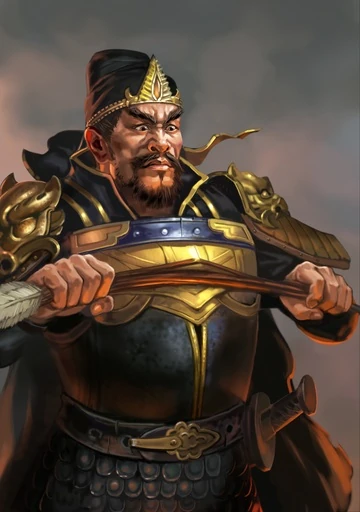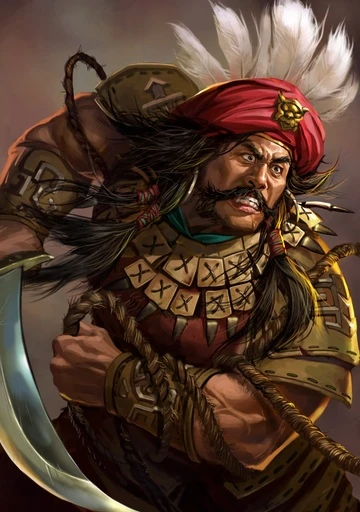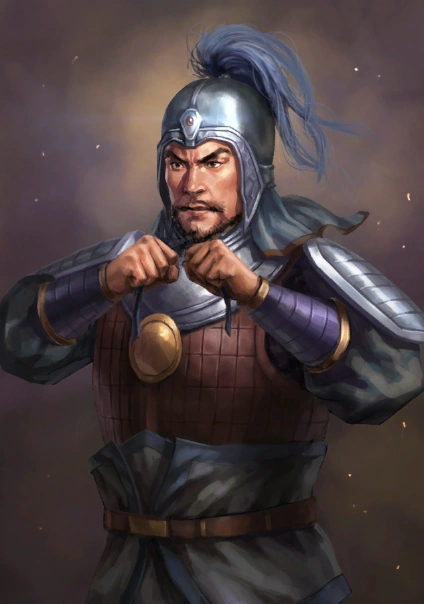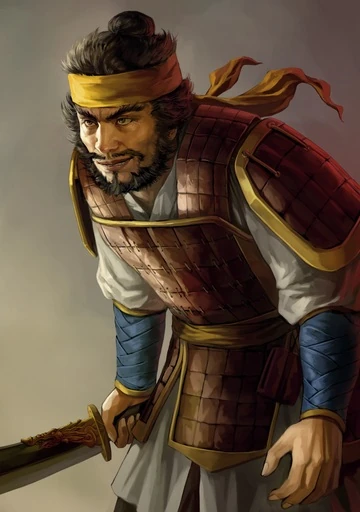
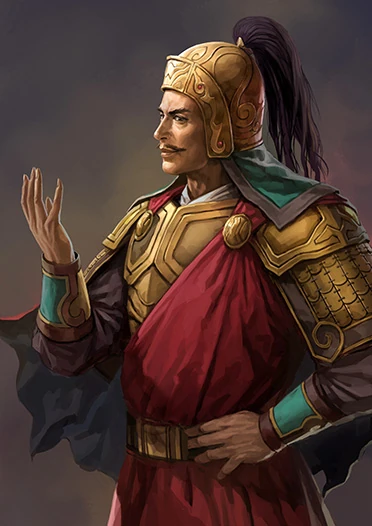
Here is the detailed biography and chronological timeline of Cai Mao (蔡瑁), courtesy name Degui (德珪), an influential Jing Province noble, naval commander, and politician in Luo Guanzhong’s historical novel Romance of the Three Kingdoms alongside his complete historical record.
Biography Overview
In both history and Romance of the Three Kingdoms, Cai Mao was the head of the powerful Cai clan of Xiangyang. Born into immense wealth and high nobility, his clan boasted forty-five estates, blue-stone walled manors, and hundreds of servants. His elder sister married the influential scholar Huang Chengyan, while his second sister became the primary wife of Liu Biao, making Cai Mao a dominant figure in Jing Province.
In his youth, Cai Mao traveled to Luoyang and forged a close personal friendship with a young Cao Cao. Within Liu Biao’s administration, he served as General Who Suppresses the South and chief commander. Deeply hostile toward Liu Bei, Cai Mao schemed relentlessly to secure the succession for his nephew, Liu Cong, culminating in the surrender of Jing Province to Cao Cao in 208 AD. In the novel, his mastery over naval warfare prompts Zhou Yu to execute a brilliant counter-intelligence scheme, tricking Cao Cao into executing Cai Mao just before the Battle of Red Cliffs.
Cai Mao (蔡瑁) — Historical & Literary Timeline
Early Life — Luoyang Period
Wealthy Nobility & Friendship with Cao Cao
Born in Xiangyang as the son of Cai Feng, Cai Mao grows up in immense luxury in Caizhou. In his youth, he travels to Luoyang and connects with the 20-year-old Cao Cao. The pair visits Liang Hu, a senior official selecting magistrates, seeking an appointment for Cao Cao in Luoyang, but Liang Hu humiliates them by refusing an audience—an insult Cao Cao never forgets.
190 AD–191 AD — Chapter 7
Pacification of Jing Province & Battle with Sun Jian
When Liu Biao is appointed Governor of Jing Province, Cai Mao, Kuai Yue, and Kuai Liang advise him on pacifying local rebels at Yicheng. Soon after, when Sun Jian invades, Cai Mao commands the vanguard at Xianyang. Though beaten in dual combat by Cheng Pu and Huang Gai, he later organizes the deadly ambush at Mount Xian that slays Sun Jian.
201 AD–207 AD — Chapters 34–35
Feud & Assassination Attempts Against Liu Bei
Opposing Sun Qian’s request to grant Liu Bei refuge, Cai Mao lobbies Lady Cai to relocate Liu Bei to distant Xinye. When Liu Bei advises Liu Biao to make his eldest son Liu Qi the heir, Cai Mao attempts to ambush Liu Bei at his guest house and frames him with a forged poem. Later, during a grand banquet at Xiangyang, Cai Mao surrounds the residence, but Liu Bei escapes across the Tan Torrent on his horse Dilu after a warning from Yi Ji.
208 AD — Chapters 40–41
Blocking Liu Qi & Surrender to Cao Cao
As Liu Biao falls critically ill, Cai Mao and Zhang Yun physically bar the eldest son Liu Qi from entering to bid his father farewell. Upon Liu Biao’s death, they forge a succession decree for Liu Cong and surrender Jing Province to Cao Cao’s advancing army. Fearing total destruction, Liu Bei flees Fan while Wei Yan denounces Cai Mao as a traitor during a riot at Xiangyang’s gates.
208 AD — Chapter 45
Reunion with Cao Cao & Naval Command
Cao Cao greets his old youth friend warmly, visiting Cai Mao’s home and mocking Liang Hu’s past arrogance. Recognizing Cai Mao’s aquatic expertise, Cao Cao places him in sole command of his massive northern navy. Cai Mao builds a grand naval training base along the Yangtze River, presenting a grave threat to Sun Quan’s forces.
208 AD — Chapter 45
Zhou Yu’s Stratagem & Execution (Novel)
Identifying Cai Mao as the single greatest obstacle to Wu’s survival, Zhou Yu uses Jiang Gan to plant a forged letter alleging that Cai Mao and Zhang Yun plan to defect to Wu. When Cai Mao hesitates to attack Wu prematurely, an enraged Cao Cao orders their immediate execution, realizing his catastrophic mistake only after the naval commanders are beheaded.
Historical Context & Comparison
In authentic history documented in Chen Shou’s Records of the Three Kingdoms (Sanguozhi) and the Record of Xiangyang, Cai Mao was not executed at Red Cliffs. Following his surrender alongside Liu Cong, Cao Cao treated him with immense lavishness due to their youth friendship, raising him to the rank of General Who Guards the South and Marquis of Hanyang. He lived out his remaining years in comfortable, opulent luxury at his estate in Xiangyang, complete with giant deer stone statues. However, he was widely despised by contemporaries for usurping Liu Qi’s birthright. Cao Pi later cited Cai Mao alongside Shen Pei and Guo Tu as self-serving ministers who corrupted the rule of great warlords.